DDSC Gains Regulated Access to UAE Exchanges
With central bank approval in place, the dirham stablecoin can now be traded on VARA-regulated platforms, marking another step in the UAE’s push for regulated stablecoins and onchain settlement.
Key Takeaways
- DDSC is getting regulated access to selected VARA-licensed exchanges after approval from the Central Bank of the UAE.
- The dirham stablecoin was developed by IHC, FAB, and Sirius International Holding, and runs on ADI Chain for payments and settlement.
- The UAE is combining central bank oversight and exchange licensing, while RAKBank also previously received in-principle approval for a dirham-backed stablecoin.
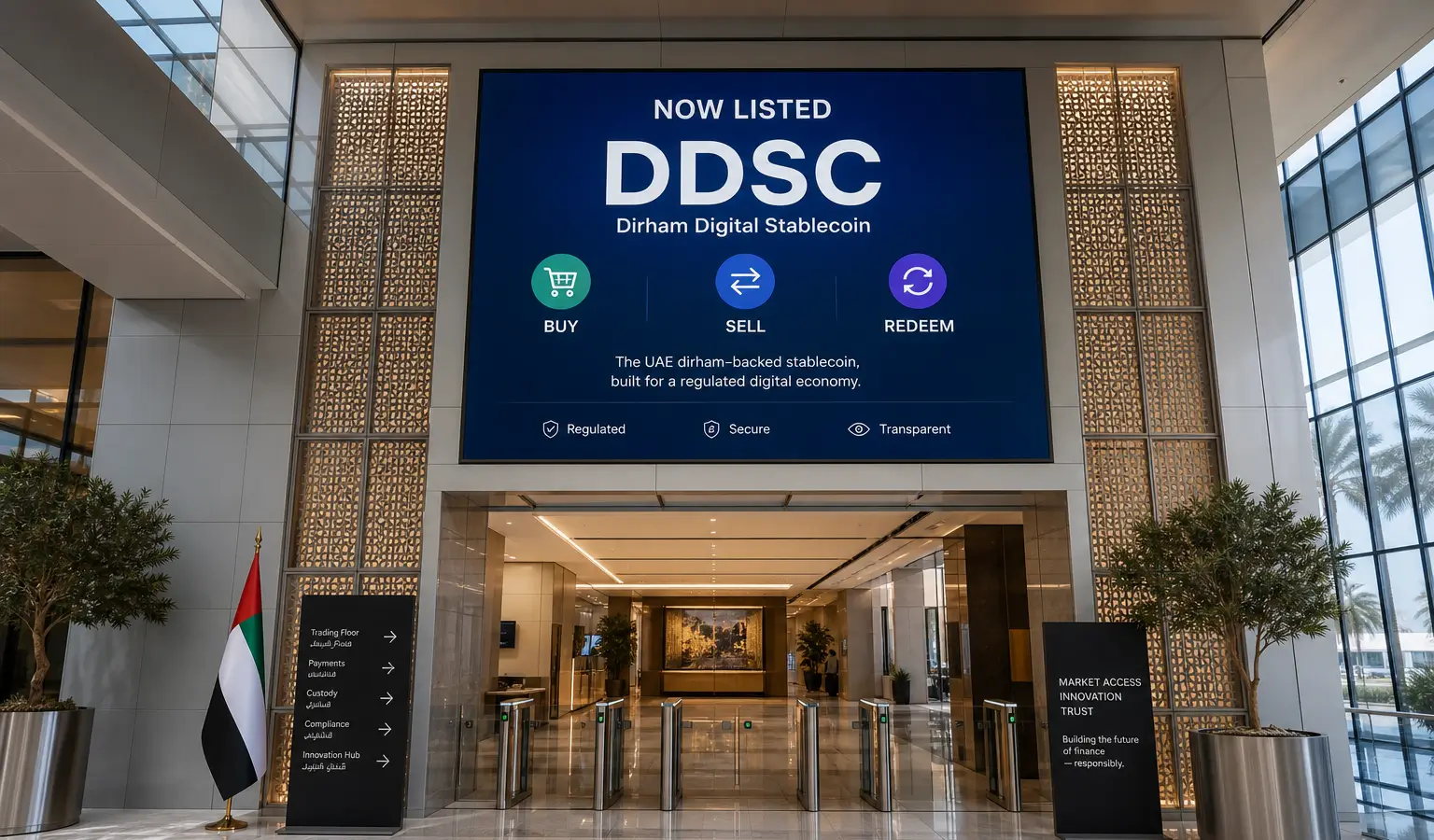
The dirham stablecoin DDSC is now on track to reach exchange platforms in the United Arab Emirates through a regulated route. Following approval from the Central Bank of the UAE, the token can be bought, sold, and redeemed on selected VARA-regulated platforms. That expands DDSC beyond institutional settlement and into wider market use.
Local Stablecoin Gets Access
DDSC was created by International Holding Company, First Abu Dhabi Bank, and Sirius International Holding, and it is pegged to the UAE dirham. The token operates on ADI Chain and is designed to function as a payment token within the domestic financial system. It also reflects a broader shift in how stablecoins are being used, not just for trading, but for treasury movement and cross-border settlement as well.
The approval arrives as stablecoins take on a larger share of crypto activity. Visa previously reported more than $51 trillion in transaction volume over the past 12 months, while TRM Labs estimated stablecoins in 2025 made up 30 percent of all on-chain crypto transactions. For the crypto market, that underscores how important regulated access and local settlement rails have become.
Why The UAE Is Moving Fast
The UAE has been laying the groundwork for payment tokens for quite some time. The central bank’s Payment Token Services Regulation explains how stablecoin issuance, conversion, custody, and transfer services can be structured, while VARA in Dubai licenses the exchange platforms that are allowed to offer them. Together, those two layers make it possible to regulate the token itself and the trading venue separately.
The infrastructure side matters too. ADI Chain is built as an institutional Layer-2 blockchain for payments, settlement, treasury management, and trading flows, so DDSC is more than just a token. It is also part of a wider technical stack for business use cases, which makes the rollout relevant for companies that want faster settlement inside a regulated setup.
What This Means for European Readers
For European crypto readers, DDSC is another example of a country trying to bring stablecoins deeper into the mainstream financial system. The combination of central bank oversight and exchange licensing could offer a useful model for other markets that are thinking about payment tokens, especially as stablecoins are used more often for settlement and payments around the world.
The move also builds on earlier signals from the region. RAKBank received in-principle approval from the Central Bank of the UAE in January 2026 for its own dirham-backed stablecoin, showing that several major players in the UAE are heading in the same direction. What stands out is that local currencies are increasingly getting their own onchain version instead of relying entirely on dollar-based stablecoins.