DOG Mode Puts Bitcoin Governance Back in the Spotlight
DOG Mode focuses on Bitcoin Core’s relay policy and other node software, with implications for mempool rules, Ordinals, and the role of mining pools.
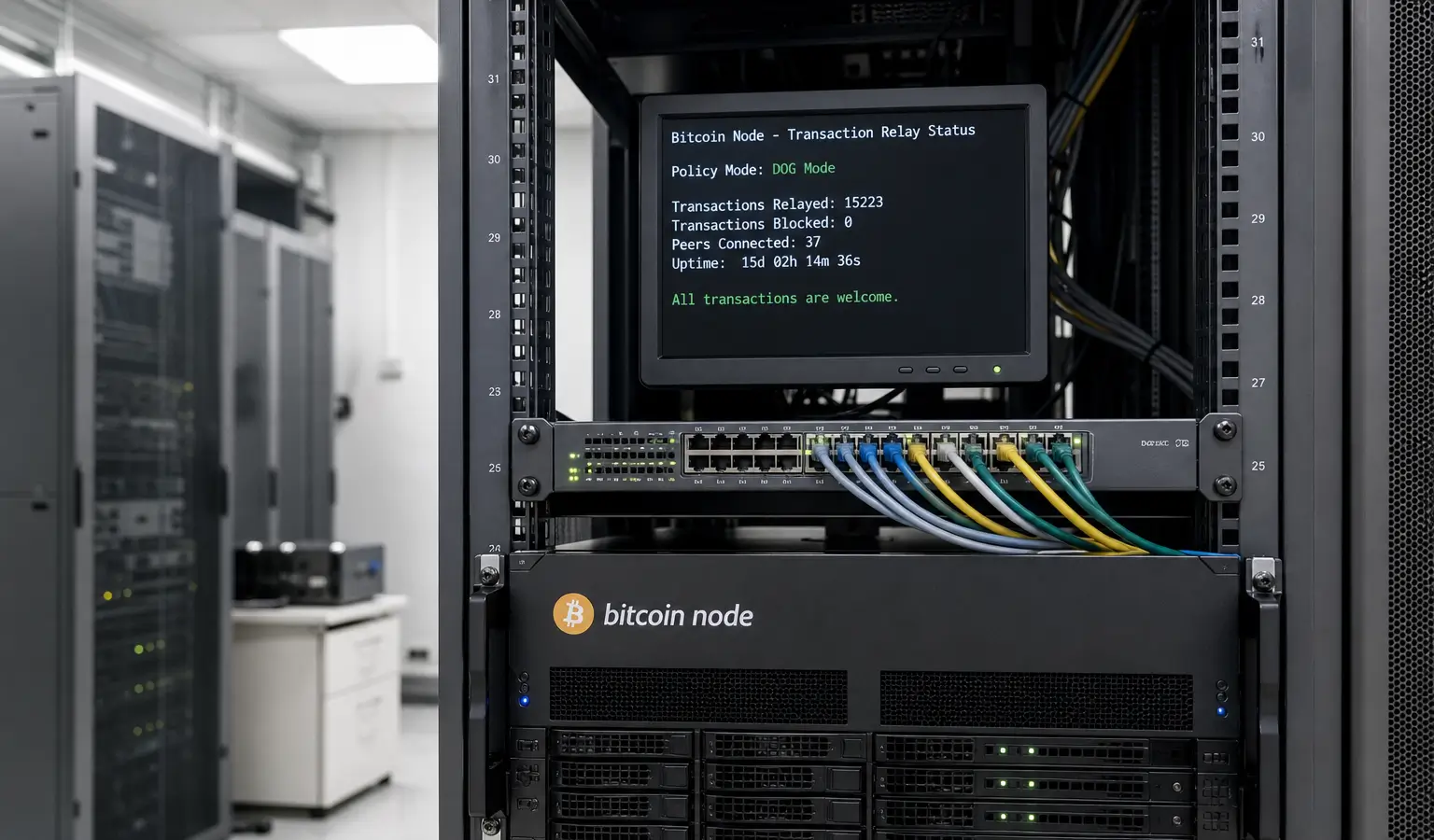
Key Takeaways
- Developer Leonidas’ DOG Mode targets Bitcoin Core’s default relay policy and other node software, not consensus rules.
- The client affects which valid transactions nodes pass along, shifting the debate toward mempool policies and transaction distribution.
- The debate matters for European users because it could affect fee estimates, transaction throughput, and the role of intermediaries.
Bitcoin is back at the center of a governance fight, but this time the argument is not over consensus changes. Developer Leonidas’ alternative client, DOG Mode, is aimed at Bitcoin Core’s default relay policy and other node software. That brings an old question back into focus: who really gets to decide which transactions the network relays?
Relay Policy as the Battleground
DOG Mode is not trying to change Bitcoin’s core rules. Instead, it is designed to alter the settings that determine which valid transactions get relayed before miners add them to a block. In other words, the debate moves away from consensus code and into the layer around it, where node operators and software choices can still shape how the network behaves in practice.
Leonidas has been a vocal supporter of Ordinals, the method that allows data to be stored on the Bitcoin blockchain as images or text, often treated as a form of NFTs. From that angle, DOG Mode reads as a direct response to earlier efforts to make those transactions harder to relay, including Bitcoin Improvement Proposal 110, which called for tighter rules and drew criticism as a form of censorship. That broader dispute already intensified around BIP-110 and Ordinals, where developers and Ordinals creators argued over how much room Bitcoin should leave for non-payment transactions.
Why This Matters Technically
At a technical level, the issue comes down to how Bitcoin transactions spread across the network. Nodes rely on mempool policies such as minimum relay fees, eviction rules, and package relay to decide which unconfirmed transactions they will accept and forward. Replace-by-Fee also matters here, since it allows a sender to swap out an unconfirmed transaction for one with a higher fee when faster confirmation is needed.
In today’s setup, large or non-standard transactions can sometimes get an advantage through specialized services or direct arrangements with mining pools. DOG Mode is meant to reduce that dependence on private channels and push more of the process back onto the peer-to-peer network. It will not eliminate differences between nodes, but it could either widen or narrow them depending on how many software operators choose to adopt the policy.
Why It Matters for European Readers
For European crypto readers, the bigger point is that Bitcoin governance is not only about headline-grabbing protocol upgrades. It also includes the rules that shape how transactions move through the network. Those rules can influence fee estimates, transaction throughput, and how much room intermediaries have in the block space market. That makes the debate relevant well beyond the Ordinals discussion for anyone using Bitcoin or building on the infrastructure around it.