Empire Market Founder Loses 1,230 BTC After 40-Year Sentence
U.S. authorities are also seizing Bitcoin, ETH, and real estate in addition to the prison sentence. Empire Market ran on crypto and mixing services for millions of dollars in drug transactions.
Key Takeaways
- Raheim Hamilton, co-founder of Empire Market, received 40 years in prison, a $5 million fine, and must forfeit 1,230 BTC.
- In addition to Bitcoin, Hamilton is forfeiting 24.4 ETH and three properties after his conviction in Chicago.
- Between 2018 and 2020, Empire Market facilitated more than 4 million drug transactions worth over $430 million.
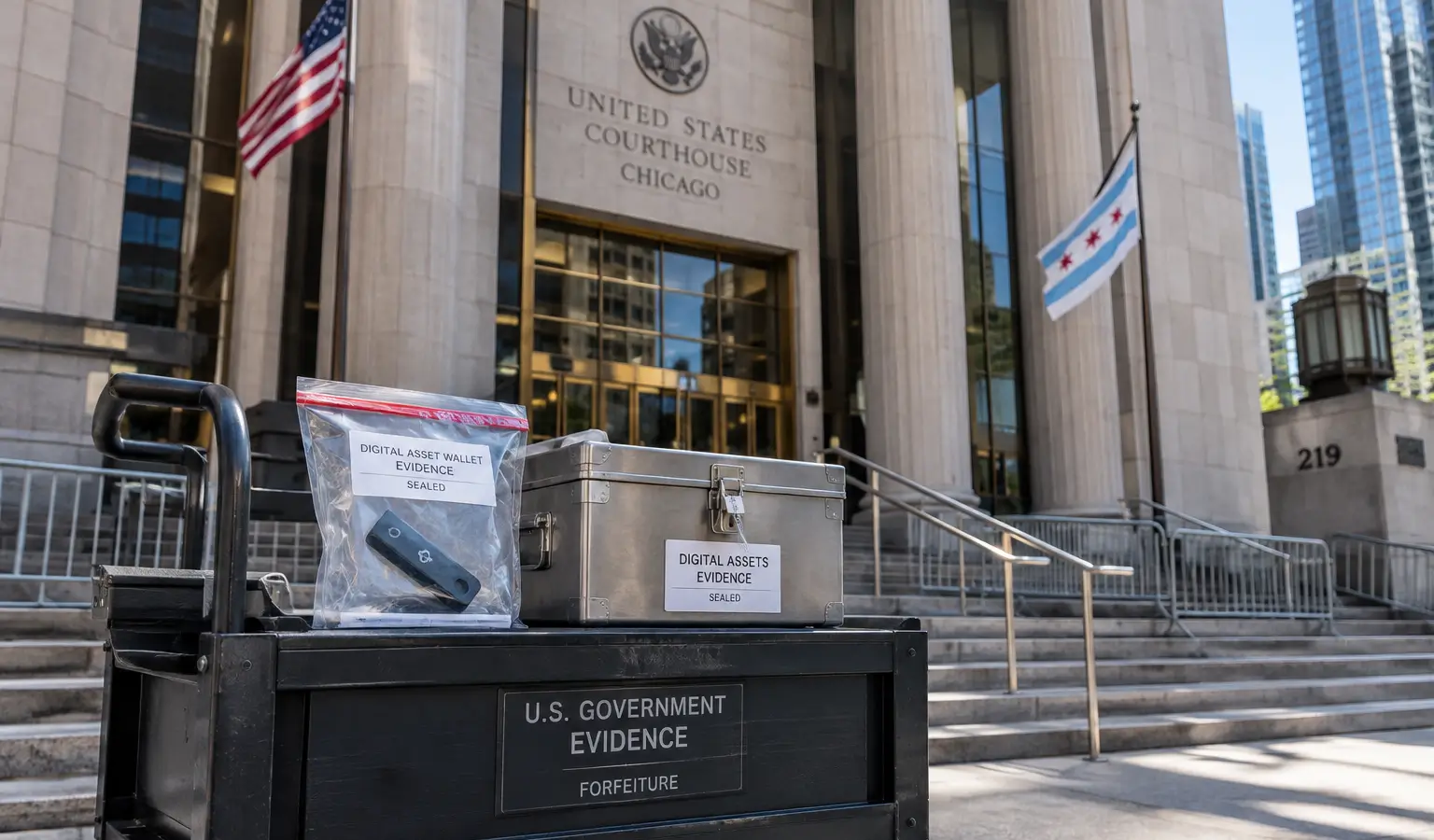
Raheim Hamilton, co-founder of the dark web platform Empire Market, must forfeit 1,230 BTC and was also sentenced to 40 years in prison. The federal judge in Chicago also fined him $5 million (€4.5 million). In addition to Bitcoin, Hamilton is forfeiting 24.4 ETH and three properties.
Millions in Transactions
According to the U.S. Attorney's Office for the Northern District of Illinois, Empire Market operated on a large scale between 2018 and 2020. The platform facilitated more than 4 million drug transactions with a combined value of over $430 million (€384 million). According to prosecutors, nearly $375 million (€335 million) of that came directly from drug trafficking.
According to prosecutors, Hamilton and his co-defendant Thomas Pavey also sold stolen account credentials, personal data, fake coins, and hacking tools. Pavey already pleaded guilty last year in a federal drug case and also gave up 1,584 BTC at the time. He is still set to be sentenced later this month.
Crypto Played a Central Role
The case shows how closely crypto was tied to how Empire Market worked. Buyers had to pay in crypto and were encouraged to use mixing services to hide the flow of funds. Those services make it harder for law enforcement to trace transactions directly, although this case also shows that those trails do not stay invisible.
Empire Market launched in January 2018 and quickly grew into one of the largest English-language darknet marketplaces. After its abrupt shutdown in August 2020, many users and sellers moved to other platforms with a similar setup. For European crypto followers, the case is especially relevant because it shows how authorities see crypto not just as a payment method, but also as evidence in criminal cases involving cybercrime and money laundering. That ties into the broader question of how Bitcoin transactions reveal more than many users think, even when people try to hide their tracks.