FASB Wants Stablecoins Counted as Cash Equivalents
The proposal could simplify the financial statements of companies holding U.S. dollar stablecoins. In doing so, FASB is filling a gap left after the GENIUS Act, which does not cover accounting.
Key Takeaways
- FASB is proposing that certain stablecoins can be booked as cash equivalents.
- That only applies to tokens with liquid reserves, full backing, and dollar redeemability.
- The consultation runs until November 19; after that, FASB will decide whether to move the proposal forward.
The U.S. standard setter FASB has put forward a proposal that could let certain stablecoins fall under the accounting category of cash equivalents. For companies and institutions holding these tokens, that could make financial statement reporting clearer, although this is still only a proposal and not a final rule.
What FASB Is Proposing
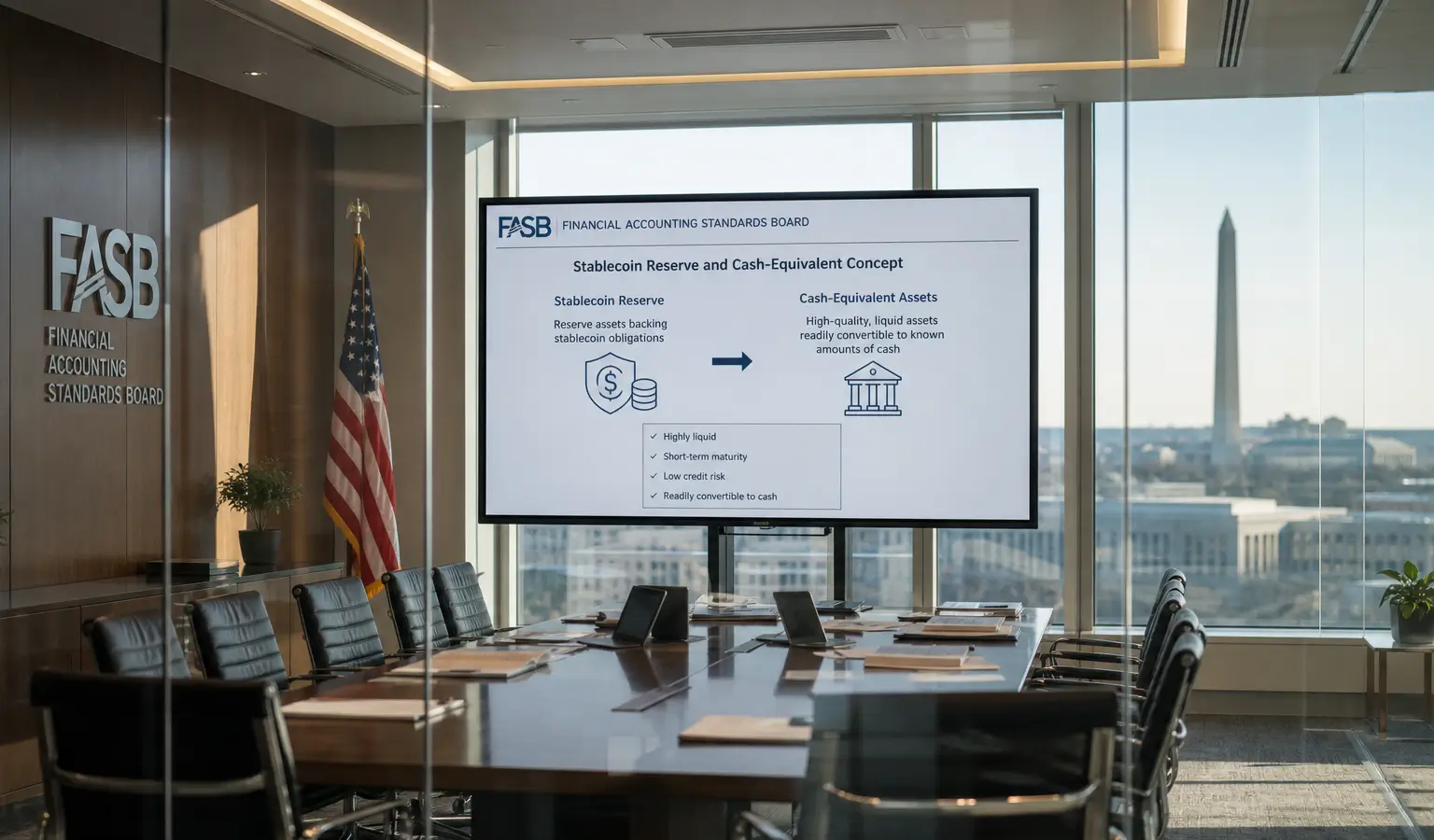
According to FASB, stablecoins with liquid reserves that are at least equal to the number of tokens outstanding, and whose contents are disclosed annually, could be treated as cash equivalents. The tokens must also be redeemable for dollars at any time. In practice, FASB is putting stablecoins in the same category as other highly liquid, cash-like investment instruments such as Treasuries, commercial paper, and money market funds.
The board says the proposed change should use examples to clarify how the existing definition of cash equivalents applies to certain digital assets. FASB wants to prevent the same stablecoin from being booked differently by different parties, depending on how they interpret the rules.
Why This Matters Now
The move fits into a broader effort in which FASB has been working on crypto-specific accounting rules since 2023. The stablecoin debate got extra weight after the GENIUS Act was signed in July 2025, which sets federal rules for stablecoins but says nothing about accounting classification. That is exactly the gap FASB is now trying to fill.
For the crypto market, this matters because accounting rules determine how companies present their balance sheets and cash flow statements. If stablecoins are more often treated as cash equivalents, reporting could become more consistent for companies with large positions in these tokens. That also matters for firms like Coinbase and Circle, where the accounting treatment of USDC directly affects how stablecoin revenue and reserves are presented. FASB has opened the consultation until November 19, after which it will become clear whether the proposal moves forward.