FBI Chief Patel Reported MSTR Purchase Late
Patel bought Strategy shares while the FBI was investigating crypto fraud, and the late filing is fueling questions about conflicts of interest tied to the Bitcoin company.
Key Takeaways
- FBI Director Kash Patel reported a Strategy purchase of $100,001 to $250,000 only months after the trade.
- Under the STOCK Act, senior officials have to disclose individual stock trades above $1,000 within 45 days.
- The late filing stands out because Strategy is a major Bitcoin company and Patel leads the FBI, which raises conflict of interest questions.
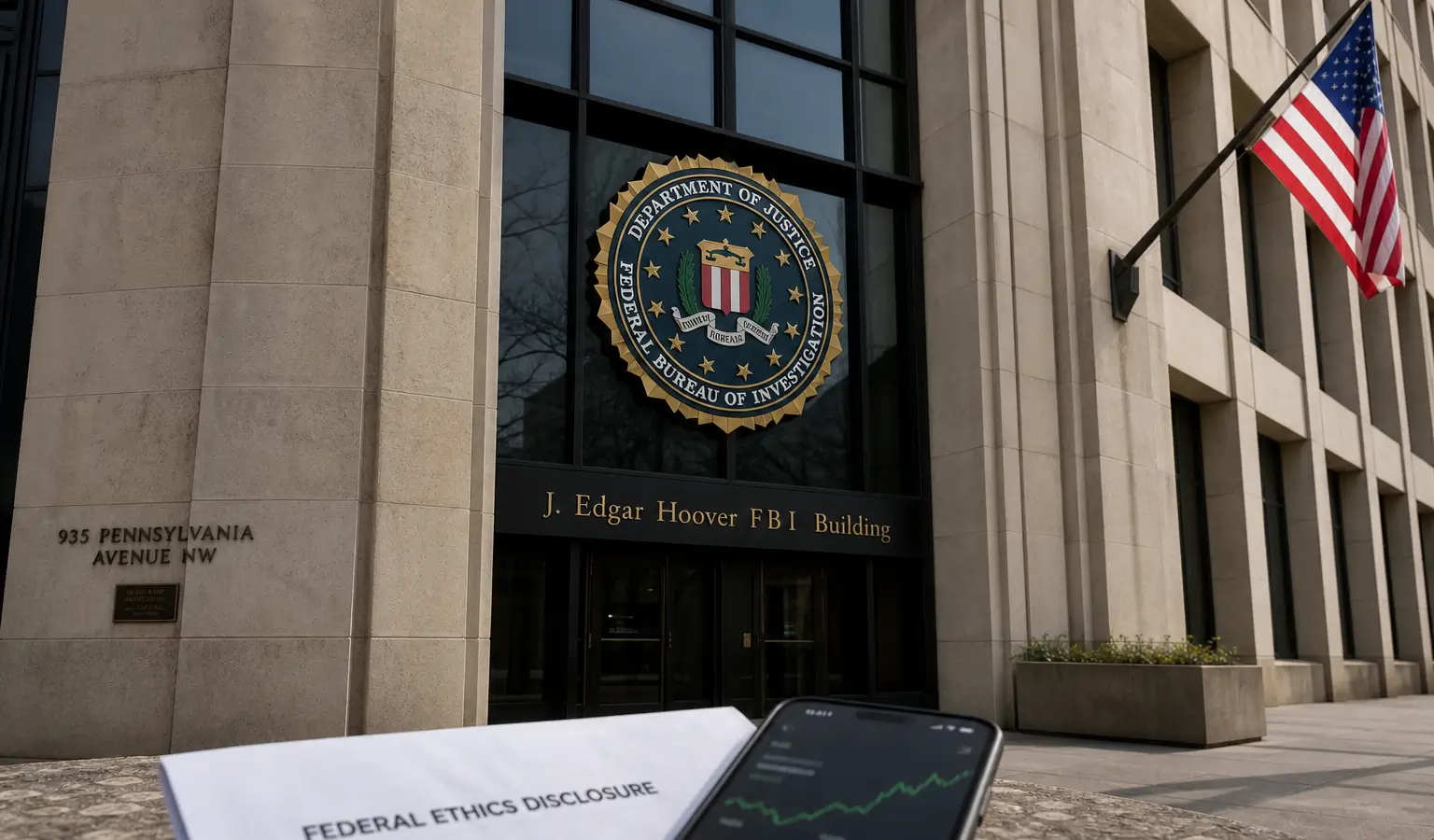
FBI Director Kash Patel failed to disclose a Strategy stock purchase in the $100,001 (€87,900) to $250,000 (€219,600) range on time. A NOTUS report says Patel bought the shares on Nov. 21, but the required filing was not submitted until May 26. The delay draws even more attention because Strategy, the world’s largest publicly traded Bitcoin company, is a major name in the crypto market.
Delay Around the Required Filing
Patel reportedly said the missed disclosure came down to a miscommunication. He told the Office of Government Ethics that he had "inadvertently omitted" the purchase. Under the STOCK Act, senior executive branch officials must disclose individual stock trades above $1,000 (€879) within 45 days.
That deadline was missed by a wide margin in this case. An FBI official later said the Department of Justice did not fine Patel, and the filing has since been amended and approved. Still, the late correction is part of what has drawn criticism, since the law is meant to surface possible conflicts of interest quickly.
Why Strategy Is Extra Sensitive
The timing makes this more politically charged than a routine paperwork error. Strategy, which adopted that name in February 2025 and was previously known as MicroStrategy, calls itself a Bitcoin Treasury Company and, based on available figures, holds 847,363 BTC on its balance sheet, worth more than $50 billion (€43.9 billion). The company has also done millions of dollars in business with the Department of Justice over the years, which has added to watchdog scrutiny.
Patel’s position also raises the stakes. As FBI director, he oversees an agency that is actively investigating crypto scams and fraudulent investment schemes. That makes a personal stake in a major Bitcoin company especially sensitive in the broader debate over ethics and conflicts of interest.
Debate Over Rules for Public Officials
The backlash against Patel fits into a larger Washington fight over whether senior federal officials should be allowed to own individual stocks. Dylan Hedtler-Gaudette of the Project on Government Oversight told NOTUS the late filing violated the law and renewed his call for a ban on trading individual stocks by federal officials.
For European crypto readers, the case matters because it shows how tightly Bitcoin and public companies like Strategy are now linked to politics and regulation in the United States. Cases like this can also influence how regulators draw the line between public service, personal investing, and the wider crypto industry.