FBI Holds Quiet Crypto Crime Symposium With Chainalysis and TRM Labs
The San Antonio gathering brought together the FBI, FinCEN, and forensic firms to discuss fraud, hacks, and sanctions risks. Stablecoin compliance and North Korean activity were also on the agenda.
Key Takeaways
- The FBI held another closed-door meeting in San Antonio about crypto crime with investigators, law enforcement, and security specialists.
- The event covered fraud, hacks, sanctions risks, cartels, terror financing, and other crimes involving virtual assets.
- Attendees included Chainalysis, TRM Labs, Predicate, SEAL, and FinCEN, with a focus on tracking and information sharing.
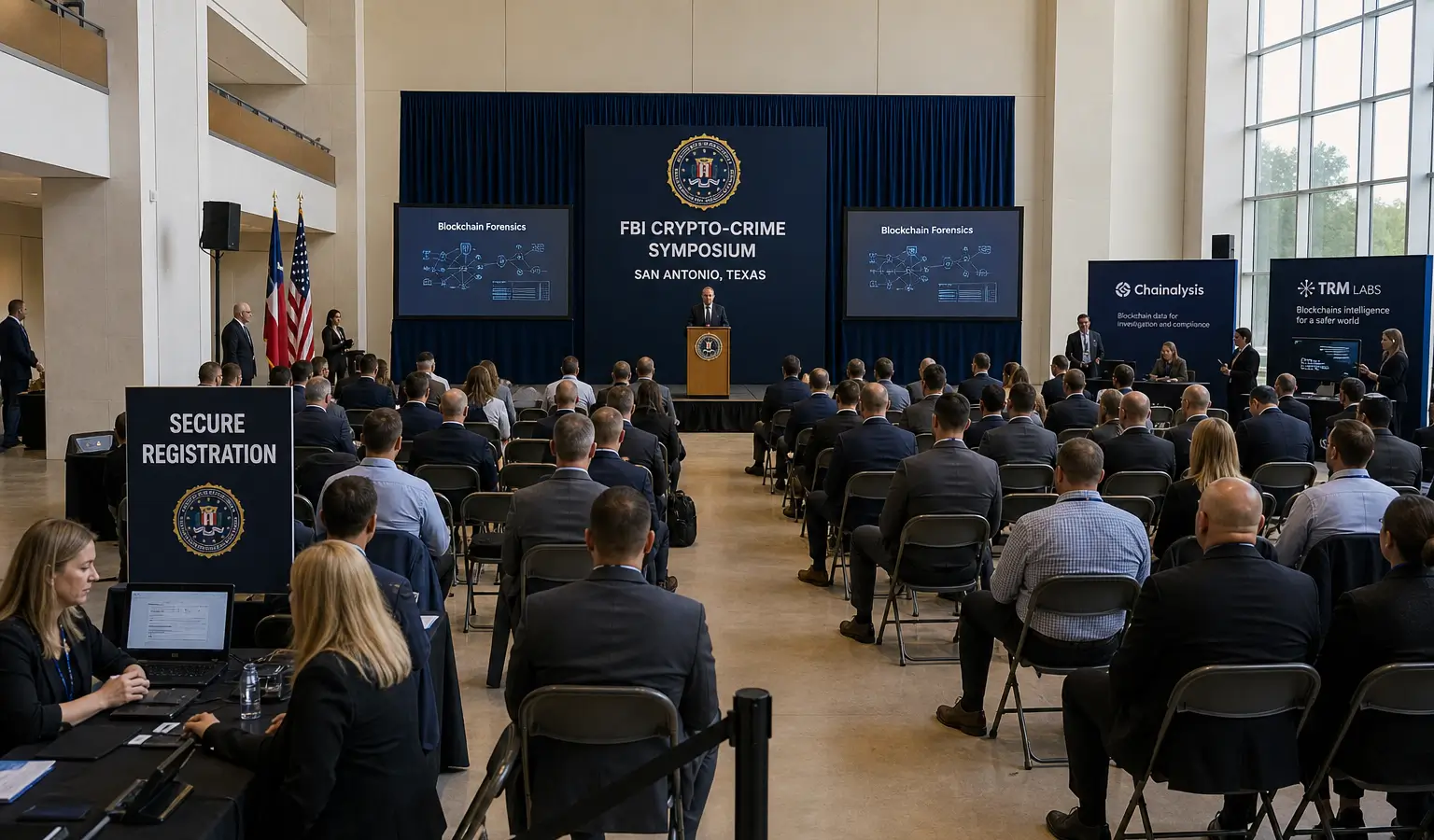
The FBI quietly held another in-house event about crypto crime. During the Virtual Asset Technical Exchange in San Antonio, investigators, foreign law enforcement, and crypto security specialists talked about fraud, hacks, sanctions risks, and other crimes involving crypto.
Closed-Door Meeting
The event, formerly known as the Virtual Currency Symposium, was an invitation-only gathering with about 50 private-sector companies and partners, according to three previous attendees. In total, attendance reached into the hundreds. The format was clearly different from major crypto conferences: there were keynotes, panels, fireside chats, and demos, but the focus was on tracking and information sharing.
According to the sources, attendees also included blockchain forensics firms such as Chainalysis and TRM Labs. TRM confirmed it was there, while the FBI and Chainalysis did not comment. Predicate, a provider of compliance infrastructure for blockchain products, said co-founder and CEO Nikhil Raghuveera gave a presentation on stablecoin compliance and GENIUS. Representatives from SEAL and FinCEN were also present.
Focus on Abuse
The talks covered the use of virtual assets by cartels and in terror financing, as well as cyber fraud, scams, child exploitation, human trafficking, and violent crimes, including so-called wrench attacks. According to one source familiar with the event, new hacks, North Korean activity, and ways to share intelligence better were also discussed.
One attendee summed it up bluntly: this is not a crypto event, but a law enforcement meeting for people who work in investigations. The mood is less about market development and more about active threats, investigative methods, and cases that can lead to arrests and seizures.
Why It Matters
For European crypto followers, this shows how seriously U.S. law enforcement treats crypto crime. In February 2022, the FBI already set up a Virtual Assets Unit to track illegal money flows and bring teams from different departments together. That fits into a broader trend where fraud, sanctions evasion, and cybercrime are increasingly moving through crypto.
That context matters because forensic firms, compliance providers, and regulators are increasingly working the same cases together. In 2025, the use of crypto by sanctioned parties rose sharply according to Chainalysis, adding even more pressure on law enforcement and monitoring.
Recent North Korean activity also shows why that cooperation remains urgent: the FBI linked that campaign to thousands of affected wallets and millions in stolen crypto.