XRP Ledger Restarts Upgrade for Shared Payment Rights
The feature is meant to give banks, brokers, and stablecoin issuers more separated permissions after an earlier mistake in the activation process. The upgrade could go live on October 5 if validators agree.
Key Takeaways
- XRP Ledger may activate PermissionDelegationV1_1 on October 5 for shared payment rights and limited access rights.
- The upgrade lets a main account split up tasks without giving away full control, with up to ten permissions per delegate.
- The first version was withdrawn after a critical bug; the fix is in xrpld 3.3.0.
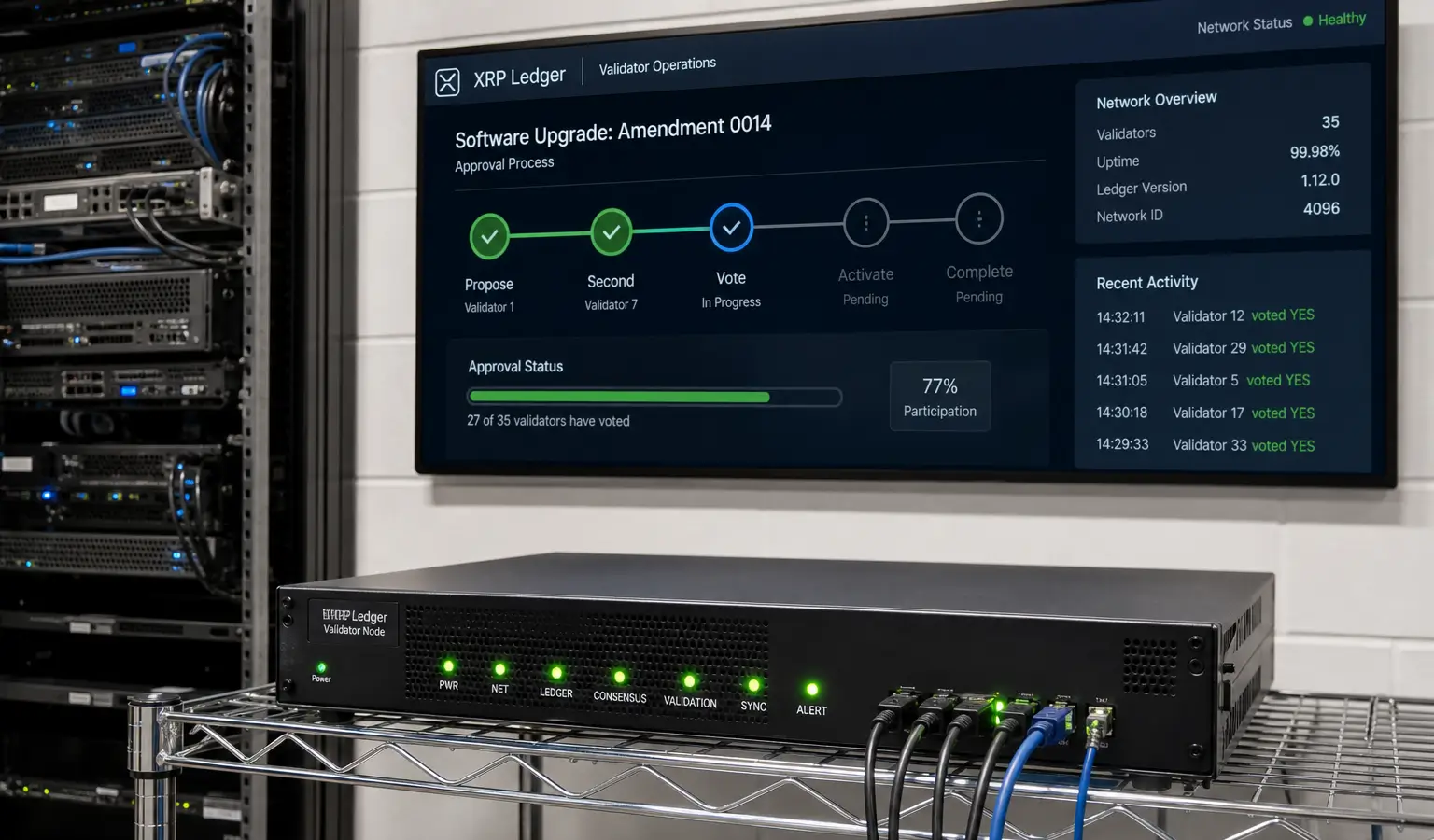
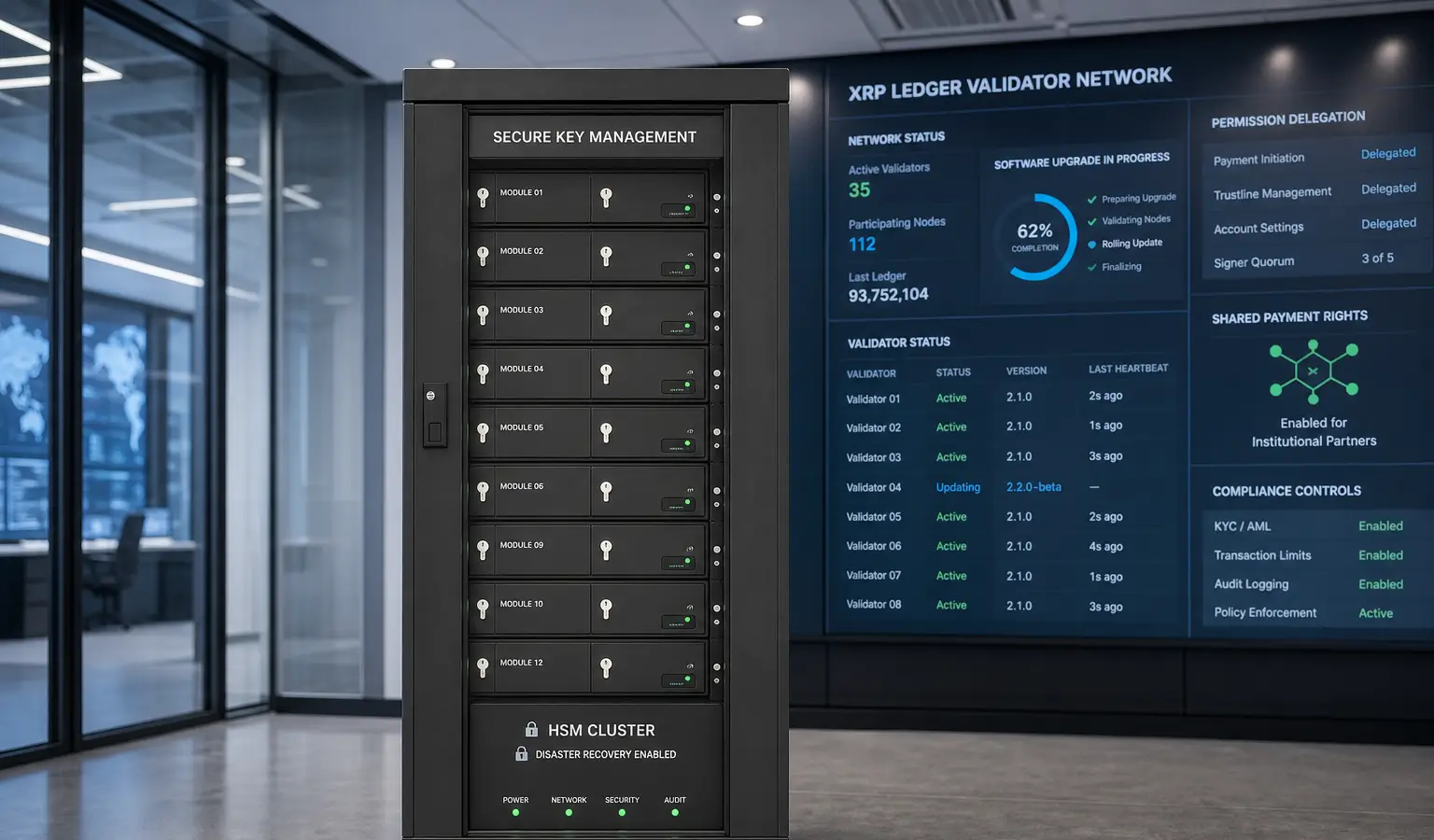
XRP Ledger is once again moving toward shared access rights for businesses. The upgrade PermissionDelegationV1_1 has been in an activation period since September 21 and could go live on October 5 at 11:18 UTC if validator support stays strong. The feature is meant to make it possible to split up payment and compliance tasks without giving away full control over an account.
What the Upgrade Does
With PermissionDelegationV1_1, a main account can give another account limited rights. For example, a stablecoin issuer could let an online compliance system approve which customers are allowed to hold its token, while the keys with full control stay offline.
A separate operations account can also make payments without getting the power to expand those rights further or take over the main account. According to the documentation, a delegate can get up to 10 permissions, which can later be changed or revoked.
Second Attempt After Bug
This is the second attempt to activate the feature. The first version was pulled after a critical bug was found that could have caused an unauthorized transaction to still charge fees to another account.
The bug was in the order of checks: first the system looked at whether an account had permission, and only after that did it verify the signature. Because of that, failed transactions could still cost a fee in some cases, which in the worst case could have drained XRP from a victim. The fix is in xrpld 3.3.0, the software that XRP Ledger nodes run on.
Why This Matters
For European crypto readers, this is especially relevant because the upgrade fits better with how regulated players want to use crypto. Banks, brokers, and stablecoin issuers often need separate roles for payments, customer onboarding, and compliance, without one party having to manage all the keys right away.
The timing also matters for the broader XRP ecosystem. XRP Ledger has already activated a permissioned DEX, which shows the network is adding more features for controlled on-chain activity alongside the open use of the mainchain. The recent return of withdrawn XRPL features also shows that developers are once again working on features that should give institutions more control and flexibility.