Goldman Sachs Backs CLARITY Act Despite Bank Pushback
Goldman sees the CLARITY Act as a step toward clearer crypto oversight in the U.S., but the fight over stablecoin yield and the roles of the SEC and CFTC is still far from settled.
Key Takeaways
- Goldman Sachs CEO David Solomon supports the CLARITY Act as a move toward clearer and more stable U.S. crypto oversight.
- Banks like JPMorgan are pushing back on stablecoin language, especially around yield and the risk of competing with bank deposits.
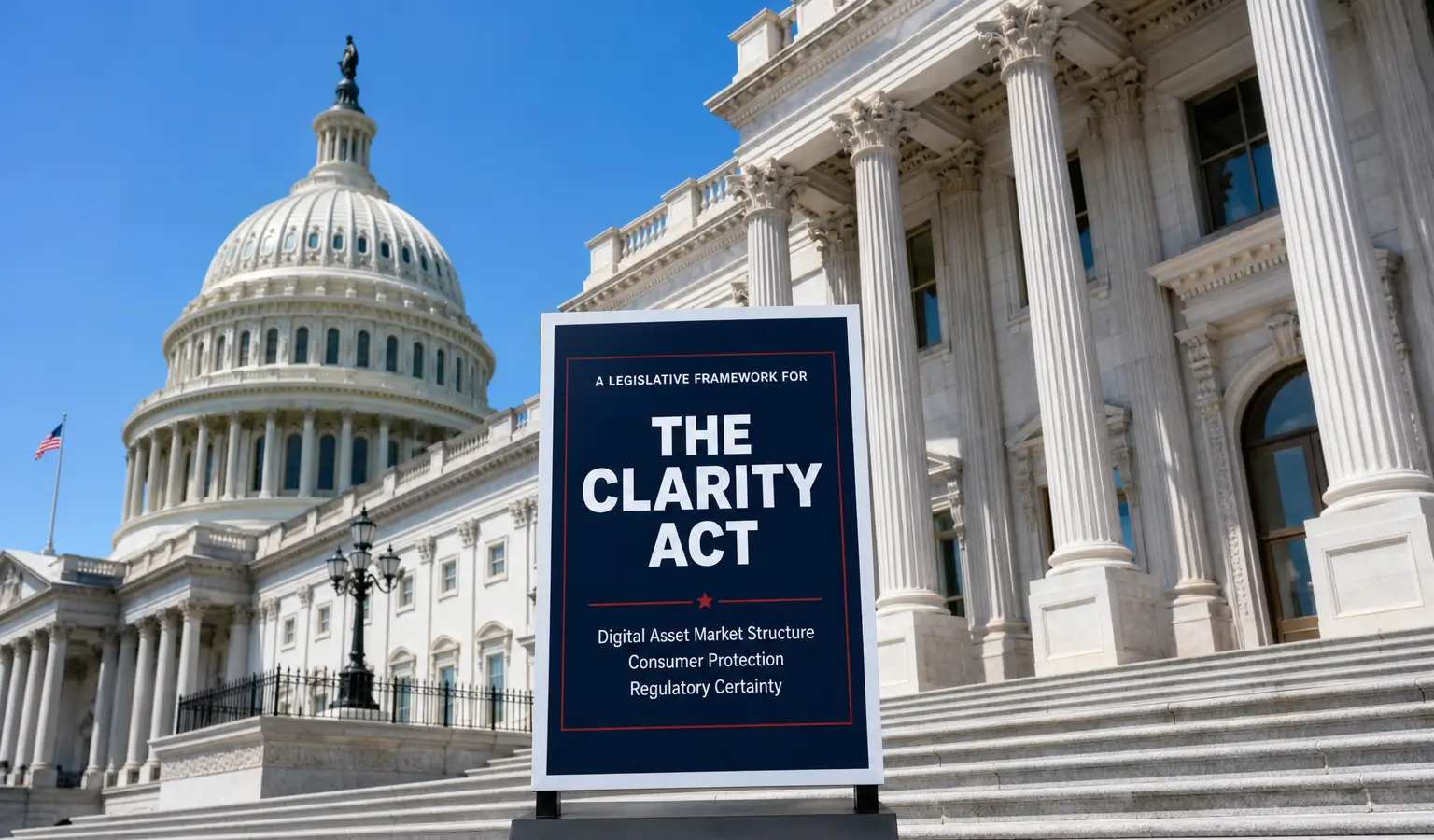
- The CLARITY Act is designed to create a federal framework for digital assets and spell out the roles of the SEC and CFTC more clearly.
Goldman Sachs CEO David Solomon has voiced support for the CLARITY Act, the U.S. bill aimed at bringing more structure to crypto oversight. He said the proposal could help level the playing field and add stability to the market, even as parts of Wall Street continue to oppose key stablecoin provisions.
Solomon Chooses Clarity
In an interview with Politico, Solomon said the bill is far from perfect, but still worth backing if it helps move the industry toward a more workable framework. He argued that the CLARITY Act could help set the foundation for market structure, allowing innovation to continue without constant uncertainty around rules.
Goldman Sachs’ position stands out because other major bank leaders are warning that the proposal could tilt the playing field. The most sensitive issue is stablecoin yield: banks fear crypto firms could offer products that function a lot like bank deposits, but without facing the same regulatory requirements.
Stablecoin Yield Remains a Sticking Point
That issue is now one of the main flashpoints in the talks around the bill. JPMorgan CEO Jamie Dimon said earlier that he opposes the latest version of the proposal because, in his view, it would allow crypto companies to effectively pay interest on stablecoins or similar products without enough safeguards.
JPMorgan also said in June that crypto legislation should close loopholes instead of opening new ones. Coinbase CEO Brian Armstrong pushed back, saying banks are trying to restrict stablecoin rewards because they threaten the traditional deposit business.
What the Bill Is Supposed to Do
The CLARITY Act, formally the Digital Asset Market Clarity Act of 2025, is intended to create a federal framework for digital assets in the United States. It also lays out the responsibilities of the Securities and Exchange Commission and the Commodity Futures Trading Commission more clearly, including rules for digital commodities, securities, stablecoin issuers, and consumer protection.
For European crypto readers, the bigger point is that the U.S. debate shows how much friction still exists between traditional banks and crypto companies once yield, deposit creation, and oversight enter the picture. If the Senate does vote on the text next week, it could also influence the broader conversation around market structure and stablecoin rules beyond the U.S. Political talks over the bill had already run into trouble earlier over ethics and oversight, as also shown in the Senate debate.