High U.S. Auction Yield Puts Bitcoin Under Pressure
Weak demand for U.S. Treasuries is pushing long-term yields higher, while Bitcoin remains sensitive to Fed rate policy and its correlation with risk assets.
Key Takeaways
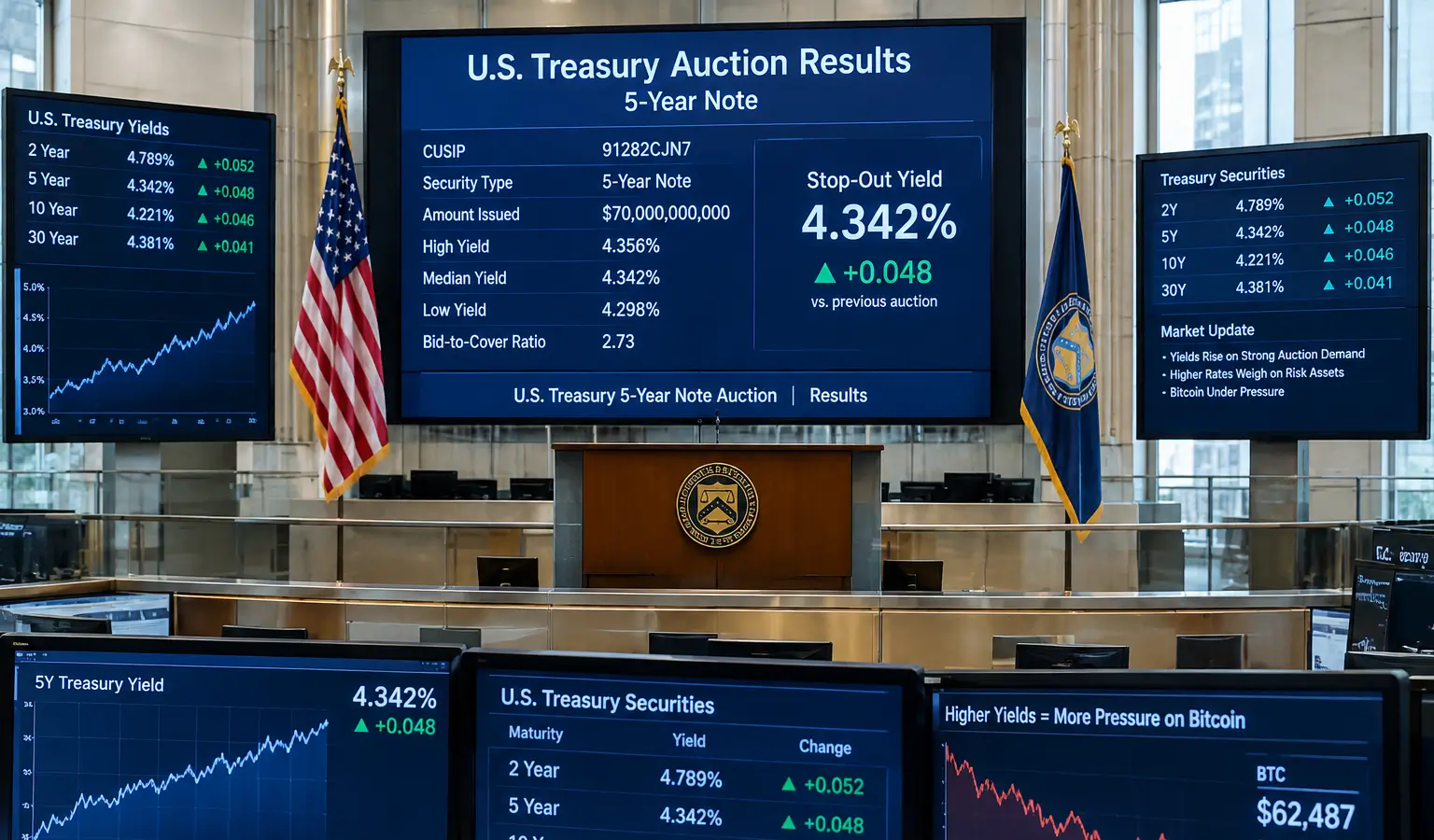
- The U.S. Treasury paid the highest yield on a 5-year note since June 2006 on Wednesday.
- Demand for the $70 billion auction was weak, with a bid-to-cover ratio of 2.212 and less participation from indirect bidders.
- Rising U.S. yields and possible additional rate hikes are putting Bitcoin under pressure, because the coin is sensitive to risk appetite.
The U.S. Treasury paid the highest yield on a 5-year note since June 2006 on Wednesday. That points to weaker demand for U.S. Treasuries, while yields remain elevated across the board. For Bitcoin, that matters because higher yields reduce the appeal of non-yielding assets.
Weak Demand at the Auction
The $70 billion (€61.3 billion) auction was priced at 5.033%, above the when-issued level of 5.002%, according to Dow Jones. That was also clearly above the 4.393% from the previous auction in August. The bid-to-cover ratio fell to 2.212, the lowest level since December 2018.
Indirect bidders, a group that includes foreign central banks among others, also took less. They bought 54.3% of the issue, compared with 61.5% at the previous auction. That was the lowest share since March 2020.
Yields Keep Rising
The pressure was not limited to the 5-year yield. The 10-year yield rose to 5.12% on Wednesday, the highest level since 2007, while the 30-year yield touched 5.37%. Earlier this month, the 30-year yield had already reached 5.26%, a cycle high that lined up with a weaker week for Bitcoin.
Flash data also showed economic activity speeding up to its fastest pace since July 2021. Fed Governor Michael Barr said Wednesday that more rate hikes are still needed to bring inflation down. Traders are now pricing in a 70% chance of a rate hike in October.
Why This Matters for Bitcoin
Bitcoin is increasingly moving with tech stocks, which makes it more sensitive to changes in interest rate policy. The coin had already fallen below $84,000 (€73,600) after a separate strong inflation reading pushed the 10-year yield above 5%. On September 23, Bitcoin was trading around $84,441 (€74,000), after a daily range between $83,654 (€73,300) and $87,251 (€76,500).
That also makes the bond market relevant for European crypto readers. If long-term yields keep climbing, they could continue setting the tone for the crypto market, especially since Bitcoin’s correlation with other risk assets often increases in those periods. Earlier moves above 5% also showed how quickly higher Treasury yields can weigh on the price.