Hong Kong Banks Score 2.3 on Quantum Readiness
The HKMA is warning about post-quantum risks and wants to prepare banks for new cryptography standards through a toolkit and workshops.
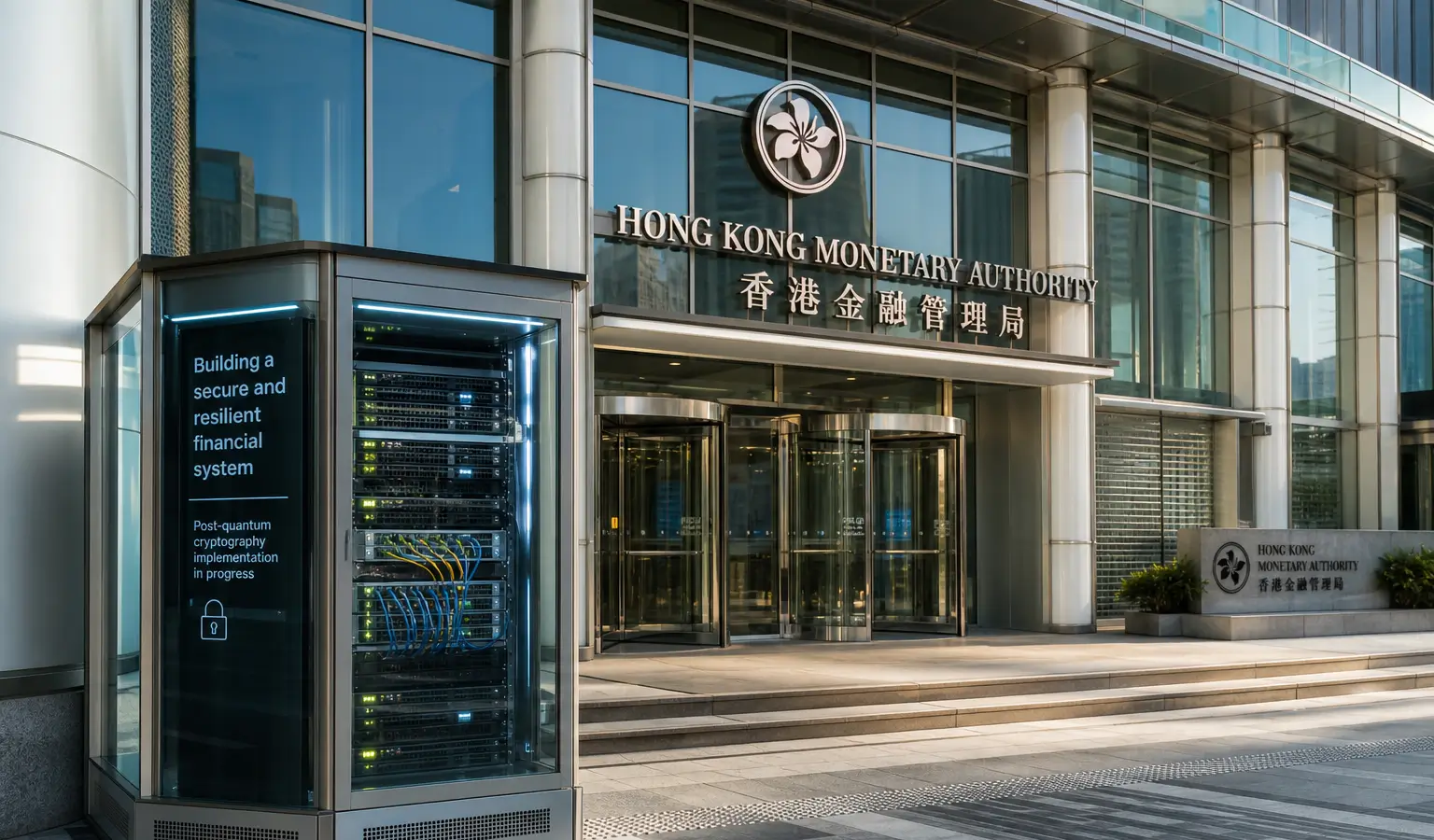
Key Takeaways
- Hong Kong banks score an average of 2.3 out of 10 on the HKMA's Quantum Preparedness Index.
- Many banks are still in the awareness stage and have few formal plans for post-quantum cryptography.
- The HKMA warns about harvest now, decrypt later attacks and wants to reach a score of 10 by 2030.
Hong Kong banks are averaging just 2.3 out of 10 on the Quantum Preparedness Index, according to the Hong Kong Monetary Authority (HKMA). The regulator says many lenders are still only at the awareness stage, with limited formal planning or pilot work around post-quantum cryptography. At the same time, quantum computing is emerging as a major long-term threat to the cryptographic systems that support modern finance and crypto.
Why This Matters Now
The HKMA says banks face a real risk from so-called harvest now, decrypt later attacks. In this scenario, attackers can collect encrypted data today and wait to unlock it once quantum hardware becomes strong enough. That threat is not limited to banks. It also extends to blockchains like Bitcoin and Ethereum, which depend on the same underlying cryptography.
The regulator wants to lift that score to 10 by 2030, and it is already moving on practical steps. Working with the business school at the Hong Kong University of Science and Technology, the HKMA is building a toolkit for post-quantum cryptography and running workshops to help banks improve crypto agility and prepare for new standards.
From Awareness to Action
The warning also reflects a wider global debate over when quantum computing will become powerful enough to threaten existing security systems. Machines capable of breaking bank defenses or blockchains do not exist yet, but some estimates put that timeline as early as 2029.
Momentum is building outside Hong Kong as well, with governments under pressure to update systems before that risk becomes real. In the United States, President Donald Trump recently signed two executive orders, one aimed at accelerating quantum computing development and another pushing the federal shift to post-quantum cryptography toward 2030-31. One example of this kind of preparation is quantum-safe certification, where regulators are already setting standards for systems that handle sensitive data.