IMF Warns Tokenized Assets Will Stay Small Without Legal Clarity
The IMF says unclear ownership rights and settlement rules are holding back tokenized assets. Even with billions in RWAs and rising attention in Europe and the U.S., the market remains fragmented.
Key Takeaways
- The IMF says tokenized assets will remain a niche unless ownership, settlement, and jurisdiction are legally clear.
- Tobias Adrian says that framework will determine whether tokenization becomes a core part of finance or stays on the sidelines, since final ownership and irreversible transactions are essential.
- BeInCrypto estimates the tokenized real-world assets market at about $60 billion, but 97 percent of it is either unavailable to U.S. retail investors or does not have retail-ready regulation.
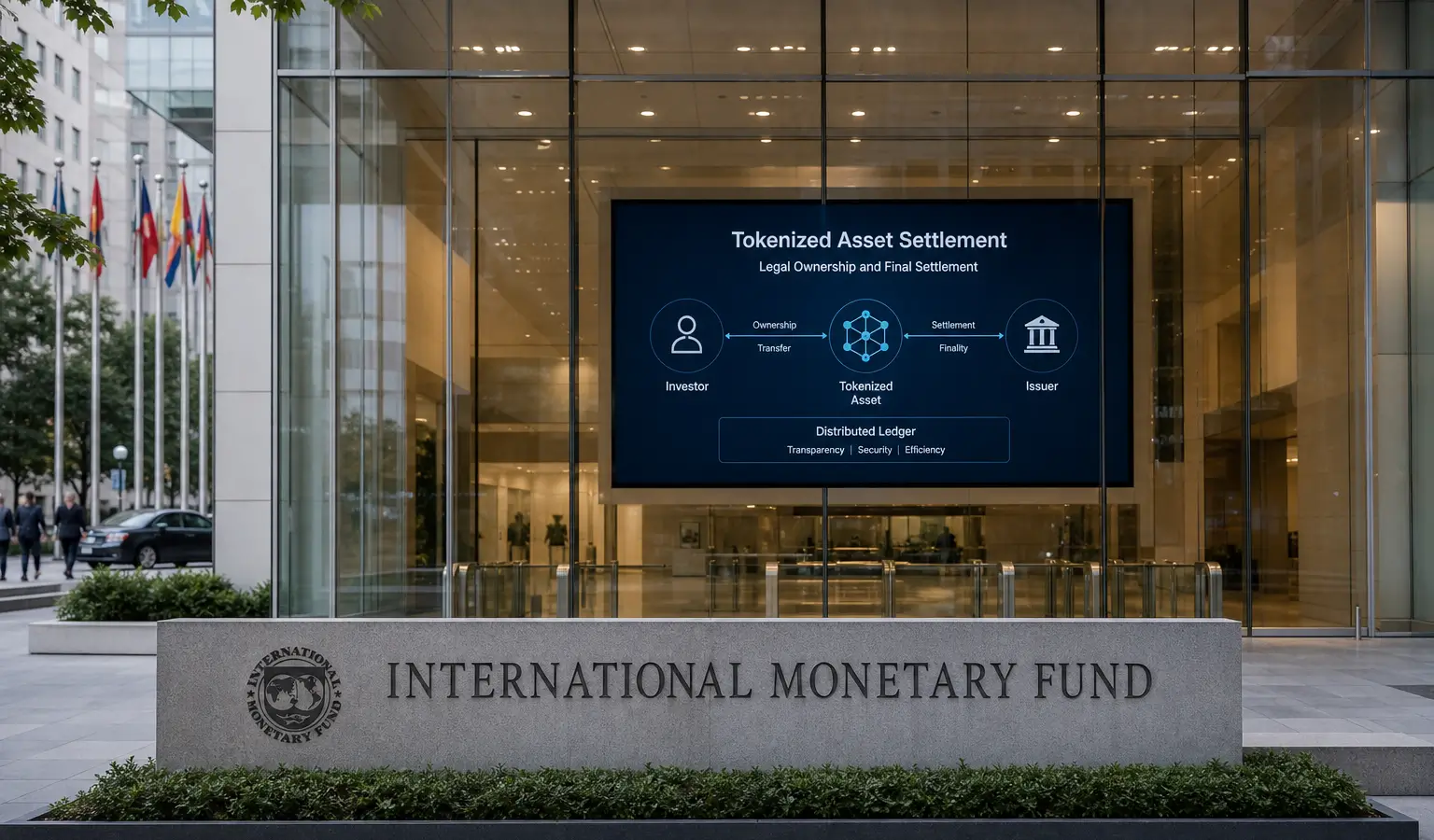
The International Monetary Fund (IMF) says tokenized assets are likely to stay on the fringes of finance until the legal picture around ownership and final settlement becomes much clearer. In the IMF’s view, tokenization is more than a technical upgrade. It is a deeper change to how financial markets are built.
Ownership Is Still the Bottleneck
IMF official Tobias Adrian, who serves as financial advisor and director of the Monetary and Capital Markets Department, says tokenization will only matter at scale if rules around ownership, settlement, and jurisdiction are clearly defined. The central issue, he says, is whether tokenized records actually reflect final ownership or simply sit as an extra administrative layer on top of existing claims.
The IMF argues that this legal foundation is essential because tokenization can only expand if market participants know which rules apply and when a transaction is truly irreversible. Without that clarity, the market remains split into separate pieces, even if the technology itself keeps improving.
The Market Is Already Fragmented
Fresh data from BeInCrypto’s Real State of Tokenization in 2026 report shows how divided the market already is. The report puts the tokenized real-world assets market at about $60 billion (€52.6 billion) as of May 31, excluding stablecoins and repurchase agreements. Even so, roughly 97 percent of that value is either out of reach for U.S. retail investors or lacks regulation that is ready for retail use.
In other words, tokenization is still not one single market. It is a collection of separate segments shaped by geography, regulation, and investor type. Only $1.7 billion (€1.5 billion) is available to retail buyers, while accredited U.S. investors can access about $8.3 billion (€7.3 billion), including products under Regulation D.
How that exposure is structured also differs widely. Some tokens represent direct ownership, others stand for fund shares, and some only provide synthetic exposure. That distinction matters most in stocks, where 59 percent of all stock tokens by count offer synthetic price exposure rather than actual shareholder ownership.
The same debate is now unfolding in the United States, where regulators and market participants are still trying to build a workable framework for tokenized securities. That conversation includes the SEC’s temporary exemption under consideration for securities tokenization, which is designed to test new models in practice first.
Why This Matters for Europe
For European crypto and investing platforms, the takeaway is simple: tokenization can only scale if legal frameworks, settlement rules, and oversight become more aligned across markets. The IMF also points to the need for clear policy rules, reliable settlement assets, strong code management, and international coordination. For firms building tokenized investment products, those factors could decide how quickly the sector moves beyond a narrow niche.