

Injective Asks SEC to Allow Tokenized Stocks With Order Books Too
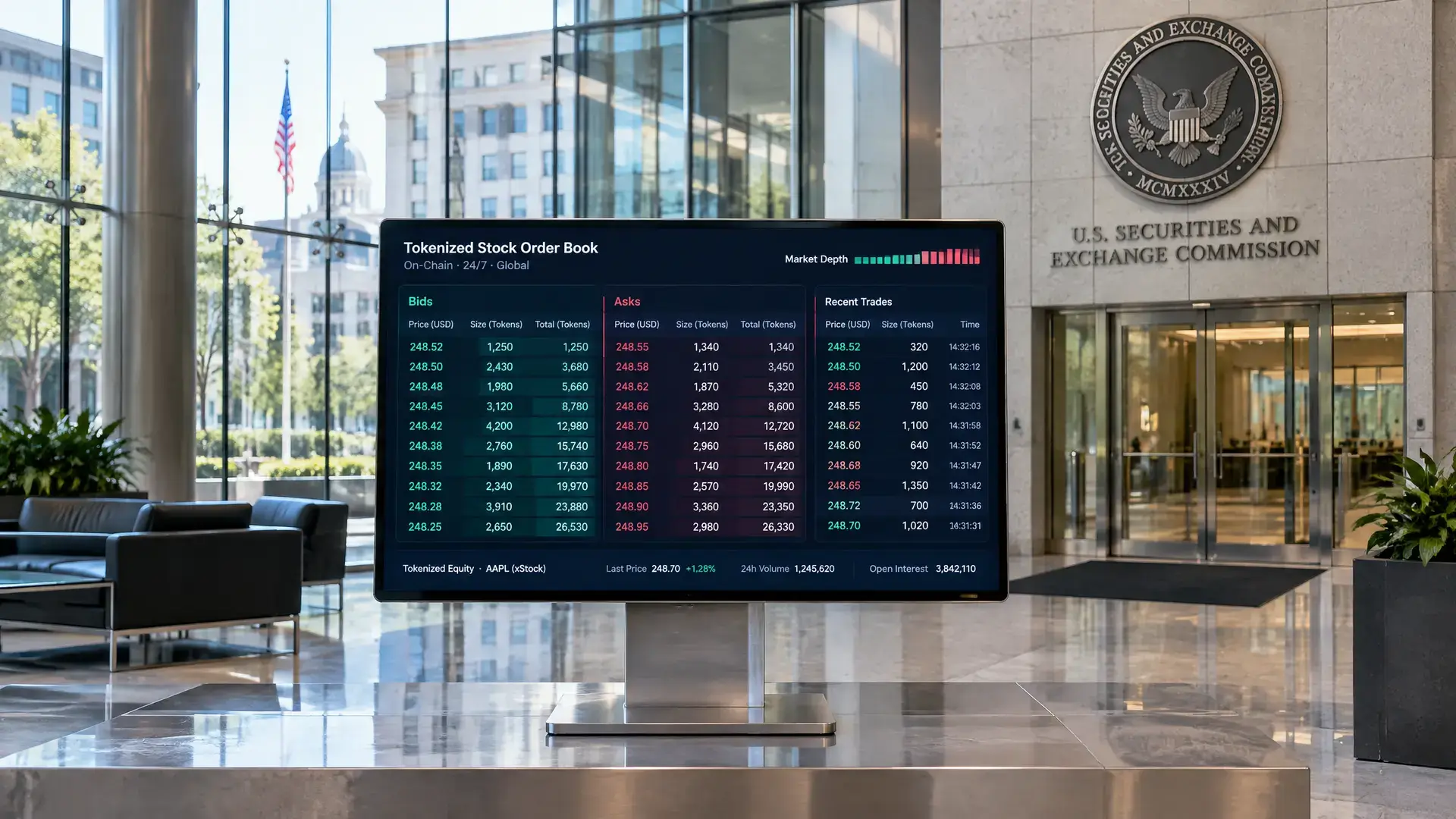
Injective wants the SEC to allow tokenized U.S. stocks not just through liquidity pools, but also through blockchain order books. The debate touches on the Innovation Exemption and market surveillance rules.
Key Takeaways
- Injective Labs is asking the SEC to allow tokenized stocks through blockchain order books under the Innovation Exemption as well.
- According to Injective, the current setup mainly favors AMMs and liquidity pools, while order books offer clearer prices and more investor protection.
- The SEC is reviewing the temporary framework for tokenized stocks, which could later be made permanent.
Injective Labs has asked the U.S. market watchdog SEC to broaden the rules for tokenized stocks. The crypto company wants not only liquidity pools to fall under the Innovation Exemption, but also order-book platforms that run on blockchain.
What Injective Wants
In a filing from November 23, Injective says the current setup mainly favors AMMs. These are systems that process transactions through pools of assets, while an order book lets buyers and sellers trade at specific prices. According to Injective, that puts platforms with its technology at a disadvantage, while an order book can offer clearer prices and more protection against market manipulation.
The company says the SEC already allows certain blockchain platforms to trade tokenized U.S. stocks under the Innovation Exemption without registering as a national securities exchange. Injective wants that exception to depend not on one matching method, but on the platform’s own features and safeguards.
Rules for Tokenized Stocks
The SEC introduced the Innovation Exemption on September 17, 2026, as a temporary framework. The measure gives certain tokenized securities venues and liquidity providers room, under specific conditions, to trade tokenized NMS stocks with AMMs and liquidity pools, without registering as a national securities exchange or ATS. The regulator has also asked for public feedback on possible changes and on whether the exemption should later become permanent.
Injective says its proposal fits that idea of technology-neutral rules. The company also points to extra safeguards, such as monitoring for market manipulation, rules against matching your own orders, price limits, and a mechanism to pause trading if the underlying stocks are suspended.
Why This Matters
For European crypto followers, this is especially interesting because it shows how far the debate over tokenized stocks has already moved. The question is no longer just whether stocks can be traded on blockchain, but also what kind of trading model will be allowed for them. If the SEC changes the rules, it could affect how quickly more companies bring these kinds of products to market.
The SEC’s earlier rule for tokenized stocks also shows that the regulator has already set up a framework, but the exact details are still very much up for debate.