SEC Opens the Door for Tokenized Stocks on the Blockchain
The exemption applies to approved parties and could change settlement and costs in stock trading. For Europe, the big question is how blockchain keeps pushing further into regulated markets.
Key Takeaways
- The SEC is temporarily allowing tokenized versions of U.S. stocks on blockchain-based venues without exchange registration.
- The rule only applies to approved participants, comes with limits, and expires after five years.
- Executives expect fewer middlemen, lower costs, and changes in settlement, not in the visible investor experience.
The SEC has given tokenized stocks more room to operate for now, and two executives think that could eventually reshape Wall Street’s trading infrastructure in a big way. Janus Henderson CEO Nick Cherney and Gabor Gurbacs of tokenization platform Openassets see this mostly as a shift happening behind the scenes, while investors on the front end may barely notice a difference.
What the SEC Allows
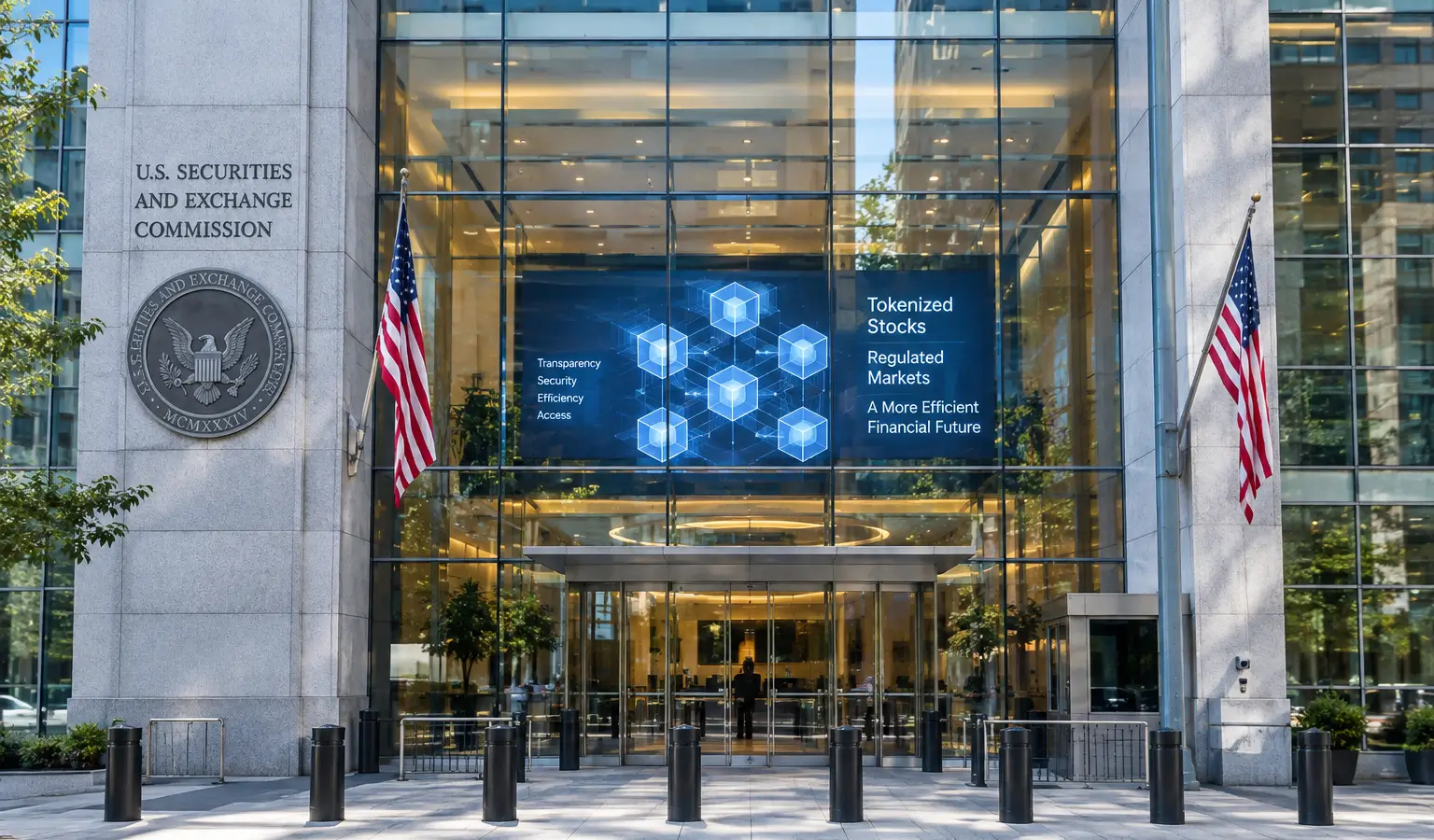
The SEC order from September 17 lets blockchain-based venues trade tokenized versions of listed U.S. stocks without registering as an exchange. According to the regulator, each token must carry the same rights as the stock it represents.
The exemption only applies to approved participants and includes limits on symbols and volume. Issuers can also object before a venue lists tokens created by outside parties. The rule is temporary and expires after five years.
The new room to operate fits under the SEC’s Innovation Exemption, which took effect on September 17, 2026, and is meant as a temporary, conditional easing of the rules. The regulator wants time to observe the market and possibly create permanent rules later.
Fewer Links in the Trading Chain
Gurbacs said a stock purchase now goes through about nine middlemen. He expects tokenization could cut that down by six or seven steps. According to him, new rules for transfer agents, which keep track of who owns a stock, could make that possible.
For investors, the process on the front end will probably stay mostly the same, he said. The change is mainly in settlement and costs under the hood. Cherney agreed and said the existing brokerage model could shift to a blockchain with very little visible change.
Cherney did stress that cost savings alone probably won’t be enough to drive broad adoption, since U.S. markets are already efficient. He also pointed to new use cases, like paying rent with an S&P 500 fund. Still, his view was clear: “we see it as an inevitability”.
Why This Matters for Europe
For European crypto readers, this matters because the SEC is not just talking about crypto here, but also about the foundation of stock trading. The move shows how blockchain is being tested more and more in regulated financial markets, instead of only in the crypto sector itself.
The size of the market makes that even more interesting. Janus Henderson’s largest tokenized fund, sold offshore to institutions, ranged between $500 million (€440 million) and $1 billion (€0.9 billion), while the asset manager’s flagship ETF manages about $30 billion (€26.4 billion). Gurbacs contrasted that with tokenized assets, including stablecoins, which are still below $500 billion (€440 million), compared with about $24 trillion (€21.1 trillion) in global ETFs.
The broader market structure is also shifting: the SEC previously gave tokenized securities venues five years to operate without traditional exchange registration, opening the door for more experiments with tokenized stocks and funds.