IRS Warns About Fake Letters on Crypto Taxes
The IRS is seeing a new wave of phishing through paper letters with QR codes and a fake portal. Coinbase and DarkTower link the campaign to crypto holders and a lookalike domain in Hong Kong.
Key Takeaways
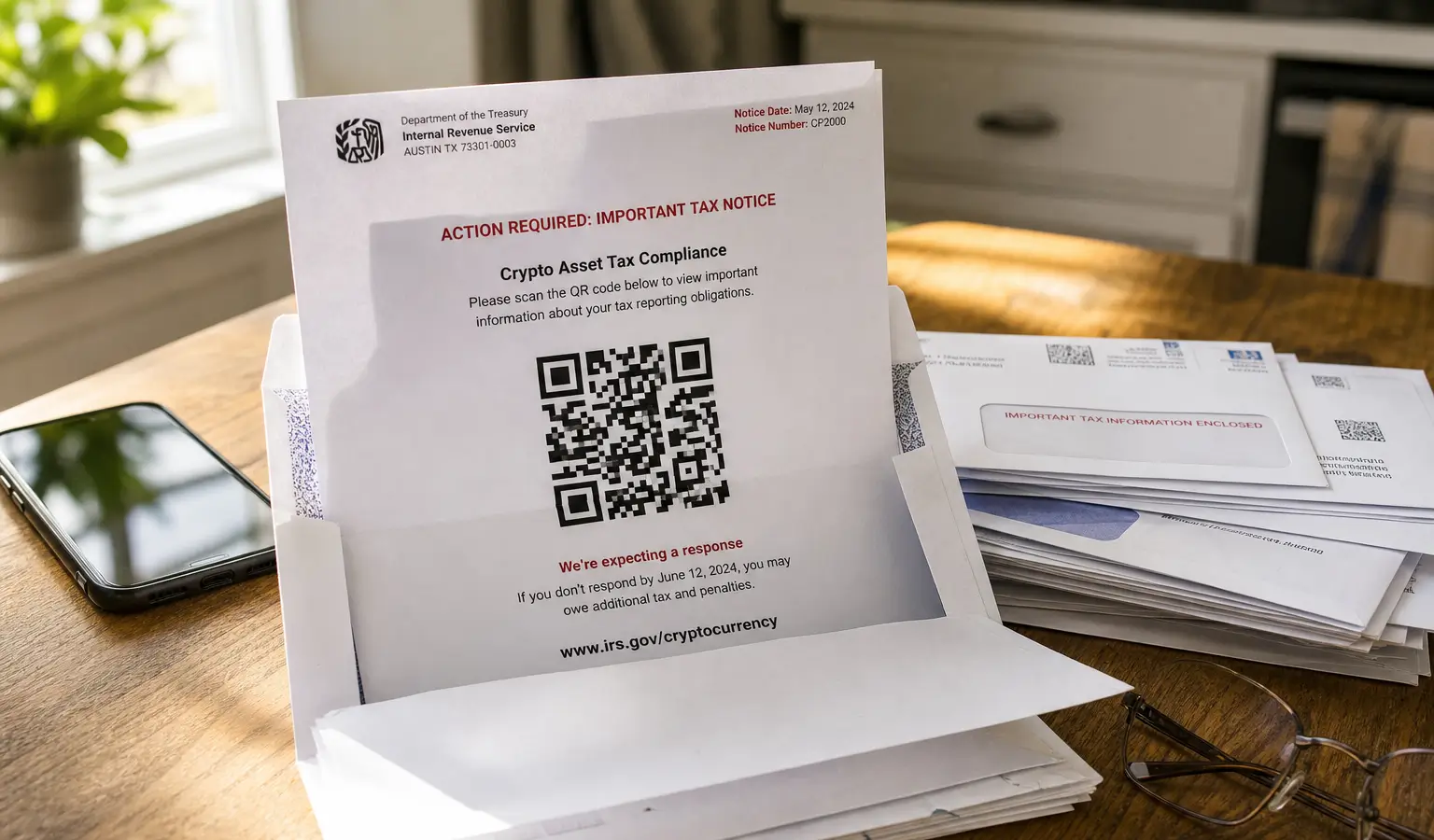
- The IRS is warning crypto holders about fake letters tied to a fraudulent Digital Asset Compliance Portal.
- The letters include QR codes that lead to a fake website meant to steal personal information and digital assets.
- The campaign is being sent through physical mail; the IRS says it does not run such a portal and does not send these letters.
The U.S. tax agency, the IRS, is warning crypto holders about a new batch of fake letters circulating in the mail. The letters direct people to a bogus “Digital Asset Compliance Portal” that is meant to collect personal information and steal digital assets.
Fake Portal Through a QR Code
The alert came Thursday from the IRS Criminal Investigation unit. The agency said the letters contain QR codes that send recipients to a fake website, and stressed that the IRS does not operate any such portal or mail out these notices.
The letters claim the recipient must register before a deadline. After someone scans the QR code, the fake site asks for personal details. The IRS is telling taxpayers not to scan QR codes in unsolicited letters, emails, or text messages, and it also warns people not to engage with callers demanding payment.
Physical Mail as the New Trick
What makes this campaign unusual is that it is showing up in physical mail, not just in inboxes. Coinbase and threat intelligence firm DarkTower flagged the scheme this week and said the letters reference tax years 2017 through 2026. They also found that the lookalike domain was registered through a registrar in Hong Kong and hosted in Romania.
The IRS has spent years warning about tax fraud, and crypto-related scams continue to show up in those notices as well. The agency also includes these threats in its annual Dirty Dozen list, which highlights major tax scams. It is part of a wider pattern of crypto fraud, including fake wallets, account takeovers, and other impersonation tactics.
Why This Matters
For European crypto readers, the case is a reminder of how fast scams can adapt to the way people use crypto. Phishing usually shows up in email or chat, but a paper letter with a QR code can feel more legitimate at first glance. That makes this type of scam relevant to anyone who owns crypto and could also face identity theft or fake support outside the U.S.