Will XRP be replaced by RLUSD?
Ripple, the company behind the world’s third-largest cryptocurrency by market cap (XRP), has recently been leaning hard into the fast-growing stablecoin market.

Ripple, the company behind the world’s third-largest cryptocurrency by market cap (XRP), has recently been leaning hard into the fast-growing stablecoin market. Under the leadership of CEO Brad Garlinghouse, the company has launched its first own stablecoin into the market: RLUSD. With this move, Ripple is taking on established names like Tether (USDT) and Circle (USDC). But what does this new direction mean for XRP, Ripple’s flagship token?
An ambitious step into new territory
Since December last year, RLUSD has been officially launched. For Ripple, based in San Francisco, this marks a major step into uncharted waters in a market currently dominated by two players: Tether and Circle.
Yet Craddock sees plenty of room for new entrants. “The pie is getting bigger,” she says. According to her, the stablecoin market could reach a value of $2.8 trillion by the end of this decade. That would be a tenfold increase from today – and in five years.
Whether RLUSD will play a significant role in that remains to be seen. RLUSD currently has a market cap around $293 million, versus a total stablecoin market of $234 billion. That equates to a market share of only 0.13% – in other words, there’s still a lot of growth potential.
Distribution and institutional focus
Ripple plans to capitalize on that growth by expanding its distribution partners. RLUSD was added to the Kraken trading platform in early April, and Craddock says more listings are in the works.
The primary use case for RLUSD, however, lies in Ripple’s own payment network. A recent example followed the acquisition of prime broker Hidden Road, a deal worth $1.25 billion. Roughly 300 institutional clients of Hidden Road will soon be able to use RLUSD as collateral for trades. This underscores Ripple’s strategy: target the institutional market, not individual users. That’s also why the company has been working with regulators from the start to stay on the right side of the line when it comes to oversight.
Will RLUSD replace XRP?
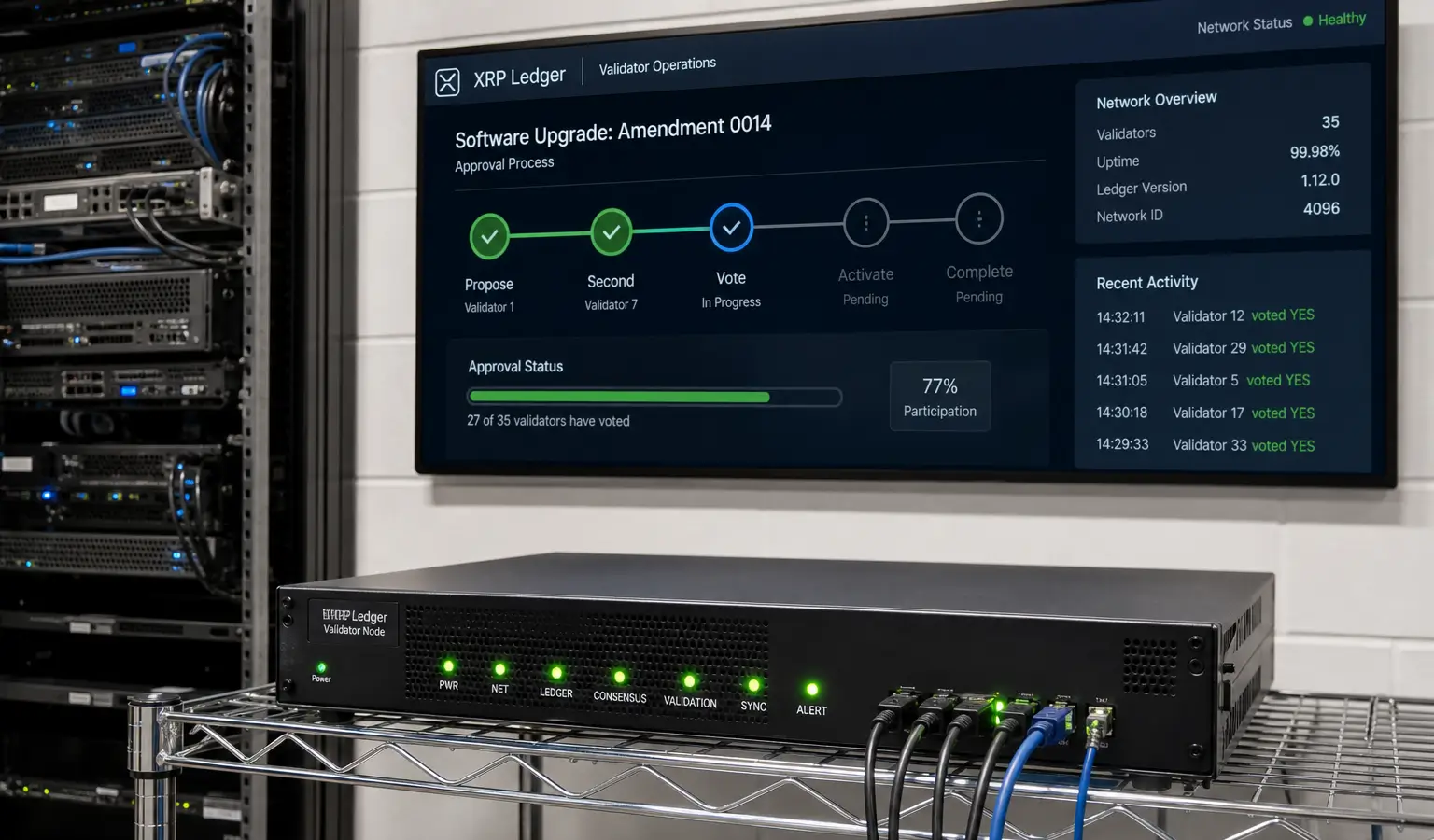
The big question remains: what happens to XRP? So far, XRP has been a key part of Ripple’s ODL service (On-Demand Liquidity), where the token is used as an intermediate asset in cross-border payments. For example, someone can swap dollars into Japanese yen without traditional intermediaries. XRP acts as a bridge asset: dollars are converted to XRP, sent via the XRP Ledger, and converted back to yen on the other end — all in a matter of seconds. Because XRP is held only briefly, price risk is minimal.
With RLUSD, that risk could disappear entirely thanks to the stable value of a stablecoin. A feature that’s particularly attractive to institutional clients.
Whether RLUSD will actually replace XRP remains an open question for now. In the interview, Craddock did not say which product is currently preferred by customers. She did, however, note that scenarios exist in which RLUSD could replace XRP in payment traffic without going into detail.