Mastercard Buys BVNK for $1.8 Billion After Bidding War
The deal underscores how stablecoin infrastructure is becoming more important in cross-border payments, with Coinbase and Visa missing out in the process.
Key Takeaways
- Mastercard is buying stablecoin infrastructure company BVNK for $1.8 billion after a bidding war that also drew interest from Coinbase and Visa.
- BVNK handles about $30 billion in annual payment volume across more than 130 countries and counts Worldpay, Deel, and Flywire among its clients.
- The deal still needs approval and is not expected to close until the end of 2026.
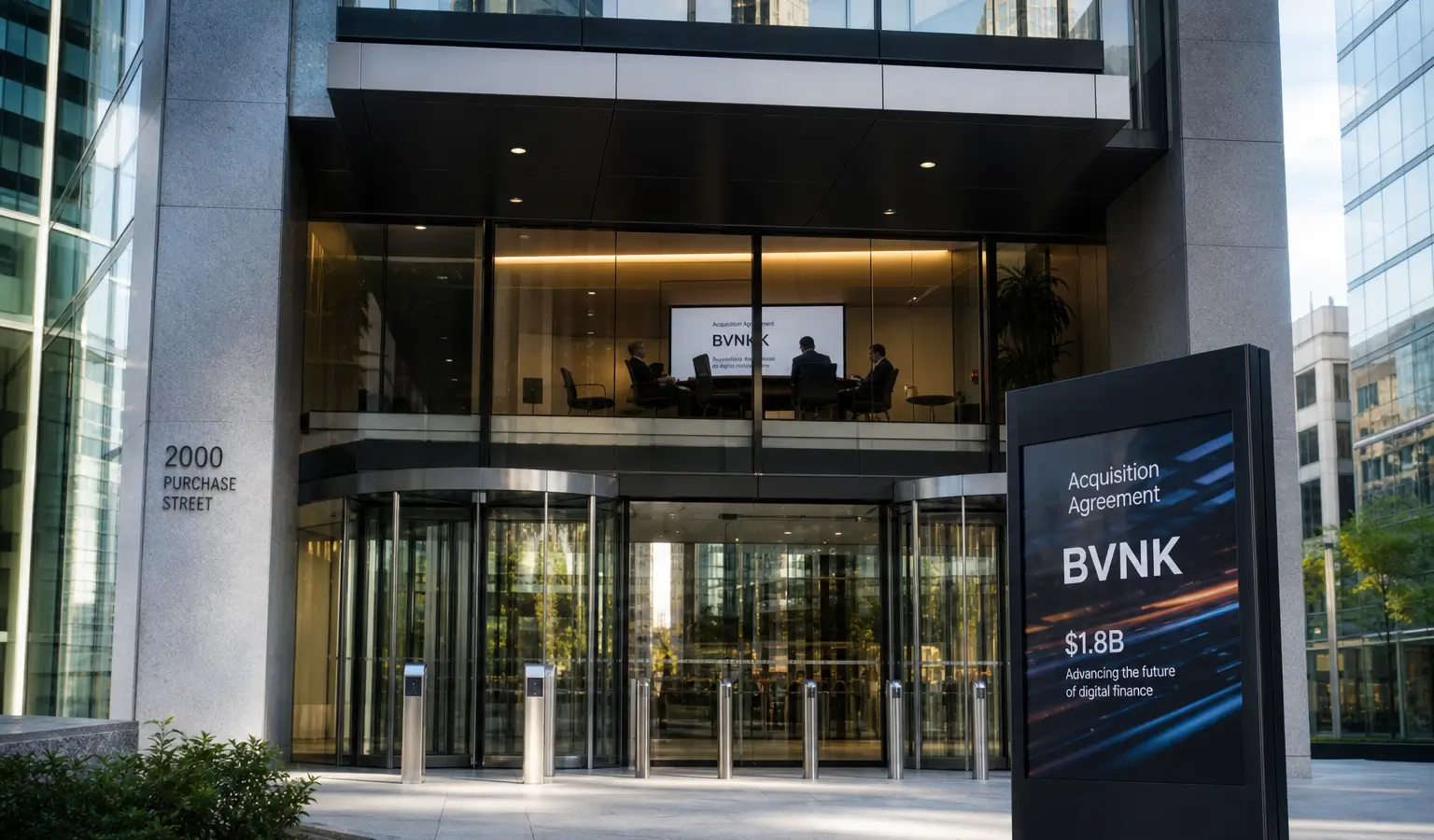
Mastercard has agreed to buy stablecoin infrastructure company BVNK for $1.8 billion (€1.6 billion) after a competitive bidding process that also included Coinbase and Visa. The deal is another sign that stablecoins are becoming more strategically important for major payment firms, even as the wider crypto market remains stuck in a bear market.
Bidding War Behind Closed Doors
According to early investor Concentric, the BVNK story began in 2018, when the company was first introduced to the venture firm. Concentric invested in 2019 at a $4 million (€3.5 million) valuation, turning that early bet into one of the sector’s biggest exits.
Concentric said the sale played out through a tightly managed process with nondisclosure agreements in place, giving bidders room to make offers, explore the opportunity, and step back if needed. Coinbase reportedly led the race at one point and may have been prepared to pay as much as $2.5 billion (€2.2 billion), but Concentric said the founders ultimately felt a stronger fit with Mastercard.
Visa also entered the contest. The company already owned a stake in BVNK and held an observer seat on the board, but it eventually chose not to proceed. Concentric said Visa would rather work with several stablecoin companies than buy a single operator outright.
Why Stablecoins Matter
The deal shows how much strategic value stablecoins now carry for traditional payment companies. By buying BVNK, Mastercard is looking to gain more control over the infrastructure that powers cross-border payments and digital settlement, rather than staying only at the customer-facing layer of the network.
Based on the available context, BVNK processes about $30 billion (€26 billion) in annual payment volume across more than 130 countries. Its client list includes Worldpay, Deel, and Flywire, which suggests stablecoin infrastructure is becoming relevant well beyond crypto-native businesses and into large-scale commercial payments.
Rist also highlighted treasury use cases, where companies can speed up cash management by using stablecoins. He also pointed to international teams and freelancers in high-inflation countries, who can keep funds in dollar-denominated stablecoins in a crypto wallet instead of being paid immediately in local currency.
What This Says About the Market
For European crypto readers, the main takeaway is that stablecoins are now deeply tied to the plumbing of global payments. This is no longer just about trading on crypto exchanges, but about the underlying rails companies use to move money across borders. That fits a broader shift in which major payment networks increasingly view stablecoins not as a niche product, but as an additional payment rail alongside existing systems.
The acquisition still needs the usual approvals and is expected to close only by the end of 2026. In other words, big financial players clearly want stablecoin technology inside their systems, but the institutional rollout is still moving through a long and heavily regulated process.