

MoldyRoost Attacks iPhones Through Malvertising and Crypto Wallets
Confiant sees a malvertising campaign that uses fake ads to infect iPhones and try to steal seed phrases from MetaMask, Phantom, and Trust Wallet.
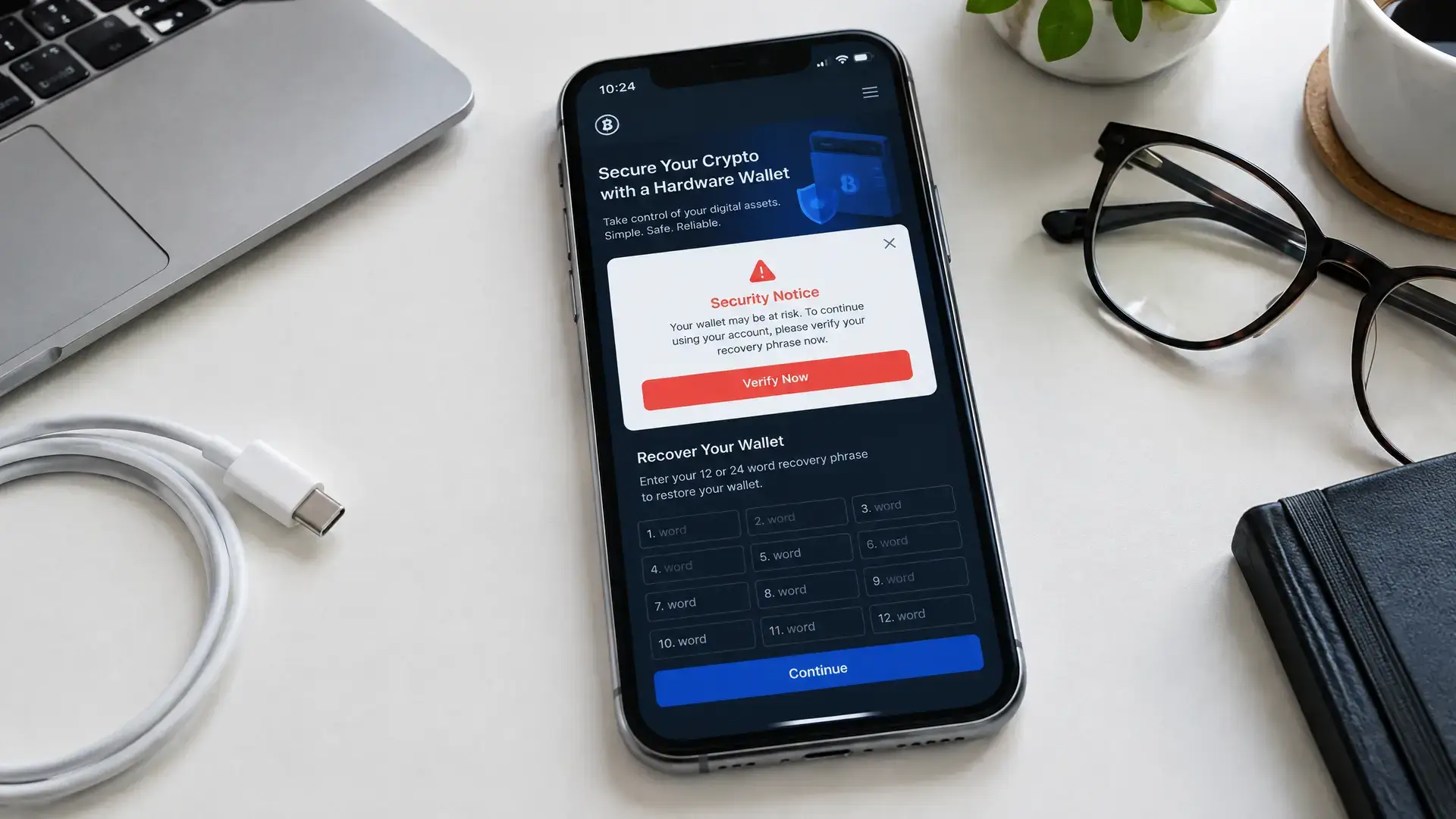
Key Takeaways
- MoldyRoost is a malvertising campaign that infects vulnerable iPhones through ads, with no extra download needed.
- The attack targets crypto wallets and tries to steal seed phrases from apps, Apple Notes, and QR codes in saved images.
- The campaign hit more than 47 countries; older iOS versions stayed vulnerable until Apple later fixed the bugs in iOS 26.3.
A malvertising campaign called MoldyRoost uses online ads to infect vulnerable iPhones and steal seed phrases from crypto wallets, cybersecurity company Confiant says. According to the researchers, one tap on an ad is enough to start the attack, with no extra download or further steps.
How the Attack Works
The ads lead to fake websites set up by the attackers themselves. Those pages look like well-known brands, magazines, games, or fake security checks. Once an iPhone user opens the page, a hidden window reads the iOS version and picks the matching exploit kits to carry out the attack, while the user only sees the decoy.
Researchers Roshan and Eliya Stein wrote that loading the landing page on a vulnerable iPhone is enough to get infected. That makes this approach different from many other scams, where victims still have to download a file or take an extra step first.
Crypto Wallets as the Target
Confiant says the Coruna kit targets wallet apps like MetaMask, Phantom, and Trust Wallet and looks for seed phrases in Apple Notes and QR codes in saved images. DarkSword takes a broader approach and can also grab saved passwords, messages, photo metadata, and location history along with wallet data.
The attack is especially relevant for crypto users because a seed phrase can fully unlock a wallet. Anyone who gets those words can move the wallet’s contents without the owner’s permission. The researchers also say many of the ads are built around crypto themes, including TRX energy rentals and crypto mining. Earlier incidents also show how vulnerable wallets can be when attackers get access through software or devices, such as a stolen iPhone in London.
Why This Matters for Europe
According to the researchers, the campaign hit more than 47 countries, including Hong Kong, Japan, Singapore, the U.S., the U.K., India, South Korea, Canada, France, and Italy. For European crypto users, this shows that attacks through ad networks are not tied to one region and can reach a large audience through regular websites and apps.
The researchers also point out that older iOS versions remained vulnerable, while Apple later fixed the known bugs in iOS 26.3. That mainly highlights how important it is to keep devices up to date, especially when crypto wallets are on the same phone as everyday app and browser use.