MoneyGram Uses Blockchain to Speed Up Cross-Border Payments
MoneyGram is using Stellar, Solana, and its own MGUSD stablecoin to speed up settlement and cut costs. The focus is shifting from crypto experiments to payment infrastructure.
Key Takeaways
- MoneyGram is leaning more heavily on blockchain to modernize its global payments infrastructure, with faster settlement and lower costs as the goal.
- The company has worked with Stellar for years and is now also a validator on Solana and Tempo.
- MGUSD is a dollar-backed stablecoin on Stellar meant for use inside MoneyGram's own payment ecosystem.
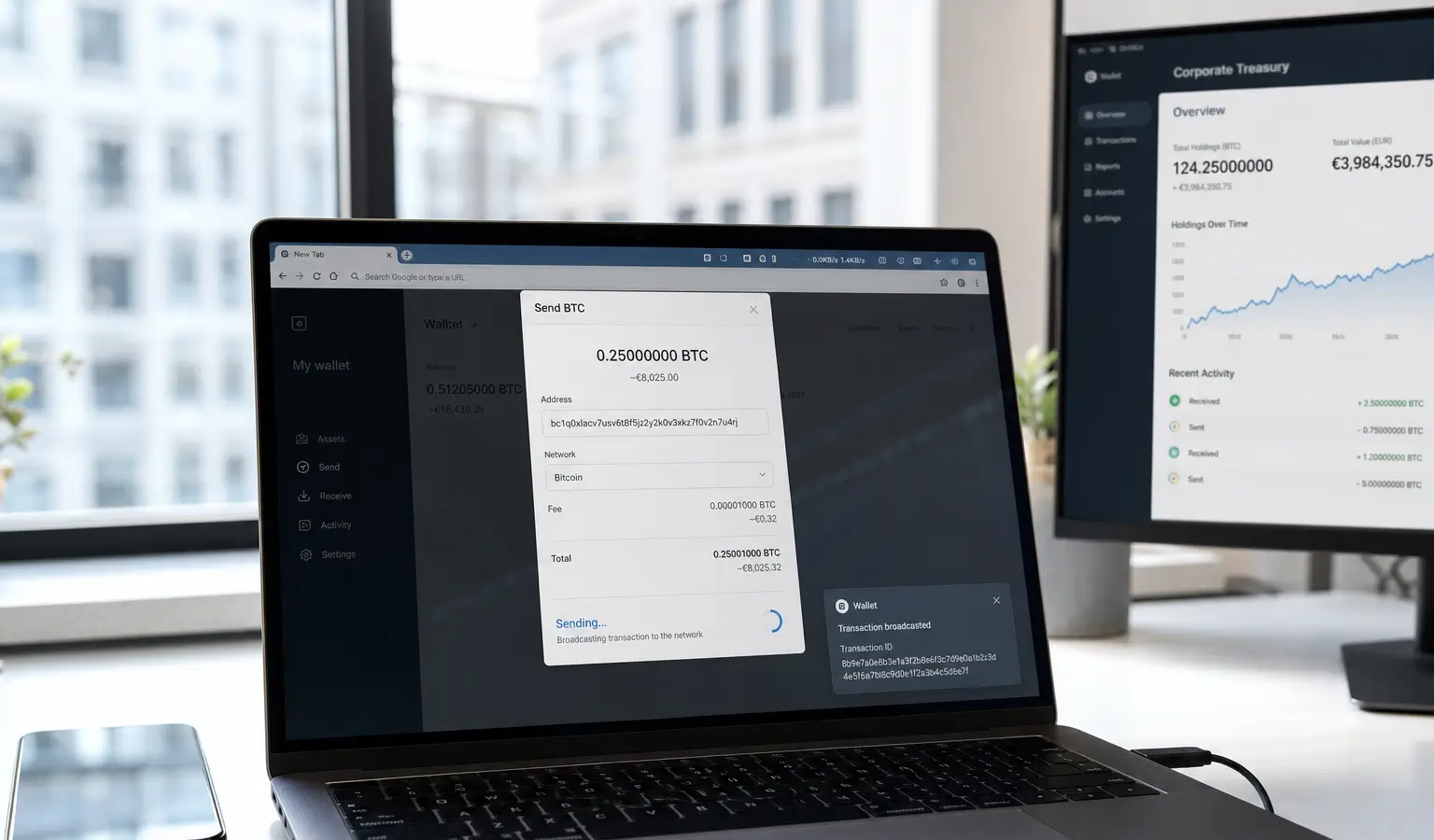
MoneyGram is treating blockchain less like a crypto side project and more like core payments infrastructure. CEO Anthony Soohoo said the company’s goal is not to put blockchain in front of consumers, but to use it behind the scenes to speed up settlement, reduce costs, and give MoneyGram more control over its network.
From Experiment to Infrastructure
MoneyGram has been working with the Stellar network for years, and that relationship has been central to its earlier blockchain efforts. The partnership began in 2021 with cash-to-USDC and USDC-to-cash services at select stores, followed by a global crypto-to-cash service on Stellar in 2022. Now the company is widening its approach beyond one network and has become a validator on Solana and Tempo.
The reasoning is straightforward. Traditional cross-border settlement still depends heavily on banking hours and weekday processing, while blockchain can support real-time settlement 24/7. Soohoo said that shift can cut operating costs and make the customer experience smoother, even if users never interact with the technology directly.
Stablecoin Inside Its Own Network
That same thinking is behind MoneyGram's new stablecoin strategy. MGUSD, which launched in June 2026, is a dollar-backed stablecoin on Stellar designed mainly for use within MoneyGram's own payments ecosystem. The company wants that setup to give it more control over costs and future product development, including wallet features, rewards programs, and other financial services.
Soohoo compared blockchain to the processor inside an iPhone: most people care that it works quickly and reliably, not about the hardware running underneath. For MoneyGram, that reflects a broader move away from product-first thinking and toward infrastructure-first thinking, with the emphasis on the customer experience rather than the technology itself.
Why This Matters for Europe
For European crypto readers, this is another example of blockchain moving well beyond trading and speculation. That is especially relevant for remittances and cross-border payments, where companies like MoneyGram are using blockchain to improve existing payment rails instead of launching new tokens. For anyone watching how stablecoins and blockchain are being folded into the real economy, that makes this a notable development.
Large financial institutions are exploring similar use cases as well. In the tokenized deposits market, the focus is much the same as it is at MoneyGram: 24/7 settlement and a more modern payments system, without tearing out the core banking infrastructure.
Soohoo also said MoneyGram ultimately wants to become a primary financial institution for its customers, with blockchain serving as one of the tools that could help expand financial access for underbanked users.