Monument Bank Delays Tokenized Deposit Project Over Custody Issue
The London bank first could not find an FCA-approved custodian; now the project is shifting to Canada. The Midnight plan shows how custody and compliance can slow down tokenized deposits.
Key Takeaways
- Monument Bank is delaying the rollout of a 250 million pound tokenized deposit project because of problems finding a suitable crypto custodian.
- The bank wants to put interest-bearing retail deposits on the privacy-focused Midnight blockchain, but is running into custody and compliance issues.
- The deposits remain fully backed, redeemable one-for-one in pound sterling, and covered by the UK deposit guarantee scheme.
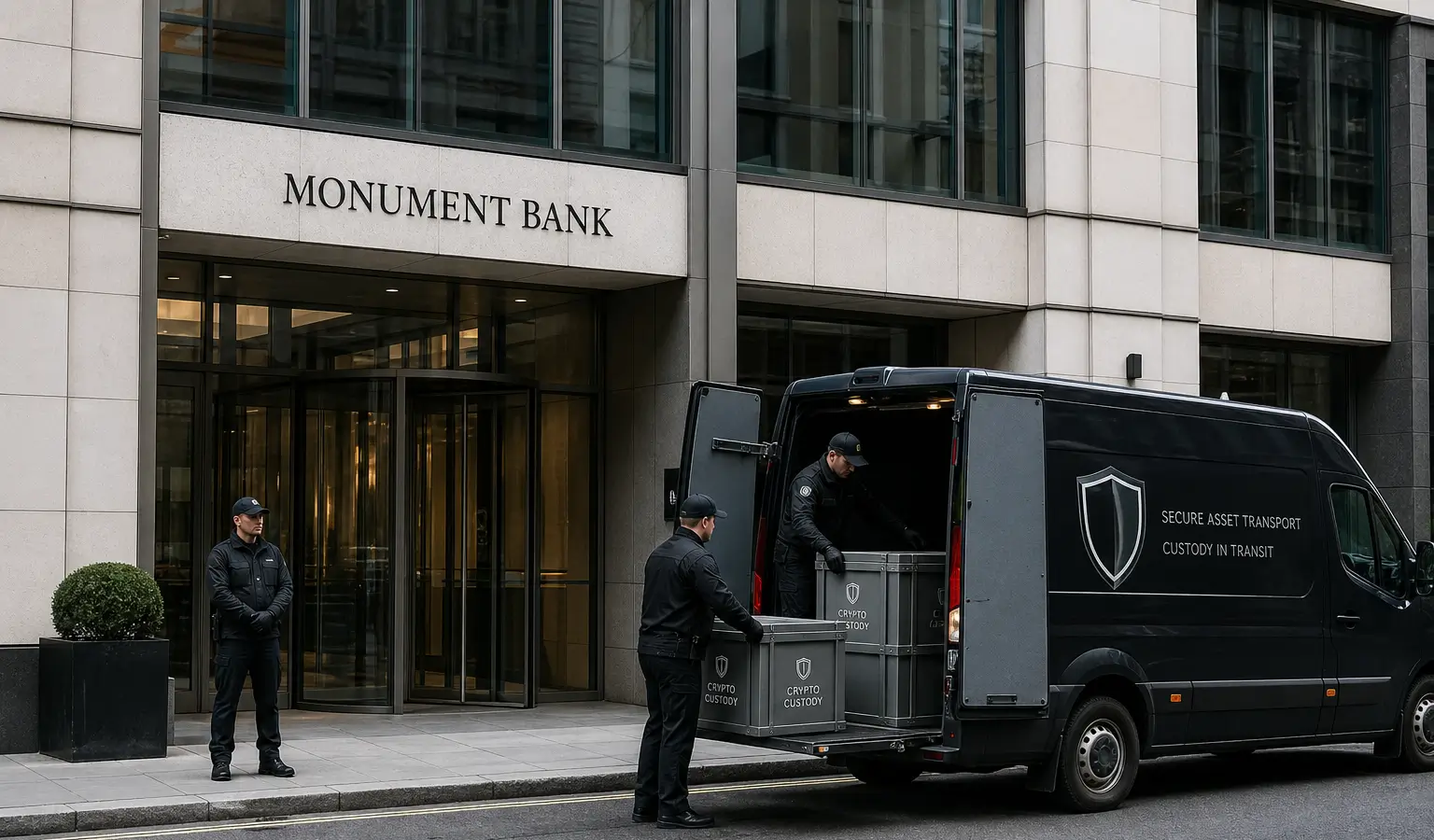
Monument Bank has delayed the rollout of a 250 million pound tokenized deposit project after the UK bank could not find a local crypto custodian that could meet the requirements of the Financial Conduct Authority. The London bank wants to put customer funds on the privacy-focused Midnight blockchain, but is running into custody and compliance issues.
Delay Over Custody
Founder Mintoo Bhandari said the project is running several months behind schedule. According to him, the bank had originally wanted to launch the first tokenized deposits two months ago, but is now likely pushing that back by another two months. Monument first looked for a provider in the United Kingdom, but later expanded the search internationally and eventually found an FCA-approved custodian in Canada.
The bank wants to do something that only a few players have tried so far: put interest-bearing retail deposits on a public blockchain. Until now, many tokenized deposit projects have been limited to institutional clients or closed networks. Monument is instead aiming at a broader group of savers with investable assets between 50,000 pounds and 5 million pounds. That fits into a broader move where banks are bringing deposit products onto blockchain rails, such as in tokenized deposit systems.
Privacy and Oversight
Midnight uses zero-knowledge proofs to keep customer data inside Monument’s systems, while still letting the bank prove onchain that it is following the rules. That should make it possible to give regulators the data they need for audits without making the underlying customer information public.
That setup lines up with the UK’s stricter stance on crypto custody. The Financial Conduct Authority is working on a broader framework for cryptoassets, where firms offering crypto custody, trading, or staking will soon need authorization. For custodians that hold customer crypto for more than 24 hours, stricter safeguarding requirements will also apply.
What This Means for Banks
Monument is positioning the project as a regulated product for mass-affluent savers. According to the bank, the deposits will remain interest-bearing, fully backed by Monument, and redeemable one-for-one in pound sterling. They will also remain covered by the UK deposit guarantee scheme, up to 120,000 pounds per person or company.
For European crypto and banking watchers, this shows that tokenization is not just a technical issue, but also an operational and legal one. Especially with retail products, the mix of custody, privacy, and oversight can slow down a rollout, even if the underlying blockchain is already ready.