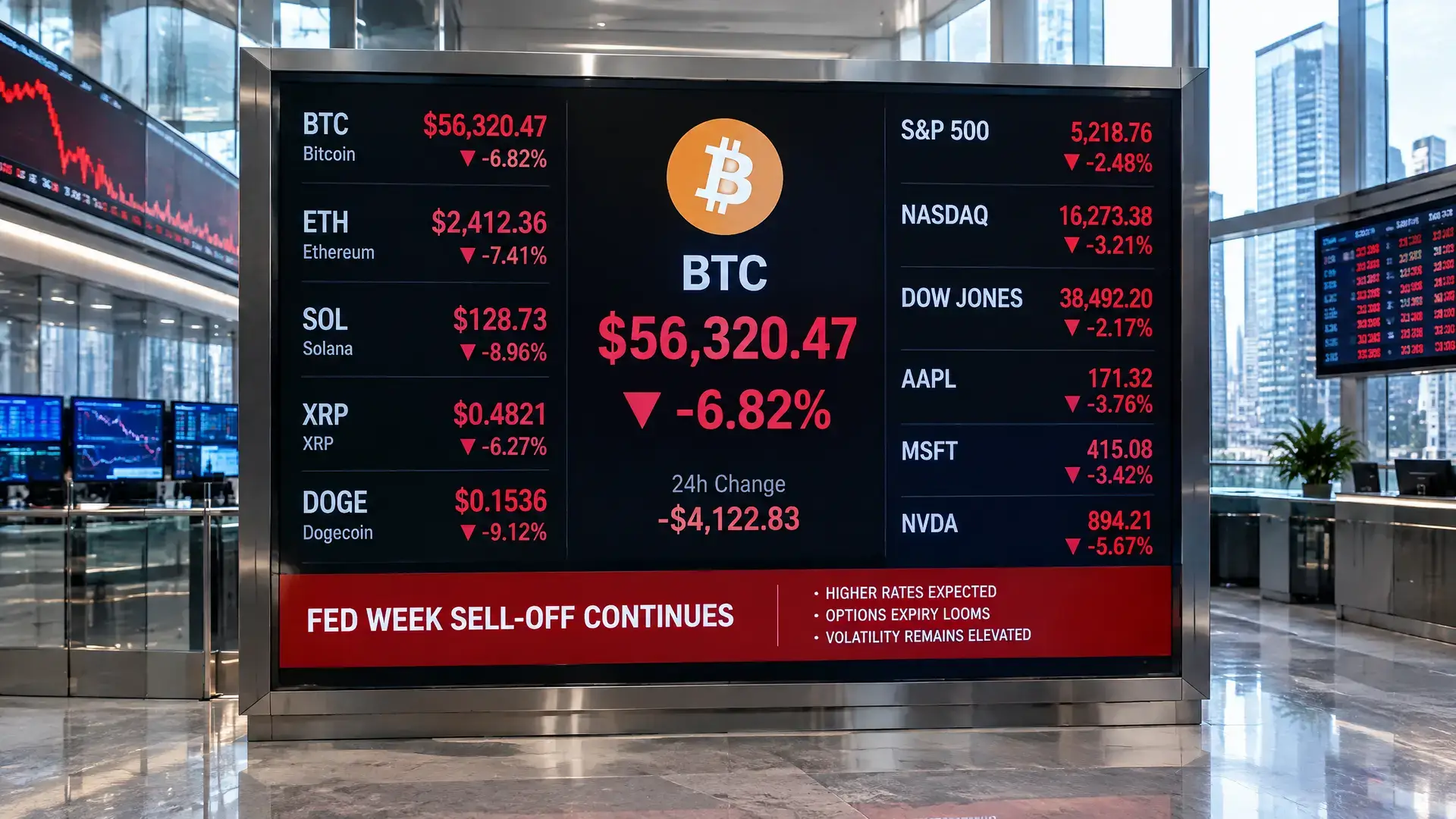
Moody’s Sees Crypto Crash as Major Economic Risk
Moody’s Analytics puts a crypto crash high on the risk list, just ahead of the Fed’s rate decision. Leveraged positions and the link to stocks and bonds are especially worrying.
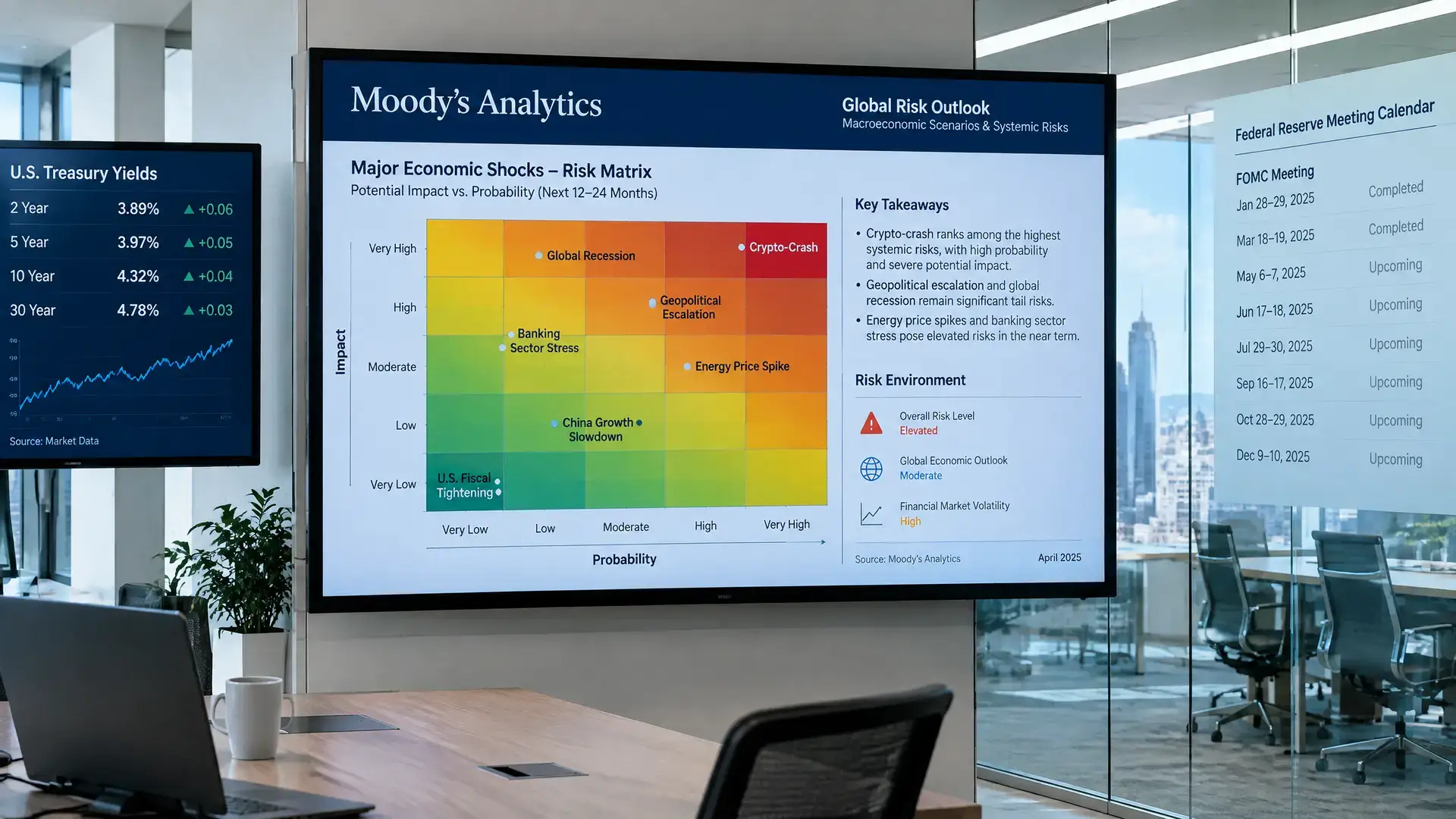
Key Takeaways
- Moody’s Analytics sees a crypto crash as one of the most likely economic shocks in the next 12 to 18 months.
- The firm expects the damage to the broader economy to stay relatively limited, despite risks from high borrowing costs and leveraged positions.
- Moody’s also points to worsening risks like AI stocks, geopolitical tensions, bond market stress, and possible policy mistakes by the Fed.
Moody’s Analytics counts a crypto crash among the most likely economic shocks over the next 12 to 18 months. The warning comes two days before the Federal Reserve makes its interest rate decision on October 28, while investors are already bracing for sticky inflation and turmoil in financial markets.
Risk Matrix Puts Crypto High
Moody’s economic research arm uses data, models, and expert analysis to rank 27 possible shocks by likelihood and impact. In that latest risk matrix, which chief economist Mark Zandi shared on Monday, a crypto crash ranks high on the probability list. At the same time, Moody’s sees the damage to the broader economy as relatively limited.
The report does not give an exact probability or price target. Moody’s does point out that high borrowing costs are putting speculative investments under pressure. If stocks keep sliding, that could also hit crypto. Leveraged positions in particular could rack up losses even faster because of forced selling.
More Worries Than Just Crypto
Moody’s names four risks that the firm says have gotten even worse: a sell-off in AI stocks, an escalating war between Iran and other parties, stress in the bond market, and mistakes in the Fed’s interest rate policy. According to Moody’s, those risks could have bigger economic consequences than a crypto crash.
The bond market is already showing signs of strain. The U.S. 10-year yield recently rose to 5.31% and fell back toward 4.99% on Monday. Zandi warned that further tightening of monetary policy could increase that strain. The Fed raised rates in September to 3.75% to 4%, while inflation remains high.
Why This Matters for Crypto
For crypto investors, the timing is especially important. The market is watching the Fed’s rate decision this week, while recent inflation data shows price pressure is still not gone. According to recent rate trackers, the market still expects only a limited chance of another rate hike, but Wednesday’s outcome could still add extra volatility to an already nervous crypto market.
Research also points to another issue that matters for crypto investors: digital coins often move down together during market stress. That makes a broad crypto portfolio less protective than people sometimes think. Even during earlier market stress, it became clear how quickly sentiment can flip, such as during the sell-off after the escalation around Iran.