Mubadala Capital Brings Fund Onchain on Solana and Base
The Abu Dhabi sovereign wealth fund is offering a private markets fund through Base, Solana, and Sui. Coinbase is also taking exposure itself, highlighting institutional demand for tokenized assets.
Key Takeaways
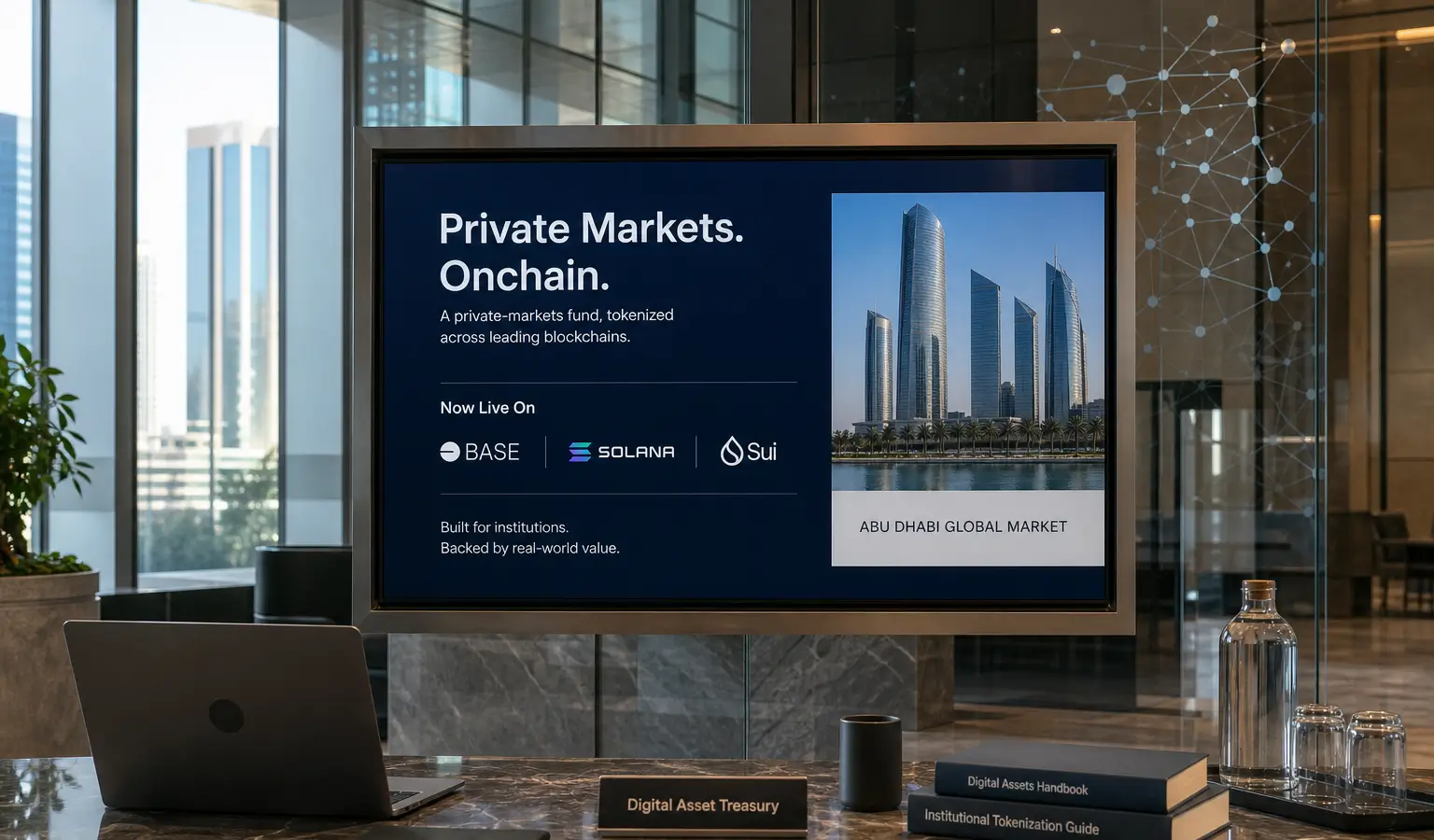
- Mubadala Capital has moved a private markets fund onchain across Base, Solana, and Sui.
- The tokenized fund is limited to qualified investors and has already drawn about $75 million in onchain assets.
- Coinbase is also putting its own balance sheet behind the product, as tokenization becomes more common in real fund structures.
Mubadala Capital has taken one of its private markets funds onchain, adding another example of traditional investment products being tokenized. The Abu Dhabi asset manager, which sits under the United Arab Emirates' sovereign wealth fund, is now making the fund available on Base, Solana and Sui.
Fund Available on Three Networks
The tokenized version is designed for qualified investors, according to the parties involved, and the setup runs through KAIO, a UAE-based tokenization specialist. So far, the fund has pulled in about $75 million (€65.7 million) in onchain assets, suggesting there is already real demand for this type of product.
The launch also reflects a wider move by major financial firms to bring fund structures onto blockchain rails. BlackRock, Franklin Templeton, Apollo, Fidelity, Janus Henderson, and more recently Invesco have all launched or expanded tokenized funds, often centered on U.S. Treasuries, money market funds, and private credit. The private assets market is following the same path: Wall Street Makes Tokenization a Strategic Priority shows that institutional players increasingly view tokenization as core infrastructure.
Coinbase Is Putting Its Own Capital In
One notable detail is that Coinbase is taking exposure on its own balance sheet. That makes it an early case of a publicly traded crypto company allocating capital to a tokenized private markets product. The exact size of the investment has not been disclosed, but the move suggests regulated tokenized assets are starting to look like a serious treasury-style tool.
Brett Tejpaul, head of Coinbase Institutional, said regulated assets can become part of a broader onchain economy through programmability, which can make them more transparent, easier to combine, and more accessible for qualified investors in permitted jurisdictions. Max Franzetti, head of Mubadala Capital Solutions, said putting the fund onchain broadens access without changing the institutional discipline behind the strategy.
What This Says About Tokenization
For European crypto readers, the main point is that tokenization is no longer just about stablecoins or isolated experiments. It is increasingly about real fund structures with existing investors and established management processes. In the United Arab Emirates, that fits into a broader effort to position the country as a hub for tokenized finance, while regulators and financial institutions there are already working closely with crypto frameworks, funds, and other digital investment tools.
Web3 infrastructure like this could eventually shape how fund shares are issued, traded, or even used as collateral. For now, though, access is still limited to qualified investors, so the bigger signal here is institutional adoption rather than broad retail use.