

New York Judge Says Ethereum Has No Terms of Use
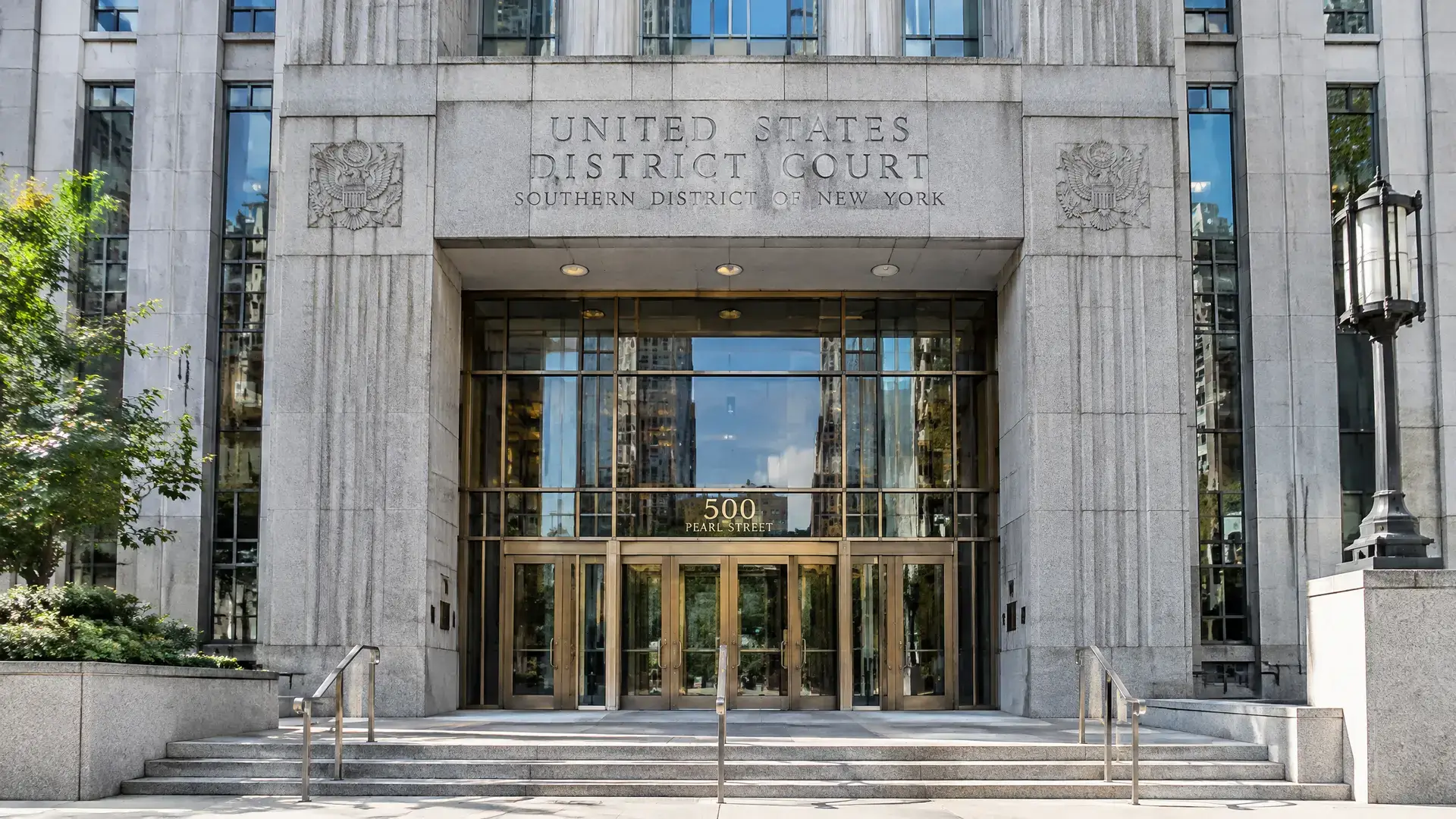
The federal judge rejected wire fraud in the first U.S. MEV case, involving an Ethereum attack by the Peraire-Bueno brothers. In Europe, the same practice could instead count as market manipulation under MiCA.
Key Takeaways
- A federal judge in New York ruled that the Ethereum case against Anton and James Peraire-Bueno did not amount to wire fraud.
- The judge dismissed the wire fraud, conspiracy to commit wire fraud, and conspiracy to commit money laundering charges and closed the case.
- In July 2025, ESMA classified sandwich attacks and harmful front-running as possible market manipulation under MiCA.
A federal judge in New York has ruled that outsmarting trading bots on Ethereum is not wire fraud. That has thrown out the first criminal case brought by the U.S. government over a so-called MEV exploit against two MIT-educated brothers. According to the judge, this was a trustless environment with no terms of use, not a criminal lie that someone relied on.
MEV Case Comes to a Halt
Judge Jessica Clarke sided with Anton and James Peraire-Bueno on November 16 in their request for acquittal. She dismissed the wire fraud, conspiracy to commit wire fraud, and conspiracy to commit money laundering charges. A year earlier, the court had already had a jury that failed to reach a unanimous verdict, after which Clarke declared a mistrial in November 2025. Now the clerk’s office must close the case.
The heart of the case centered on a trade that, according to prosecutors, generated about $25 million (€22.8 million) in 12 seconds in April 2023. The brothers allegedly placed eight bait transactions to lure sandwich bots, then used their own block to front-run the bots. According to the ruling, the bots lost about $25 million (€22.8 million), while the brothers’ validator was penalized by only around 1 ether, worth a few thousand dollars.
How the Attack Worked
MEV stands for the maximum profit that can be extracted from block production on top of the normal block reward and gas fees. In a sandwich attack, a bot sees a pending transaction in the mempool, buys a token just before it, lets the victim’s buy push up the price, and then sells right after. Strategies like this have long been a familiar part of Ethereum, but the legal status varies by jurisdiction.
The judge found that the bait transactions did not amount to a promise. The false signature on the block also did not help prosecutors, because the relay did not check the forged fields and therefore did not act on them. Clarke wrote that the behavior may have been unethical or disruptive, but that still is not enough for wire fraud.
Why This Matters for Europe
For European crypto readers, this ruling is especially interesting because the legal line around MEV is not the same everywhere. In July 2025, ESMA classified sandwich attacks and harmful front-running as possible market manipulation under MiCA. That makes it clear that the same trading practice can be judged very differently in the U.S. and in Europe, even if it happens on the same blockchain.
Ethereum’s technical side is also still evolving: an earlier test attack on Glamsterdam showed how vulnerable new blockspace and builder mechanisms can be to abuse before they reach mainnet.