OCC Sends Back Zerohash Trust Bank Application
The regulator says the filing is incomplete, while Zerohash is pushing ahead with a new application. The move follows earlier OCC approvals for companies including Circle, Ripple, and BitGo.
Key Takeaways
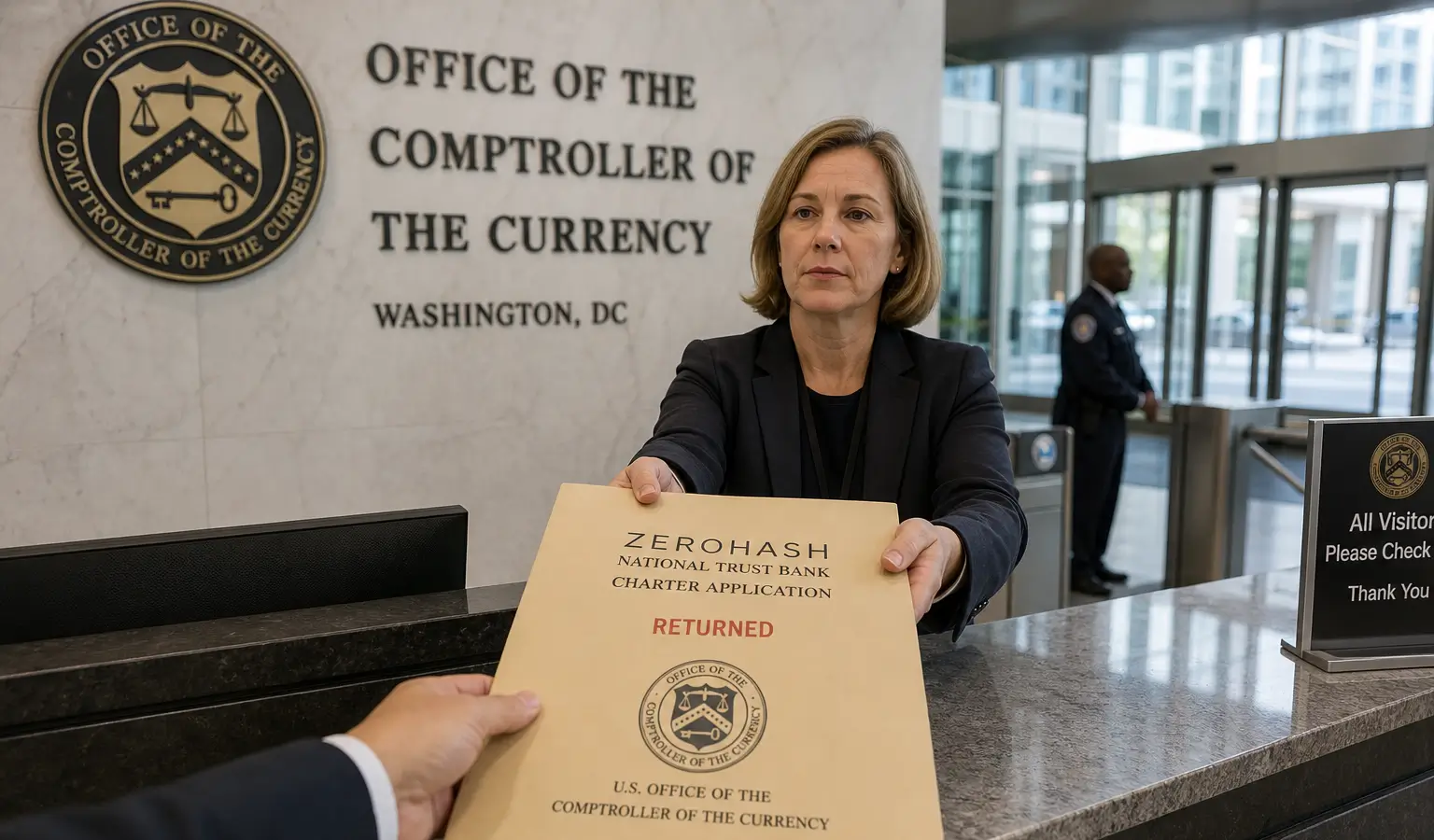
- The OCC sent Zerohash’s application for a U.S. trust bank back because the filing was materially incomplete.
- Zerohash wants to resubmit the application and says its current operations will continue under existing licenses.
- At the same time, the company is under fire in a lawsuit over alleged compliance problems and anti-money-laundering gaps.
Zerohash got its application for a U.S. trust bank back from the Office of the Comptroller of the Currency after the regulator labeled the filing materially incomplete. The crypto company, which provides backend services for Morgan Stanley's E*Trade, says it wants to resubmit the application and expects a quick review.
Application Sent Back by OCC
The return is not a rejection on the merits, but an administrative step that OCC policy follows when an application does not include all required information. Zerohash says the decision has no impact on current operations, which continue under existing licenses.
The timing stands out because the company filed an application in March for a National Trust Bank Charter. Around the same time, several crypto-related firms received the green light or preliminary approval from the U.S. regulator, including Circle, Ripple, Paxos, BitGo, and Fidelity Digital Assets. In recent months, the OCC has clearly been more open to trust banks that want to serve digital assets, partly in a market that has become more institutionally built out since the stablecoin legislation in the U.S.
Bigger Ambitions, More Oversight
According to Zerohash, the first application may have been too broad, with a wide range of digital asset and fiduciary services. The next attempt therefore needs a more phased approach, starting with a narrower set of national trust activities that better fits the planned rollout.
That choice fits a broader trend in which crypto infrastructure companies are increasingly moving toward the traditional banking framework. Zerohash already works with firms like BlackRock, Franklin Templeton, Stripe, Interactive Brokers, and DraftKings, and the company is already a state-chartered trust bank. For E*Trade, the service would also not depend on a federal charter. Other firms are also looking for a more heavily regulated profile; Wintermute recently got SEC approval to trade stocks, options, and ETF blocks in the U.S.
Compliance Remains a Sensitive Issue
At the same time, Zerohash is under a microscope because of an ongoing dispute with former chief compliance officer Edgar Guerra. In a California lawsuit, he says he was fired to cover up compliance problems, including more than 200 significant gaps in anti-money-laundering controls. It is not clear whether the OCC weighed those allegations when it sent the application back.
For European crypto readers, this case shows how tightly licensing, compliance, and institutional adoption are now tied together. Especially for companies that provide crypto infrastructure to large financial institutions, a trust bank charter can offer not just room to operate, but also an extra test of governance and internal controls.