OFAC Targets Hamas Network With Crypto and Fake Charities
Washington says millions were funneled to Hamas through fake charities and crypto. The case shows how sanctions and blockchain analysis come together.
Key Takeaways
- OFAC imposed sanctions on three people and two charities for allegedly funneling $2 million to Hamas through crypto and fake setups.
- The U.S. Department of Justice charged Saleem al-Zaq and reported six arrests in the investigation.
- Treasury says the network used money services businesses and crypto wallets; no wallet addresses have been made public.
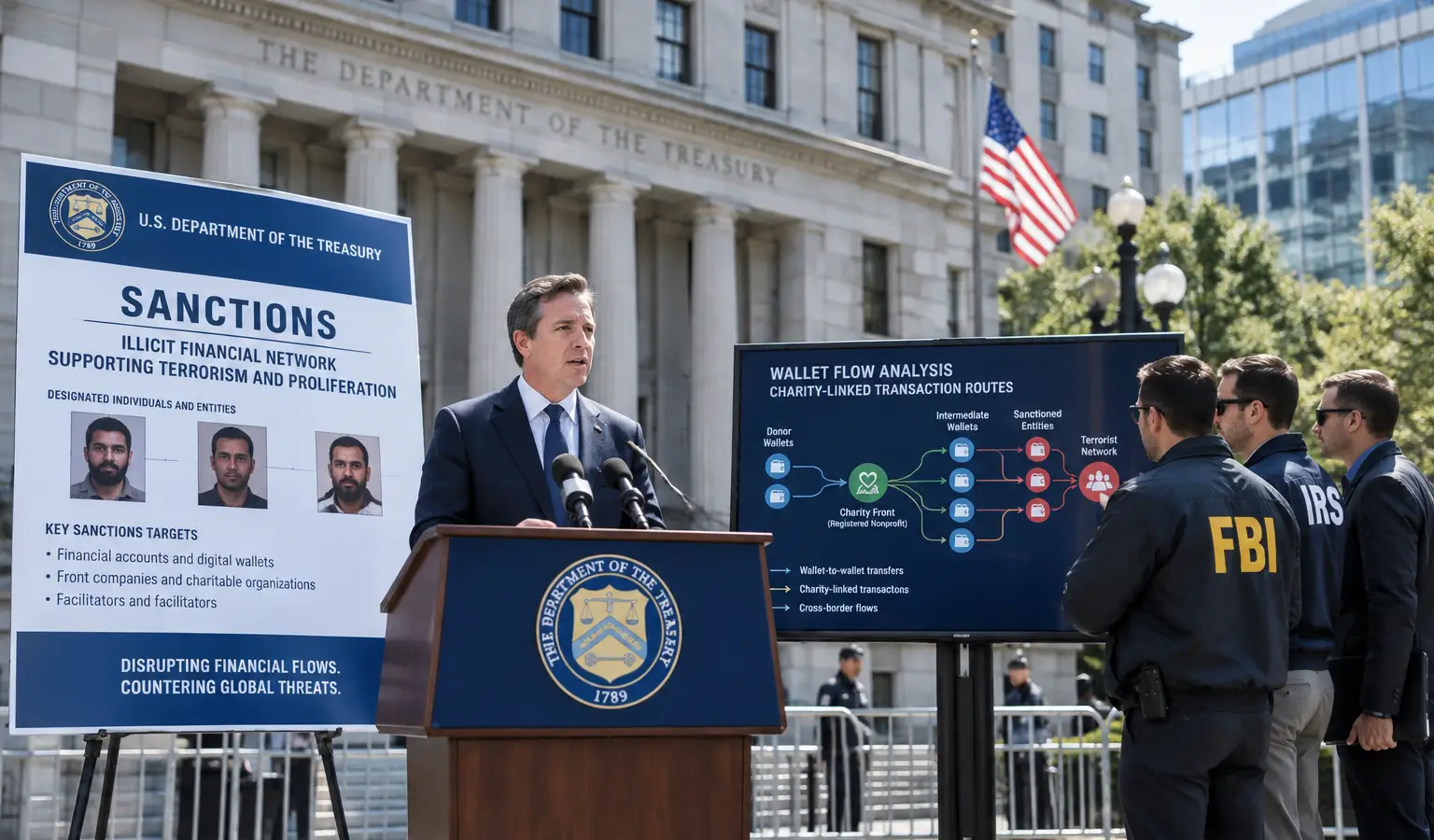
The U.S. Treasury has imposed OFAC sanctions on three people and two charities because Washington says they funneled $2 million (€1.8 million) to Hamas through crypto and fake setups. The case involves Association Baraka and Ensemble C Mieux, plus Saleem al-Zaq, Faouzi Barika, and Amel Oualid. The U.S. Department of Justice also announced an indictment against al-Zaq and reported six arrests.
How the Network Worked
Treasury says al-Zaq was active in Gaza as a deputy commander within Hamas's armed wing. His network used money services businesses and crypto wallets to move money to the Al-Qassam Brigades. According to Washington, Barika and Oualid ran the two charities, which presented themselves as aid groups for civilians in Gaza but then passed the money on to al-Zaq.
According to Treasury, it is not known what share of the total moved through crypto. The department does say Barika and Oualid sent hundreds of thousands of dollars in digital assets to al-Zaq. No wallet addresses are listed in the sanctions announcement. The case fits a broader pattern in which Hamas, according to U.S. authorities, has increasingly used crypto to make money flows harder to track.
Earlier Actions Against Hamas Financing
The U.S. government has already stepped in against similar networks before. In October 2023, for example, Treasury sanctioned the Gaza-based crypto exchange Buy Cash, which Washington said helped with Hamas financial activity. International fundraising networks that used fake charities to collect money for the group have also been targeted before.
In the broader context, the case shows why regulators and law enforcement keep watching crypto in sanctions and terror-financing cases. Blockchain researchers and law enforcement can sometimes reconstruct money flows afterward, but the mix of charities, bank accounts, and crypto wallets still makes this a complicated case for authorities.
What This Means for Crypto Followers
For European crypto followers, the main takeaway is that this case once again shows how quickly oversight shifts from individual wallets to entire money flows. Not just the crypto itself, but also the parties around it, like exchanges, payment routes, and intermediaries, come under scrutiny. That can matter for how sanctions, compliance, and blockchain analysis come together in practice.