Polymarket Has 45,000 Zero-Volume Markets, CNBC Finds
CNBC found that trading volume is concentrated in a small set of popular contracts, while bots account for much of the activity in thin markets even as sports-related growth accelerates.
Key Takeaways
- A CNBC analysis based on Polymarket data shows that about 45,000 closed markets recorded zero volume.
- Around 70% of closed markets had less than $10,000 in reported trading volume between 2021 and the end of May 2026.
- Bots were especially active in thin markets, while prediction market growth was mostly driven by a small group of popular themes.
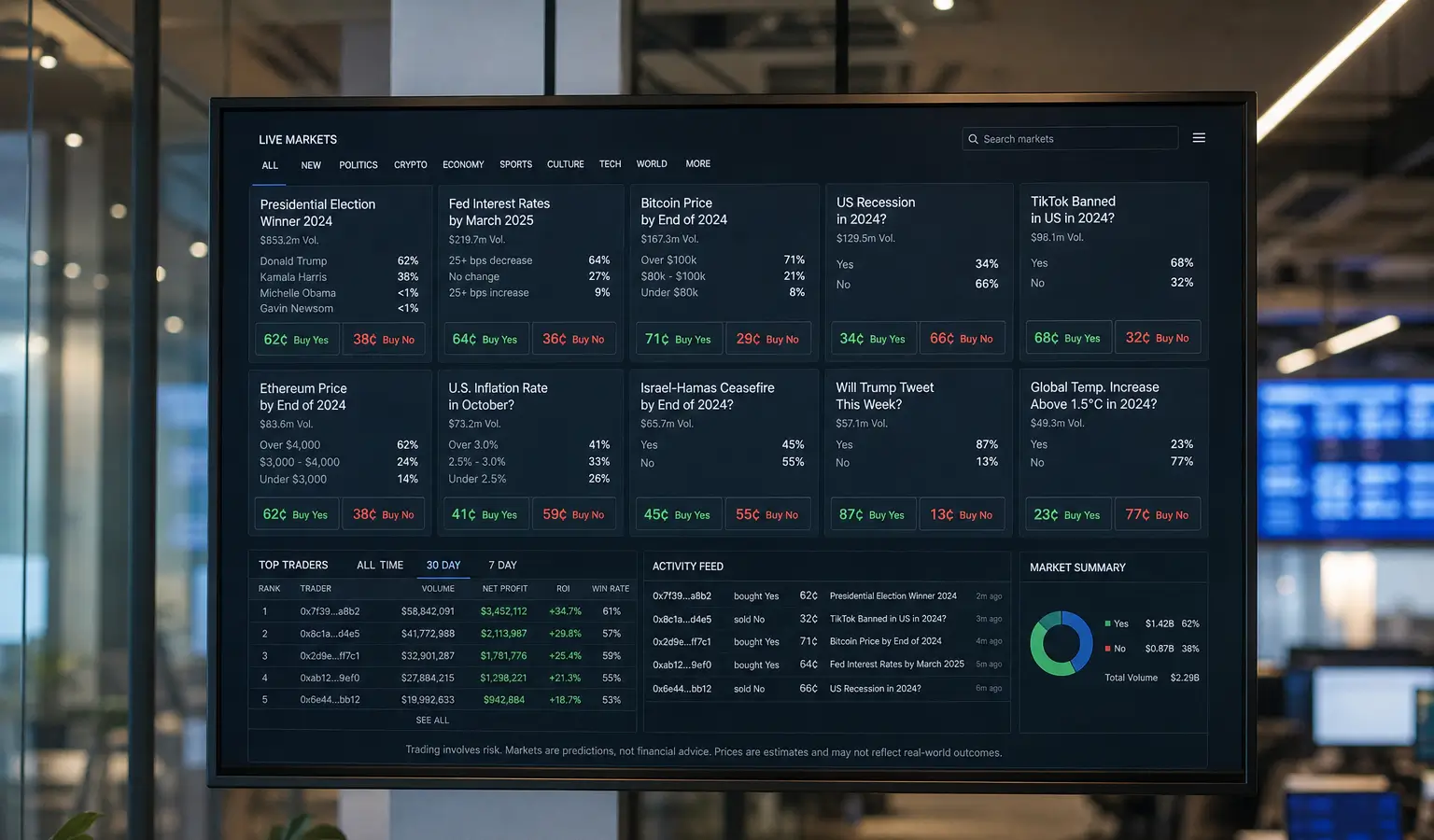
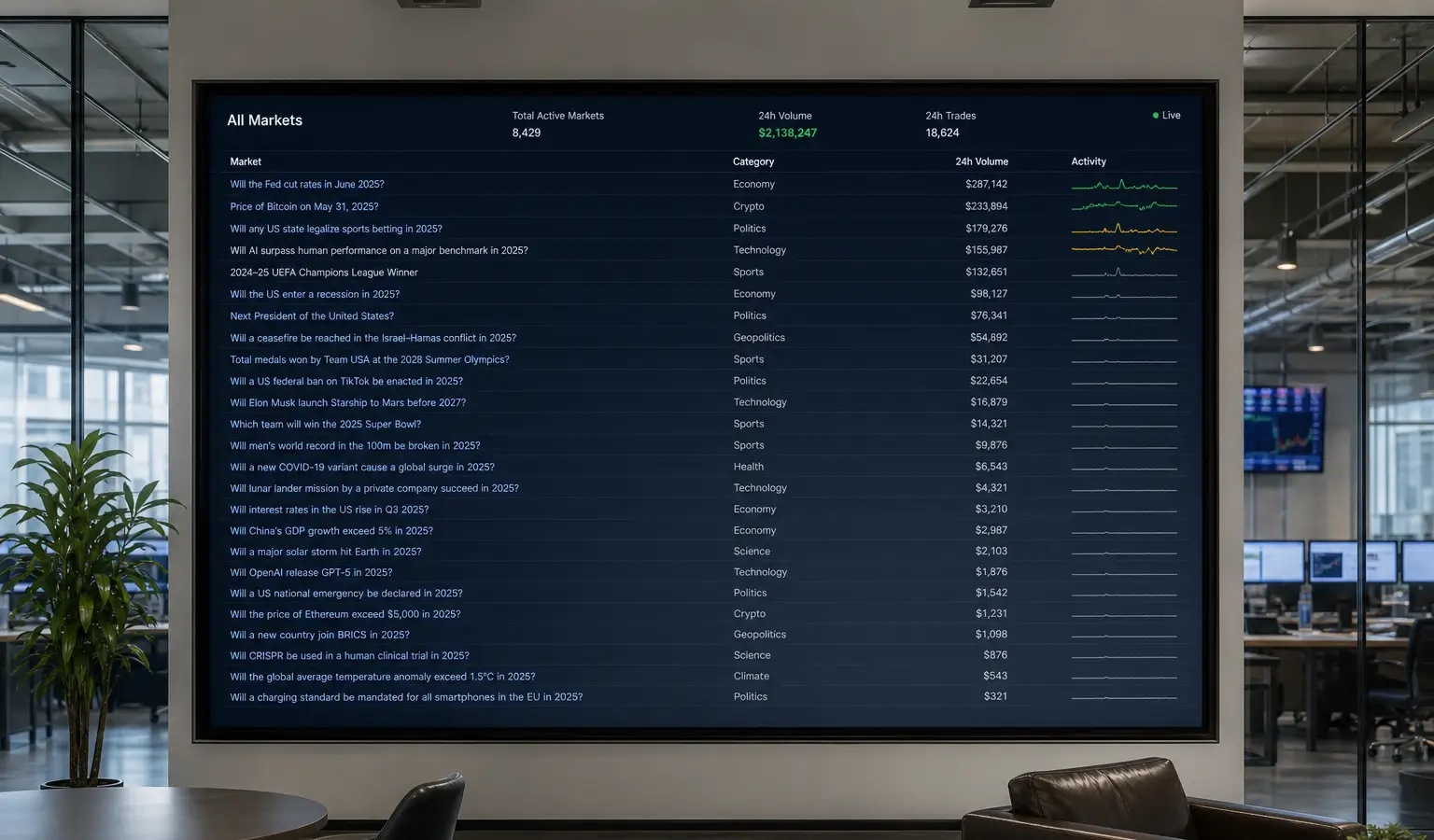
A CNBC analysis of Polymarket data points to a market with very uneven activity. Roughly 45,000 closed markets showed zero volume, and about 70% of all closed markets from 2021 through the end of May 2026 reported less than $10,000 (€8,770) in trading volume. That came as prediction markets have been gaining momentum, with interest around the 2026 World Cup helping fuel the latest surge.
Volume Is Concentrated In A Small Core
CNBC based its analysis on Polymarket’s Gamma API, which counts notional volume on both sides of a trade. The data makes the concentration even more obvious: fewer than 10% of closed markets landed between $100,000 (€87,700) and $1 million (€0.9 million), while a relatively small number of contracts captured most of the money.
In other words, trading on the platform is still dominated by a narrow set of high-profile markets. That lines up with a broader pattern across prediction markets, where a handful of major themes attract most of the attention and the rest of the market stays quiet.
Bots Dominate The Thin Market
Bots were especially important at the low end of the market. Joshua Della Vedova, a business professor at the University of San Diego, found that more than 80% of the volume in markets below $10,000 (€8,770) came from bots. He defined bots as wallets that place more than 50 trades per day or more than 1,000 trades overall.
By his estimate, those bots generated about $1.2 million (€1.1 million) in markets under $10,000 (€8,770), compared with roughly $50.5 million (€44.3 million) in the $1 million (€0.9 million) to $10 million (€8.8 million) range. In that larger bracket, bots accounted for 38% of total profits, while markets above $10 million (€8.8 million) added another $35.1 million (€30.8 million).
Della Vedova said bots can make money across different market sizes and trade on a per-transaction basis, which helps explain why they remain active even in bigger markets. For readers, the takeaway is that volume on prediction markets does not necessarily mean broad retail participation.
Growth Masks The Uneven Split
At the same time, the broader market is still expanding. According to CryptoRank, weekly World Cup volume across major venues climbed from $65 million (€57 million) in the week of June 1 to $5.4 billion (€4.7 billion) by the end of June, with a high of $5.6 billion (€4.9 billion) in the week of June 22. Kalshi helped drive that jump, underscoring how major sports events can quickly unleash a wave of demand.
That growth makes the gap with the thin long tail even more noticeable. Since launch, Polymarket has handled an estimated $8 billion (€7 billion) to $12 billion (€10.5 billion) in cumulative trading volume, with much of it concentrated in the 2024 U.S. election cycle and the growth period after its return to the U.S. market in 2025. In the first 11 months of 2025 alone, the platform also processed more than $22 billion (€19.3 billion) in notional volume, up 57% from all of 2024.
Kalshi and ADI Predictstreet have also broadened their World Cup 2026 offerings with a global approach. That reflects how Kalshi and ADI Predictstreet are expanding global World Cup predictions can drive huge trading flows in a short period of time.
For European crypto readers, the bigger picture is that prediction markets are now large enough to attract billions in volume, but liquidity still depends heavily on a small set of popular contracts. That could shape how regulators, platforms, and professional traders think about market quality and user activity.