Robinhood Defends Stock Tokens in Clash With AMC
Tenev says AMC does not have a veto over Robinhood's ERC-20 tokens, which are backed 1-to-1 but do not give voting rights. The debate also touches on European rules around tokenized stocks.
Key Takeaways
- Robinhood CEO Vlad Tenev brushes off AMC CEO Adam Aron's criticism of stock tokens.
- Tenev says issuers cannot decide on every financial product built around their stocks.
- The debate centers on the rights, backing, and transparency of tokenized stocks in Europe and the crypto market.
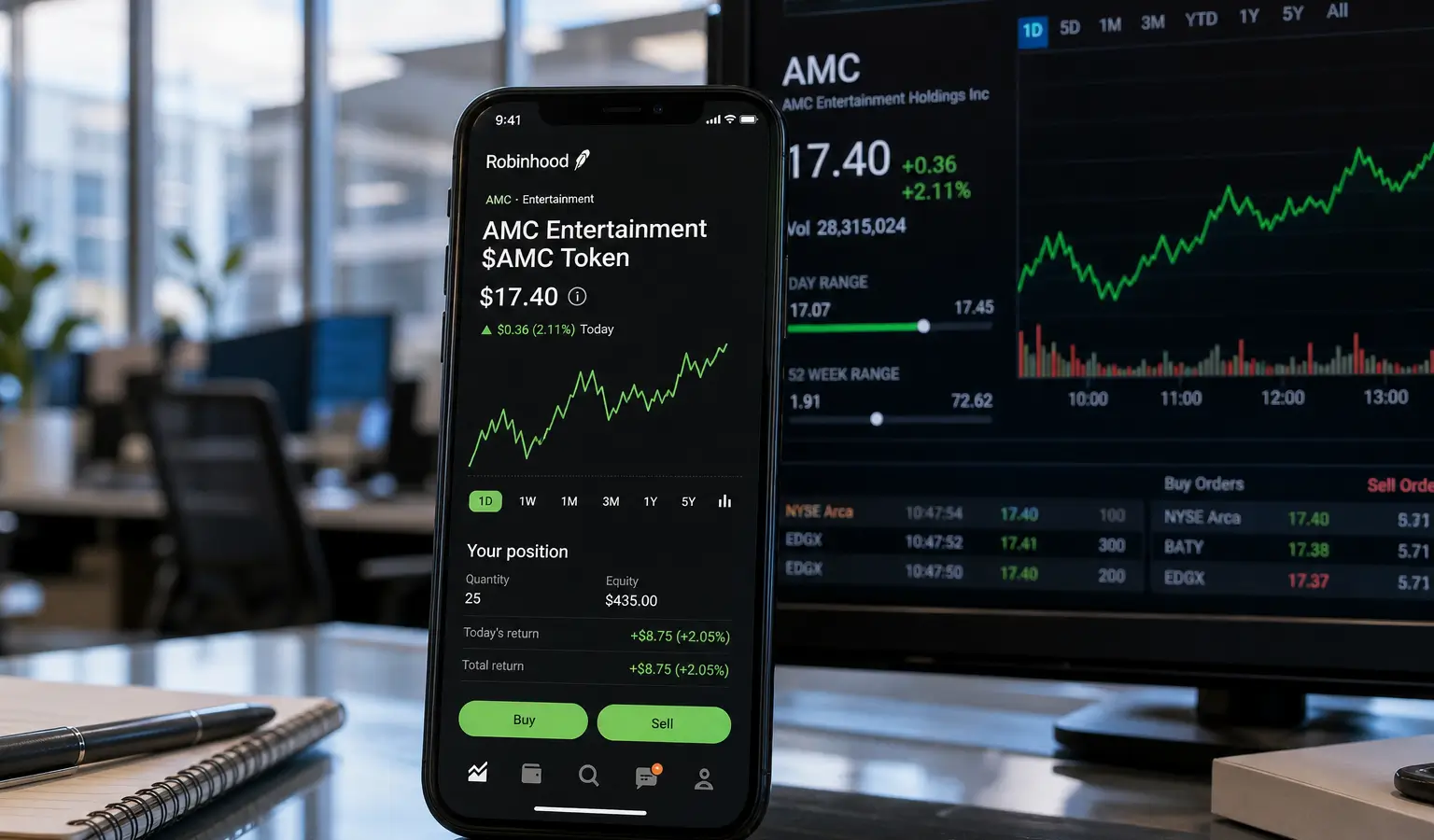
Robinhood CEO Vlad Tenev brushed off AMC CEO Adam Aron's criticism of stock tokens. In an interview with CNBC, he said public companies cannot decide on every financial product built around their stocks, while the debate over tokenized stocks in the crypto market keeps heating up.
Tenev Rejects Veto
Tenev said issuers do have control over the rights and obligations of the shares they issue, but not over everything other parties do with those shares afterward. According to him, that also applies to Robinhood stock tokens, which in his view do not automatically need permission from the company behind the shares.
The Robinhood chief spoke publicly for the first time since the dispute broke out last week. Aron previously called the product a “fake market” for AMC shares and threatened to involve the U.S. Securities and Exchange Commission. Later, he called the tokens “contemptible” and “outrageous” and demanded that Robinhood stop trading tokens tied to AMC.
How the Tokens Are Structured
Tenev also gave more detail on how the stock tokens are set up. According to him, each token is backed 1-to-1 by an underlying position held as collateral, while the token itself is a debt claim. Investors get dividends, but not the voting rights that come with the underlying shares.
That structure raises a broader question in the industry: when is something still a tokenized stock, and when is it mainly a separate financial product that only references a stock? Robinhood's stock tokens are ERC-20 tokens issued by Robinhood Assets (Jersey) Limited. They give economic exposure to U.S. stocks and ETFs, but no legal or economic rights in the issuer itself. The tokens are not registered under U.S. securities law and are not available to U.S. persons.
Why This Matters for Europe
The debate is also relevant for European crypto and investing platforms, because tokenized stocks are increasingly sitting between traditional markets and blockchain products. For regulators and platforms in Europe, the issue is not just technology, but also what rights a token actually represents and how clearly that is explained to investors.
Graham Rodford, CEO of the UK-regulated digital asset platform Archax, said there is an important difference between putting a real share on a blockchain and issuing a separate instrument that tracks the share. Carlos Domingo of tokenization company Securitize also pointed to the risk that these products can drift away from the reference price. He mentioned an AMC-related trading pair that was trading around 60 times AMC's reference price, which he said shows how thin token markets can diverge from the stocks they are supposed to track.
Attention is also growing elsewhere in the market for this kind of setup. Tokenized ETF products show that providers are increasingly looking for a model that combines economic exposure with a clearer legal structure.