POSCO Puts Trade Receivables on Avalanche After Injective Pilot
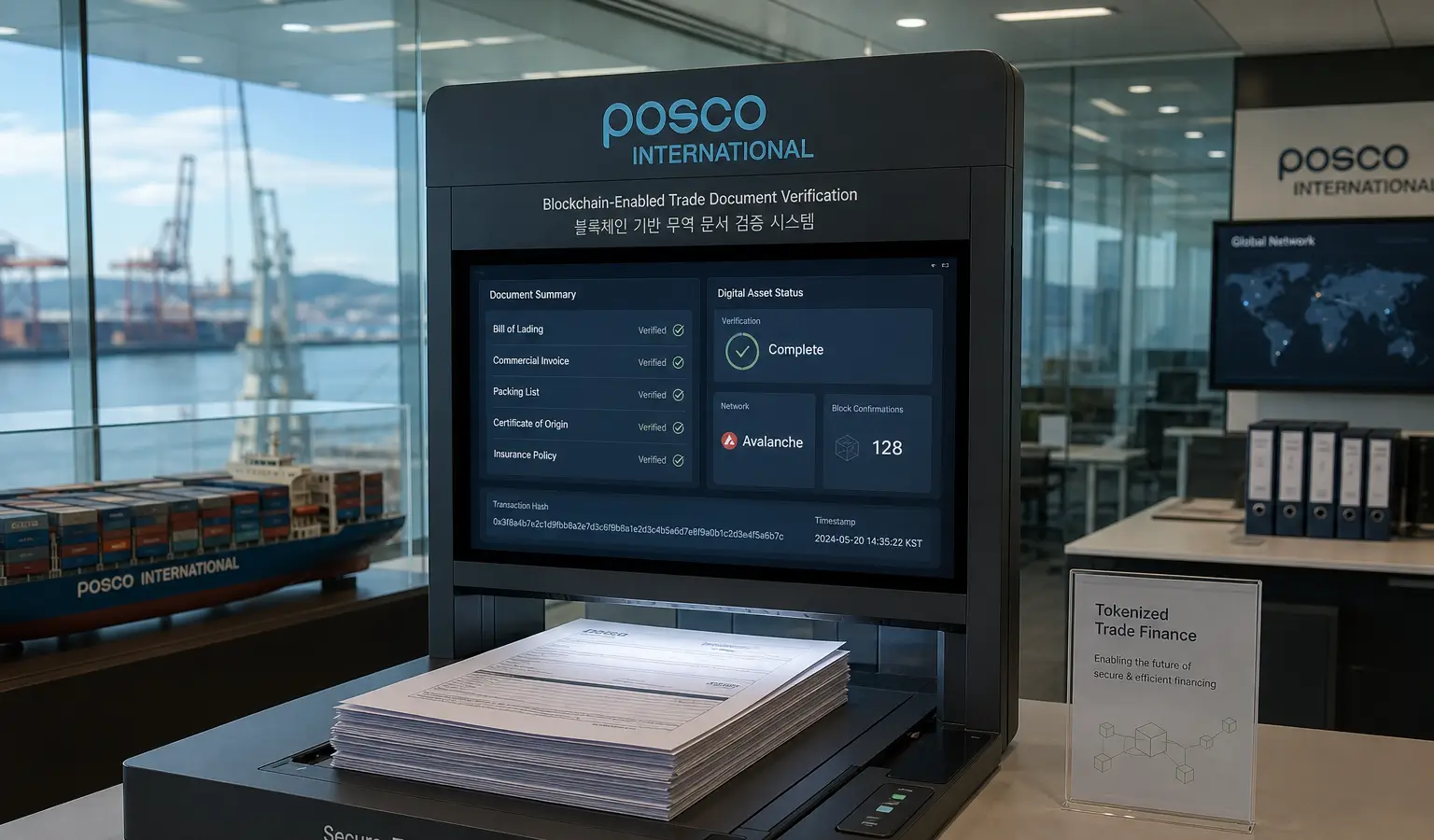
The South Korean trading giant is testing trade finance on blockchain after an earlier pilot on Injective. The new transaction ran through Olea and Intain on Avalanche.
Key Takeaways
- POSCO International turned trade receivables into digital assets on an Avalanche-based blockchain network.
- The transaction was carried out with Olea and Intain, which used AI to compare documents and verify and record the receivables.
- The trial follows an earlier pilot on Injective and fits into broader tests for tokenized trade finance.
POSCO International has taken a new step in tokenized trade finance by turning trade receivables into digital assets on an Avalanche-based blockchain network. The South Korean trading giant did this a month after a similar pilot on Injective, continuing its push to move trade finance onto blockchain rails.
Transaction With Olea and Intain
POSCO's U.S. unit worked on the transaction with trade finance platform Olea and asset-backed finance company Intain, the companies said Tuesday. Intain used AI to compare invoices, purchase orders, credit notes, and shipping documents before the receivables were verified and recorded on its Layer-1 network on Avalanche.
Trade receivables are amounts a company is still owed after it has delivered goods but before the customer pays. Companies can borrow against them, but that often takes a lot of manual work because buyers, sellers, and banks each keep their own records. A shared blockchain ledger can bring that data together into one record of ownership and status.
Why This Matters
The move fits into a broader trend where tokenization is moving beyond funds and bonds. In the global trade finance market, which market estimates put at more than $10 trillion (€8.6 trillion) a year, slow settlement and fragmented documentation have long been seen as a drag on trade financing, especially for smaller exporters and players in emerging markets.
For European crypto followers, what stands out is that this kind of use case shows how blockchain is being tested outside of pure token trading too. POSCO, Olea, and Intain said they want to explore further uses for tokenized trade finance, including cross-border settlement based on stablecoins and digital treasury tools. That lines up with broader experiments with faster settlement, such as real-time blockchain settlement for institutional transactions.
From Pilot to Broader Test
The recent trial follows a pilot with LG CNS that was announced last month. In that case, tokenized receivables were issued, transferred, and settled on Injective, again using receivables from real trade between POSCO's foreign subsidiaries and their counterparties.
POSCO International is South Korea's largest trading company and posted $22.2 billion (€19 billion) in revenue from steel, energy, and battery materials activities. The company has more than 80 overseas offices, which makes the scale of these kinds of experiments even more visible in practice.