3% Move in PT-reUSD Triggers $36 Million in Liquidations
A large buy and quick sell in YT-reUSD put DeFi loans on Morpho under pressure. The liquidations show how oracles and reused collateral can quickly increase risk.
Key Takeaways
- A large buy and quick sell of YT-reUSD pushed expected yield higher and drove PT-reUSD down about 3%.
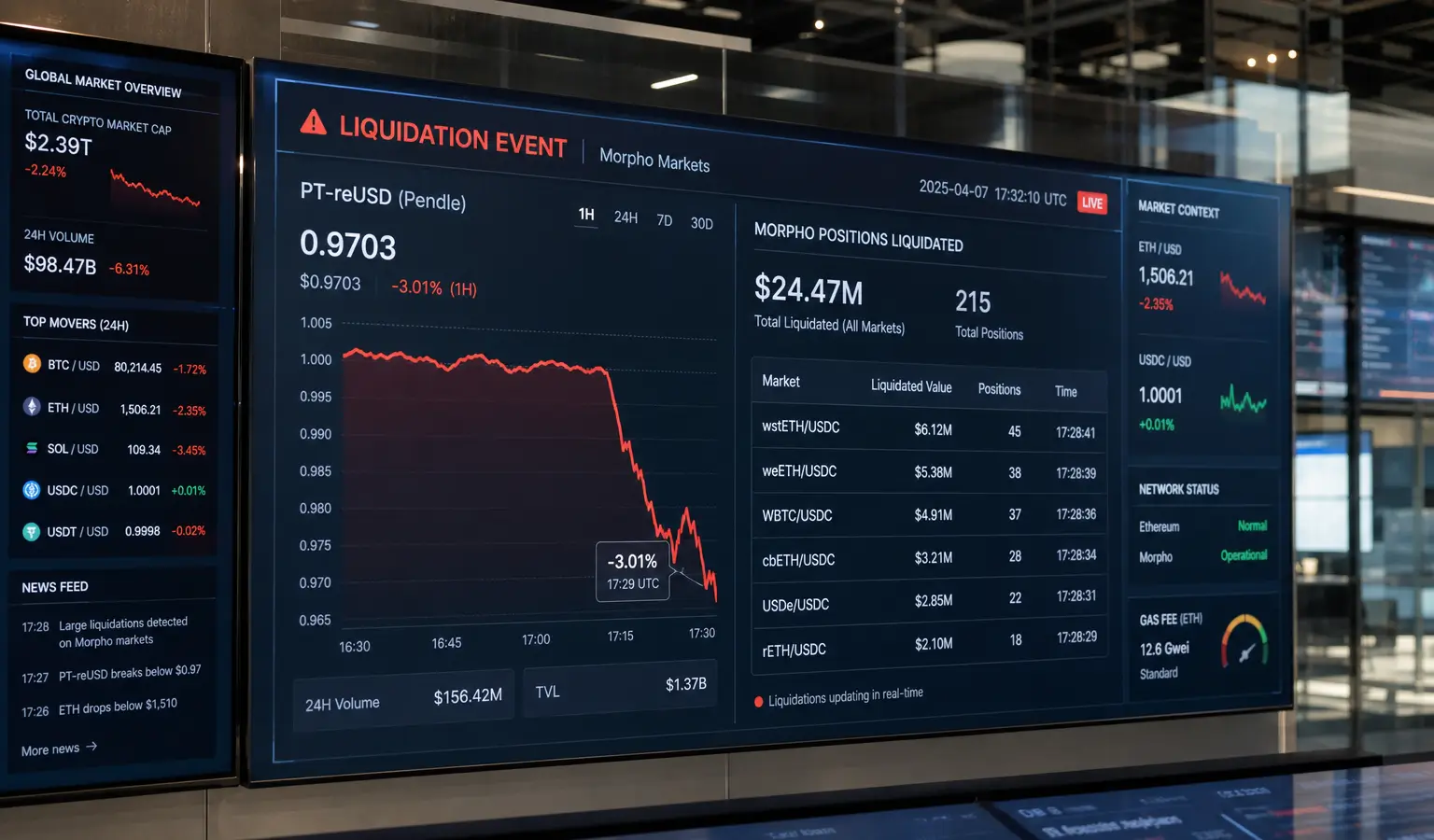
- That drop hit Morpho positions with less than 3% room to spare, after which automatic liquidations caused about $36 million.
- Pendle and Steakhouse Financial said the oracle worked correctly and that no bad debt was created.
A large buy in YT-reUSD set off a chain reaction in DeFi that ended in about $36 million (€30.9 million) in liquidations. According to blockchain security firm PeckShield, one wallet bought a large amount of YT-reUSD, which pushed the expected annual yield up to 20%, and then sold that position shortly after. As a result, PT-reUSD fell by about 3%, just enough to put positions on Morpho under pressure.
How The Liquidations Happened
The problem was not PT-reUSD itself, but what traders had built with it. Some users had deposited PT-reUSD as collateral on Morpho, borrowed USDC against it, and then bought PT-reUSD again with that borrowed money. Each extra round increased the possible return, but also left less and less room for a drop. Based on the position descriptions, these borrowers had less than 3% room before their loans would be automatically closed.
In DeFi, that happens without a trader stepping in. Once collateral falls below a set level, the platform automatically sells it to repay the loan. That is exactly why a relatively small price move can be enough to hit a large group of positions at once.
The Role Of The Oracle
Morpho used an oracle for that assessment, a price feed that determines what the collateral is worth. In this case, the feed looked at the lower of two values: the average trading price of PT-reUSD over the past 15 minutes, or a fixed line that gradually moves toward $1 (€0.86) at expiration. When the market price fell below that line, the 15-minute average price became the leading figure.
Pendle said the feed was set up correctly and did what it was supposed to do. Steakhouse Financial, which manages lending markets with PT-reUSD as collateral, said its own vaults were not affected and that no bad debt was created. According to Steakhouse, the liquidation proceeds covered the loans. The company temporarily pulled its money out of the affected markets while it investigated the situation, and then started depositing again.
Why This Matters
For European crypto investors, this shows how quickly an apparently small move in a yield token can spill over into DeFi loans. The incident affects not just trading in Pendle products, but also the broader use of oracles, collateral, and reused borrowed capital. That makes these setups interesting, but also more sensitive to sudden swings than many users might expect at first glance. Morpho is often at the center of these kinds of onchain lending setups; Standard Chartered Puts Morpho on Track for $60 in 2030 previously outlined how the credit market around the protocol could keep growing.