Robinhood and AMC Clash Over Tokenized Stocks
The fight is about synthetic shares without ownership, while the SEC only allows tokenized securities with real rights. That also puts market structure and control at the center of the debate.
Key Takeaways
- Robinhood and AMC are at odds over tokenized stocks and over whether products like these can be offered without permission.
- Robinhood’s products are debt securities that track the price, but do not give ownership of the underlying shares.
- The SEC only allows tokenized securities that truly represent ownership and the rights that come with it, such as dividends and voting rights.
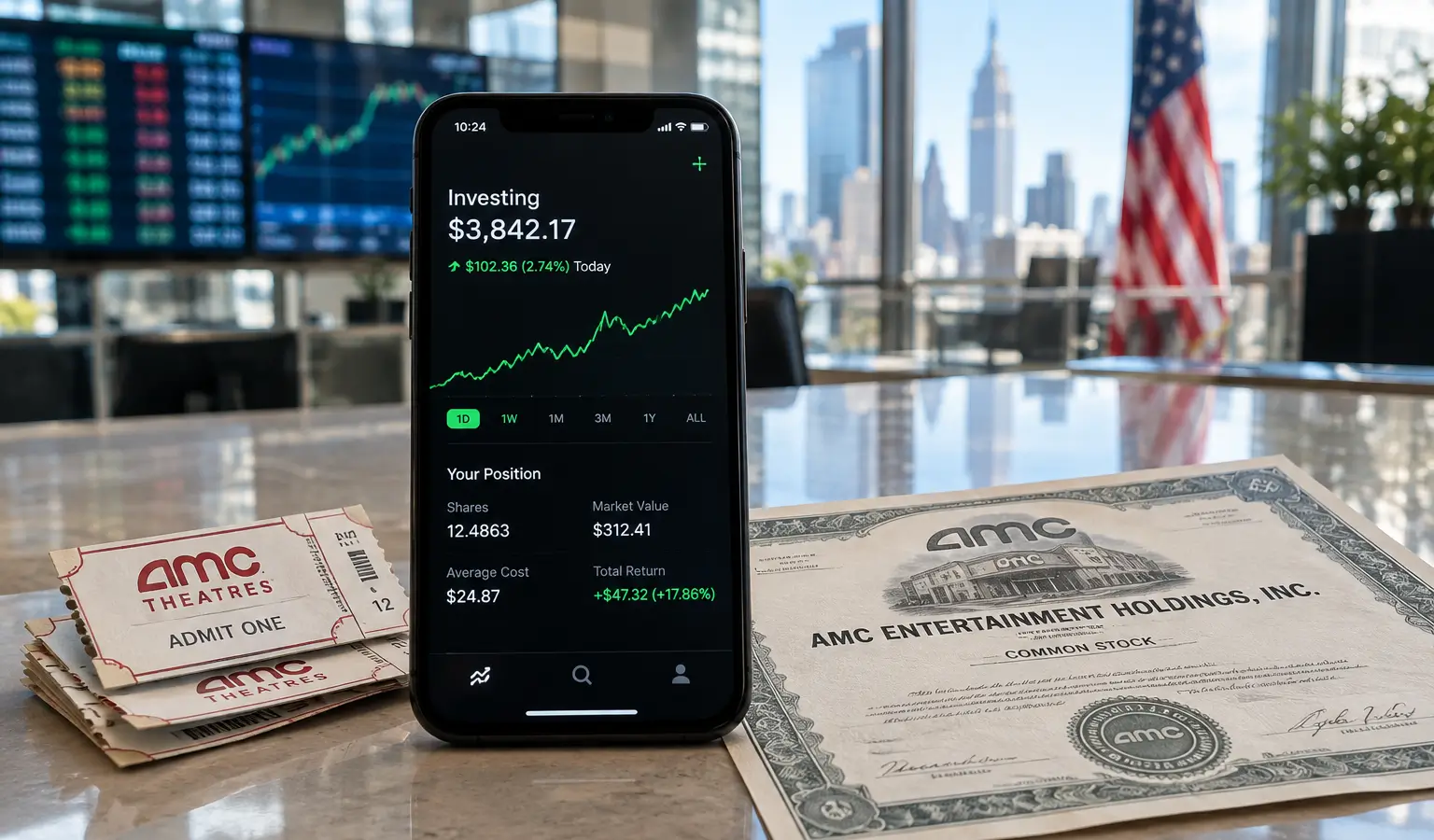
Robinhood and AMC are at odds over tokenized stocks, while the debate in the U.S. is increasingly about what a share actually is. AMC CEO Adam Aron says Robinhood’s product is being offered without permission and calls it a “vile” structure. Robinhood CEO Vlad Tenev says permission is not needed and that the company is responding to international demand for U.S. stocks.
What’s Going On
The disputed products are debt securities from an offshore Robinhood subsidiary. They track a stock’s price, but they do not give buyers ownership of the underlying shares. In the industry, products like these are often called wrappers. According to Aron, this is a fake synthetic stock market, while Tenev sees it as a way to give investors outside the U.S. access to American stocks.
That tension points to a bigger issue. Supporters say tokenization can bring millions of foreign investors closer to U.S. markets, since many of them cannot participate directly or cheaply right now. Critics say these synthetic models weaken the link between demand, trading, and real ownership.
The SEC Draws the Line
On September 17, the SEC drew a clear line with the so-called Innovation Exemption. The rule lets certain blockchain platforms trade tokenized securities, but excludes synthetic tokens. Only tokens that represent real ownership qualify, including the same rights as traditional securities, such as dividends and voting rights.
With this, the regulator is also trying to ease some of AMC’s concerns. Companies must be notified in advance and can object if a third party wants to tokenize their shares. That makes the rule about more than just a technical detail: it is also about control, ownership rights, and who gets to shape market structure.
Earlier, the clash between Robinhood and AMC already raised the same core question: can a company issue a token that tracks a stock’s price without giving shareholder rights?
Why This Matters for Europe
For European crypto readers, this matters because tokenized stocks are increasingly being pitched as a bridge between crypto infrastructure and traditional markets. The U.S. approach shows that regulators are not only looking at innovation, but also at ownership, rights, and market integrity. That could help shape how similar products are judged later in other jurisdictions.