RWA Market Keeps Growing, But Most of It Is Still Quiet On-Chain
New research shows the RWA market has topped $60 billion, but trading is still highly concentrated and often inactive. In Europe, MiCA-style rules also shape liquidity and usage.
Key Takeaways
- Tokenized real-world assets have crossed $60 billion, but the market is still heavily concentrated and only lightly traded.
- Out of 1,289 tokenized assets worth more than $100,000, 910 had no weekly transfers, representing $32.9 billion.
- EU-regulated products make up $3.3 billion, or 6% of the core market, showing how much regional rules still matter.
The market for tokenized real-world assets has now climbed past $60 billion (€52.6 billion), but new research suggests that much of that value is still concentrated, thinly traded, or completely inactive on chain. BeInCrypto Intelligence says the sector is expanding quickly, but it is still a long way from looking like a fully developed market across the board.
Concentration Is Still Extreme
In the Real State of Tokenization in 2026 report, which draws on market data from RWA.xyz, more than 7,000 products across 12 asset classes were tracked. The findings show that just 62 assets account for 88% of total market value, while five products together represent about half of the entire market.
The activity picture is just as uneven. Of 1,289 tokenized assets valued above $100,000 (€87,700), 910, with a combined value of $32.9 billion (€28.8 billion), recorded no weekly transfers. In other words, a large share of the market exists on chain, but it is barely changing hands.
Institutional Friction Is Part of the Problem
According to experts cited by BeInCrypto, part of the challenge comes from the way institutions have to navigate different blockchains and rule sets. Archax CEO Graham Rodford argues that large asset managers should not be forced to pick one network over another, and he is pushing for a regulated layer that covers issuance, trading, custody, and settlement.
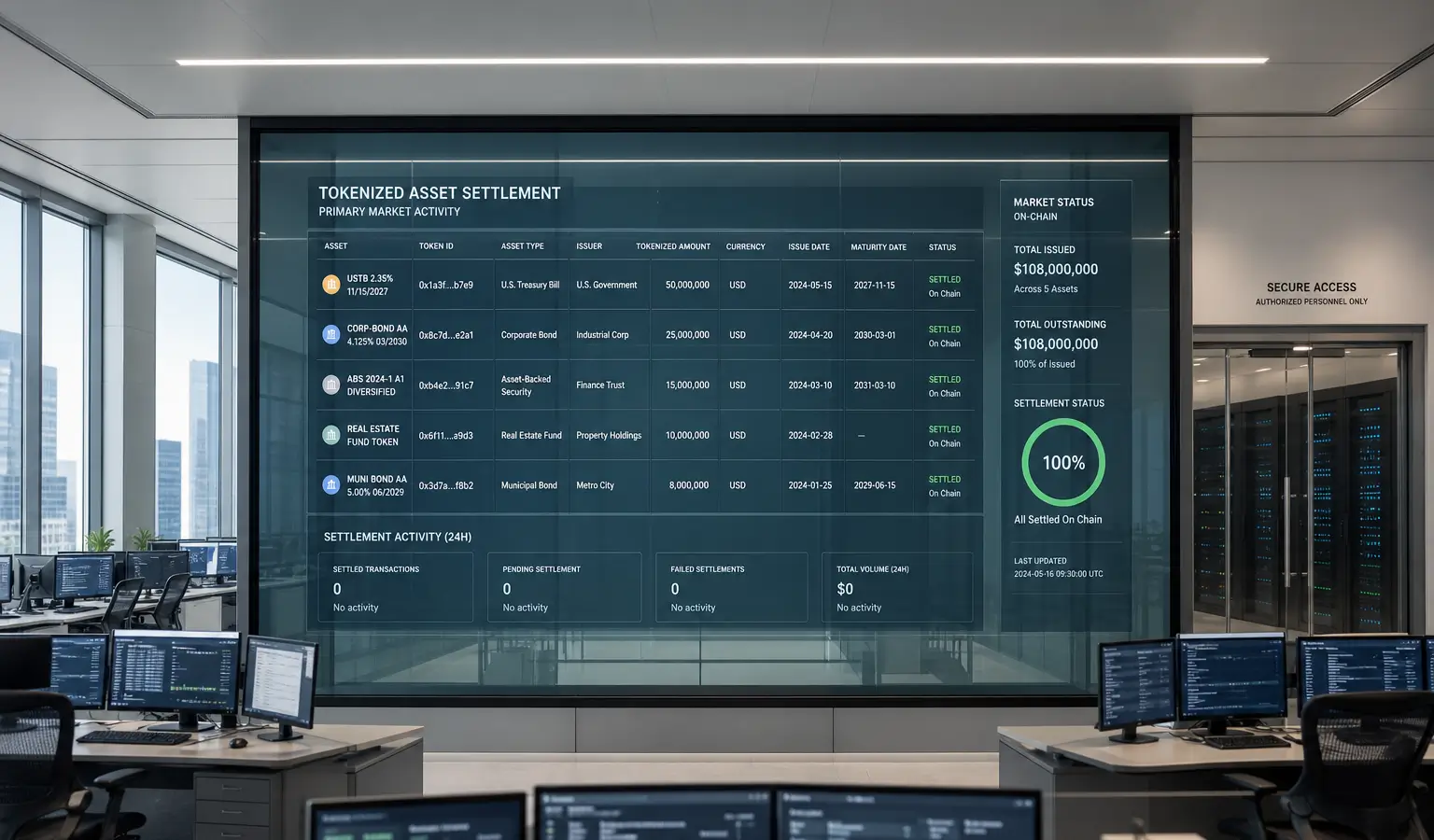
That lines up with a broader shift. Institutional players are increasingly testing tokenized securities inside existing market infrastructure, while regulators in different regions work toward frameworks that actually function in practice. The live test of the DTCC with tokenized securities shows how traditional settlement rails can still matter here. Even so, the market remains highly concentrated, with tokenized U.S. Treasuries making up a large share of total value, which underscores how dependent the sector still is on a handful of product types.
Why This Matters for Europe
For European crypto readers, the main takeaway is that the report puts EU-regulated products at just $3.3 billion (€2.9 billion), or 6% of the core market. That points to the continued importance of regional rules and market structure in shaping where liquidity and usage actually build up.
Sygnum warns in this context about the risk of separate regional liquidity pools if jurisdictions keep applying different standards. For tokenization, that means the job is not just to move more assets on chain, but to make sure they remain usable within local compliance requirements and existing financial workflows.