Samsung Denies Ties to Open USD After 140-Partner Claim
Samsung, Shinhan, and Dunamu deny involvement with Open USD, while the stablecoin faces scrutiny over its claimed network of 140 partners. The dispute also highlights competition with USDT and USDC.
Key Takeaways
- Samsung Electronics and several major Korean financial firms say they do not have formal ties to Open USD.
- Open Standard launched Open USD with a claimed network of more than 140 companies, including 13 Korean entities.
- The denials put the stablecoin’s partner list under scrutiny and add another wrinkle to competition in the stablecoin market.
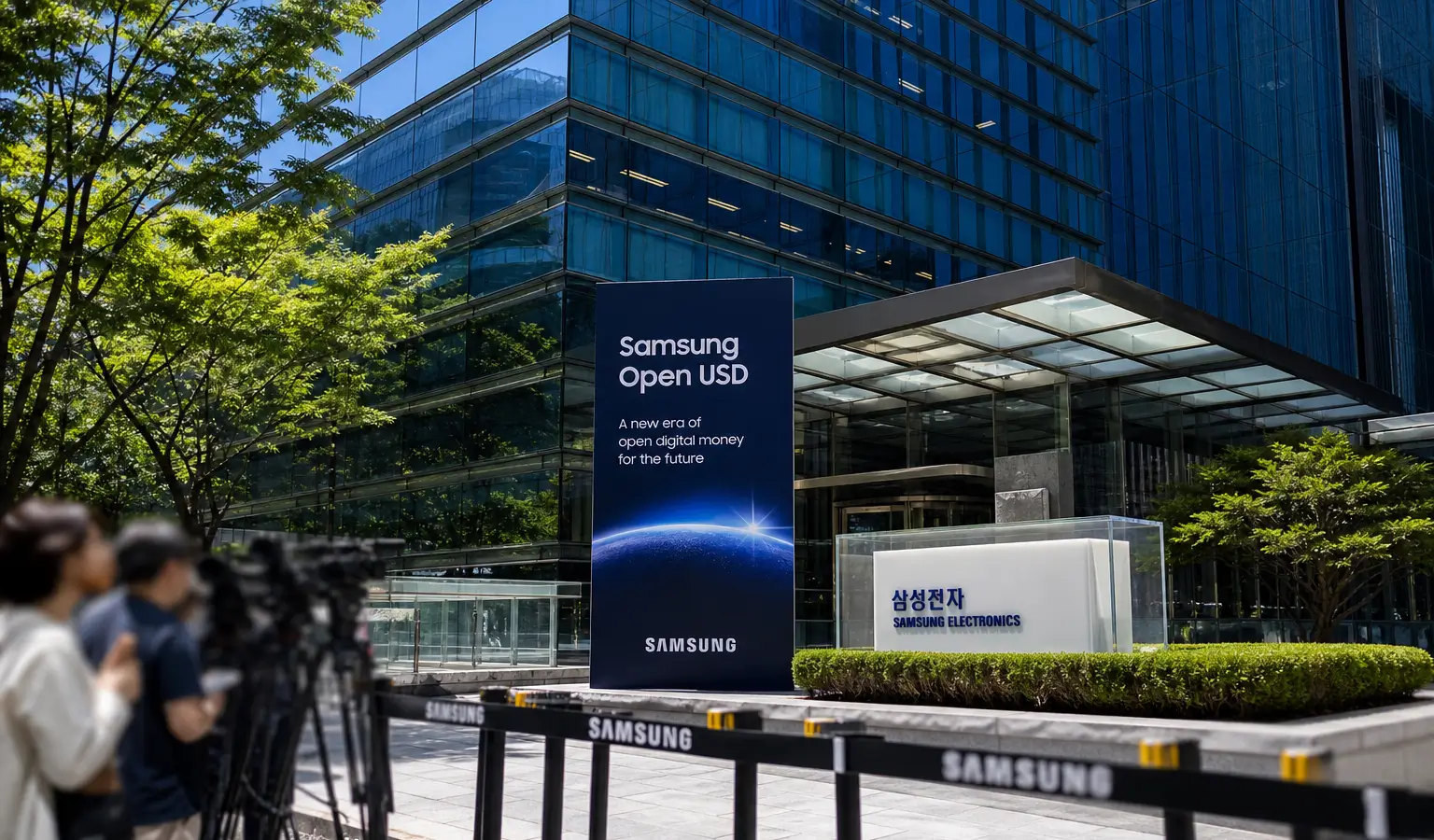
Samsung Electronics and several major Korean financial firms are denying formal ties to Open USD, the dollar-pegged stablecoin that launched this week with a claimed network of more than 140 companies. The pushback quickly casts doubt on one of the largest partner lists the stablecoin market has seen so far.
Korean Names Distance Themselves
Open Standard unveiled Open USD on June 30 and said partner firms would get fee-free minting along with a share of reserve revenue. The roster includes major names such as Visa, Mastercard, Stripe, BlackRock, and Coinbase, plus 13 Korean entities including Samsung Electronics, Dunamu, Shinhan Financial Group, and K Bank.
That list did not hold up for long. Within days, at least four of the named firms moved to distance themselves. According to Chosun Biz, a Samsung spokesperson said the company had not held any official discussions and did not even know what role it would play in the consortium. Shinhan, Dunamu, and KBank said Open Standard had only asked whether they were interested in joining, even though their names still appeared on the member list.
Another company named in the lineup gave a similar response, saying it was surprised to see through local media that it had been included as a member.
Why This Matters for the Stablecoin Market
The controversy matters because Open USD is not relying on brand recognition alone. It also uses a revenue-sharing setup that sends reserve income back to participants. That makes the actual makeup of the partner network especially important, since it is central to the stablecoin’s credibility and to how the project is supposed to work.
The timing is sensitive as well. The stablecoin market is still dominated by Tether and USD Coin, which together account for more than 80 percent of a market worth about $311 billion (€272 billion), according to DefiLlama data. Open USD is trying to position itself as an alternative, but the Korean denials show that who is truly involved may matter just as much as the launch announcement.
Competition and Regulation
Open USD’s debut also fits into a wider battle over distribution and institutional backing. Visa's own stablecoin strategy shows how major payment networks are becoming more active in the market, while Stripe earlier paid $1.1 billion (€1 billion) for Bridge, the crypto company led by Open Standard CEO Zach Abrams.
Meanwhile, regulation for stablecoins remains fragmented across the world. Different jurisdictions use different rules and definitions, which can make it harder to launch and connect new stablecoins. For South Korean companies, there is also the unresolved debate over a won-pegged stablecoin, even as domestic crypto rules continue to tighten.