Samsung Wallet Adds USDC to 82 Million Galaxy Devices
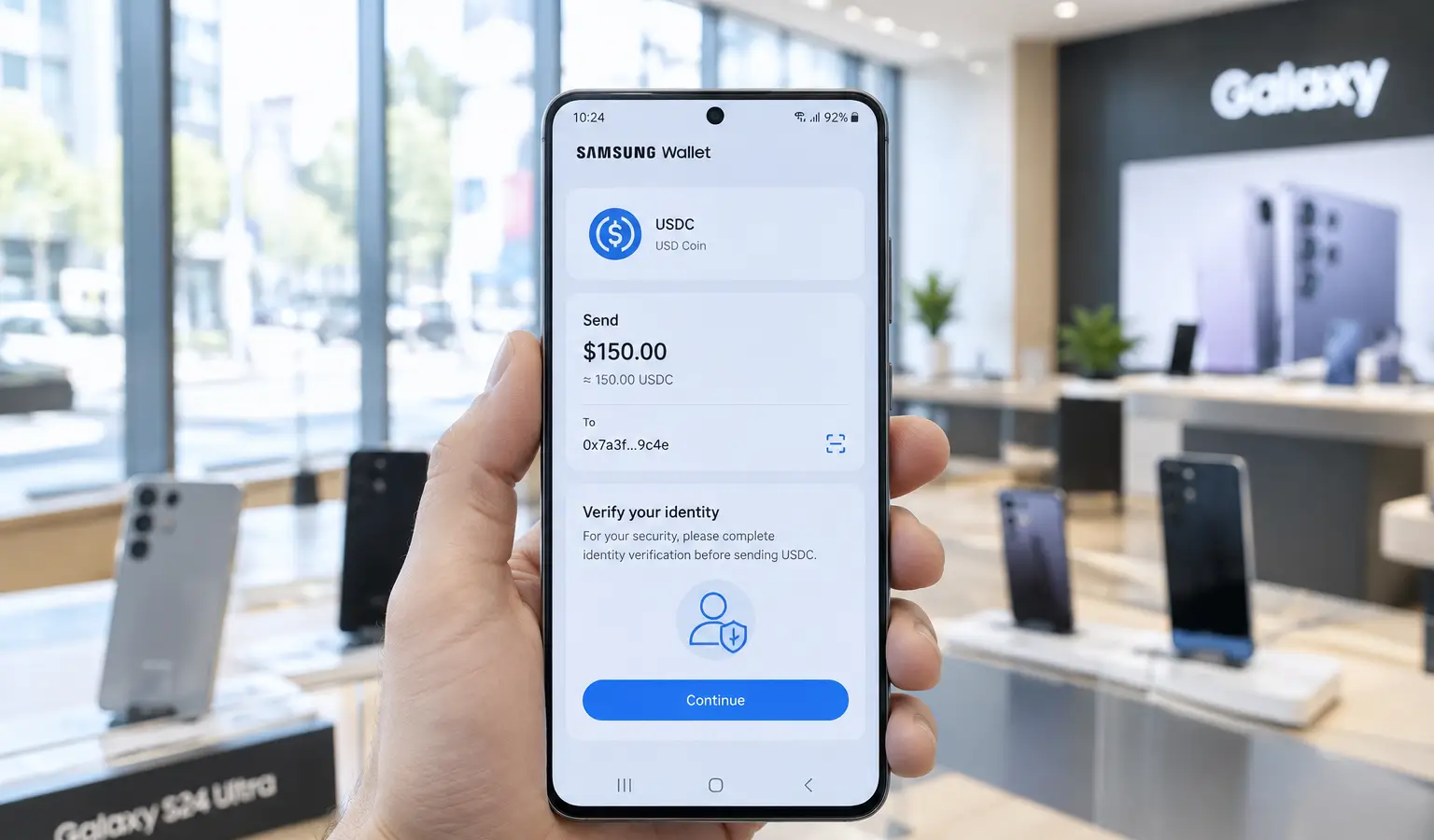
Samsung is linking USDC to Wallet on Galaxy devices in the U.S., with Coinbase and Bastion behind the scenes. The feature launches at the end of October and requires identity checks.
Key Takeaways
- Samsung Wallet will support USDC transfers at the end of October on 82 million eligible U.S. Galaxy devices.
- Users will first have to go through identity checks; the service runs through Bastion, Coinbase, and infrastructure on Solana.
- With Samsung Wallet, users can send USDC and transfer money to bank accounts in more than 60 countries.
Samsung Wallet will make USDC transfers available at the end of October on 82 million eligible U.S. Galaxy devices, without users needing a separate crypto app. Anyone who wants to use the service will still have to go through identity checks first.
Who Runs the Service
Coinbase called USDC the first stablecoin supported by Samsung Wallet. Samsung describes the setup itself as a chain of parties behind the scenes. According to Samsung, Bastion manages the accounts and provides the payment infrastructure, while Coinbase acts as sub-custodian and stores the USDC in Prime Vault.
Bastion has a trust charter in New York and is backed by Andreessen Horowitz and Coinbase Ventures, among others. Samsung also said that the transfers run through Solana, although the company also mentions Sui and other infrastructure partners. The 82 million figure refers to compatible devices, not the number of users who will actually turn on the feature.
What Users Can Do
With Samsung Wallet, users can send USDC to crypto wallets abroad without a Samsung fee. They can also transfer money to bank accounts in more than 60 countries, with the recipient getting local currency.
Samsung says the fees vary by destination and amount. That makes it hard to say ahead of time how competitive the service will be compared with traditional bank transfers. A study from Banca d'Italia previously showed that stablecoin remittances are not automatically cheap, because exchange rates and payout costs in particular can add up fast.
Why This Matters
For European crypto watchers, this is especially interesting because stablecoins are moving further from exchange apps and into a standard feature on a major phone wallet. It shows how quickly crypto payments are being built into everyday consumer apps, without users first having to install a separate wallet.
For now, Samsung is limiting the feature to transfers. Tap-to-pay in stores is still on the roadmap, according to the company, but no concrete launch date has been announced yet. Apple has not announced stablecoin support for Apple Pay so far.
Also, Visa's broader payment pilots show that major payment networks are increasingly treating stablecoins as part of their infrastructure. Samsung is now taking a similar step, but directly inside consumers' phone wallets.