Kazakhstan and Tether Test Stablecoin and Tokenization
Kazakhstan is exploring a tenge stablecoin and tokenization of real-world assets with Tether. The pilot in Alatau fits into the central bank’s tighter digital asset framework.
Key Takeaways
- Kazakhstan is exploring a stablecoin tied to the tenge together with Tether and the Alatau City Authority.
- The parties are signing a memorandum and want to first study use cases, similar tokens, and a possible pilot.
- Tokenization of assets such as bonds or real estate is also on the agenda for a pilot in Alatau.
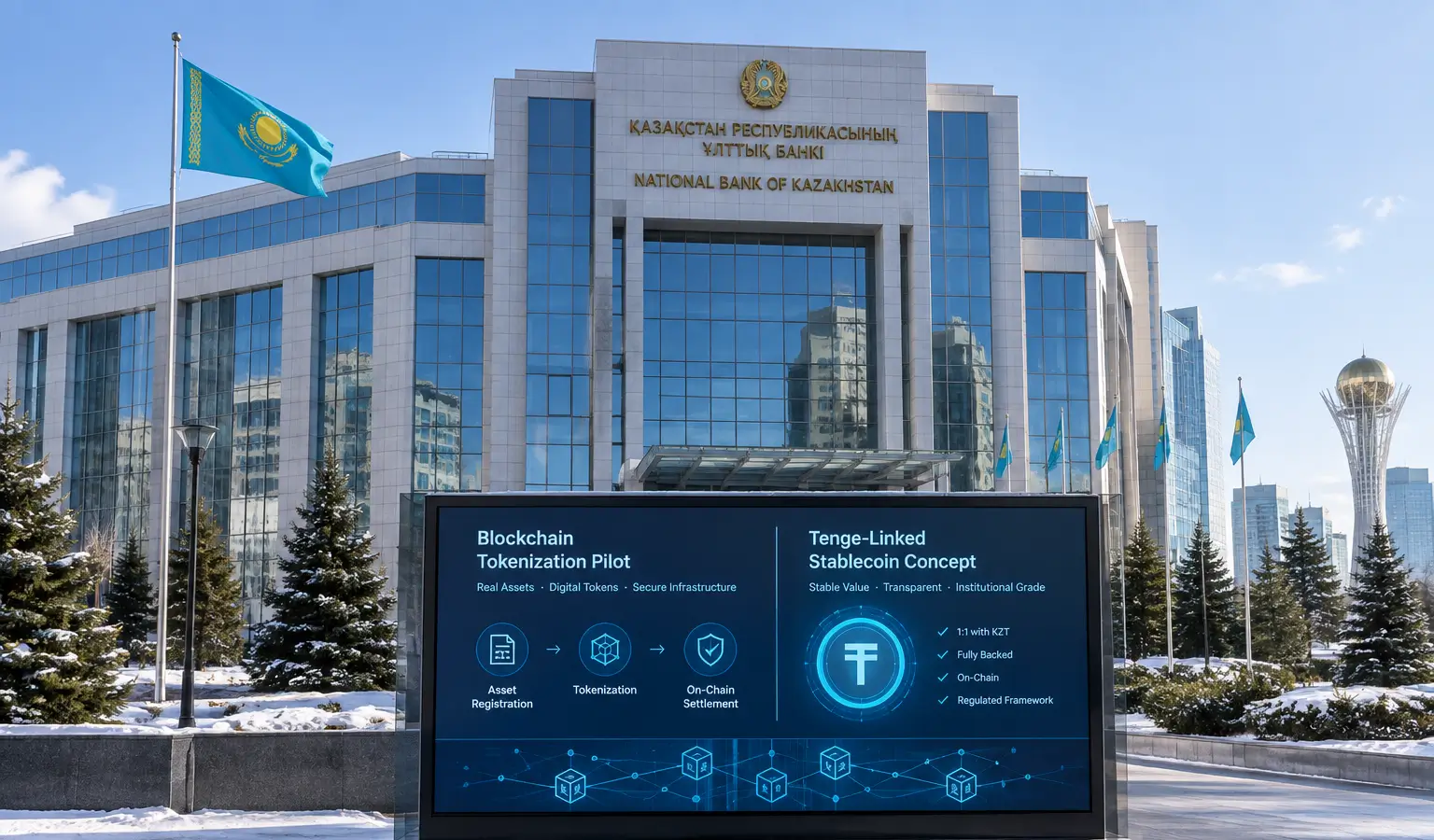
Kazakhstan is taking a new step in its digital asset policy. Together with Tether, the country is exploring whether a stablecoin can be linked to the tenge and whether real-world assets can be tokenized via blockchain. The National Bank of Kazakhstan, Tether, and the Alatau City Authority have signed a memorandum of understanding for this. This is clearly an exploration, not a final decision.
Tenge Stablecoin Under Review
The parties first want to look at how similar tokens work elsewhere, what use cases are possible, and what a pilot could look like. A stablecoin tied to the Kazakh currency is central to that effort. The central bank stressed that the outcome is still open and that no decision has been made to actually issue such a token.
That caution fits Kazakhstan’s broader approach. Earlier this year, the central bank introduced extensive rules for digital assets, with crypto and digital financial assets treated separately. Stablecoins and tokenized assets now fall under a clearer legal framework, which should make the country more attractive for experiments with new financial products.
Tokenization Gets a Place in Alatau
Alongside the stablecoin, tokenization is also on the table. That could let assets such as bonds or real estate be turned into blockchain-based representations so they can be transferred, traded, or used as collateral digitally. The parties want to determine which asset classes are suitable and prepare a pilot in Alatau, a city with a special legal regime meant in part to encourage fintech.
Tether’s Hadron platform is one of the technologies being considered. That platform is designed for issuing and managing tokenized assets. The move fits Tether’s broader shift beyond USDT, the world’s largest dollar stablecoin, and earlier collaborations around tokenization in other countries. The role of stablecoins and tokenization in speeding up capital movement also fits into that broader trend.
Why This Matters for Europe
For European crypto followers, this is especially interesting because it shows how central banks and private companies are increasingly trying to test stablecoins and tokenization in a regulated setting. Kazakhstan has been building its digital asset rules for some time and is now tying that to concrete pilots. That could matter for people watching how countries outside Europe shape the infrastructure around stablecoins, tokenized assets, and DeFi.