Singapore Wants 100% Stablecoin Reserves and a Ban on Yield
MAS wants stablecoins to be fully backed by reserves held at licensed institutions and no longer allow interest. The rules line up with MiCA and also affect Ripple’s RLUSD test in Singapore.
Key Takeaways
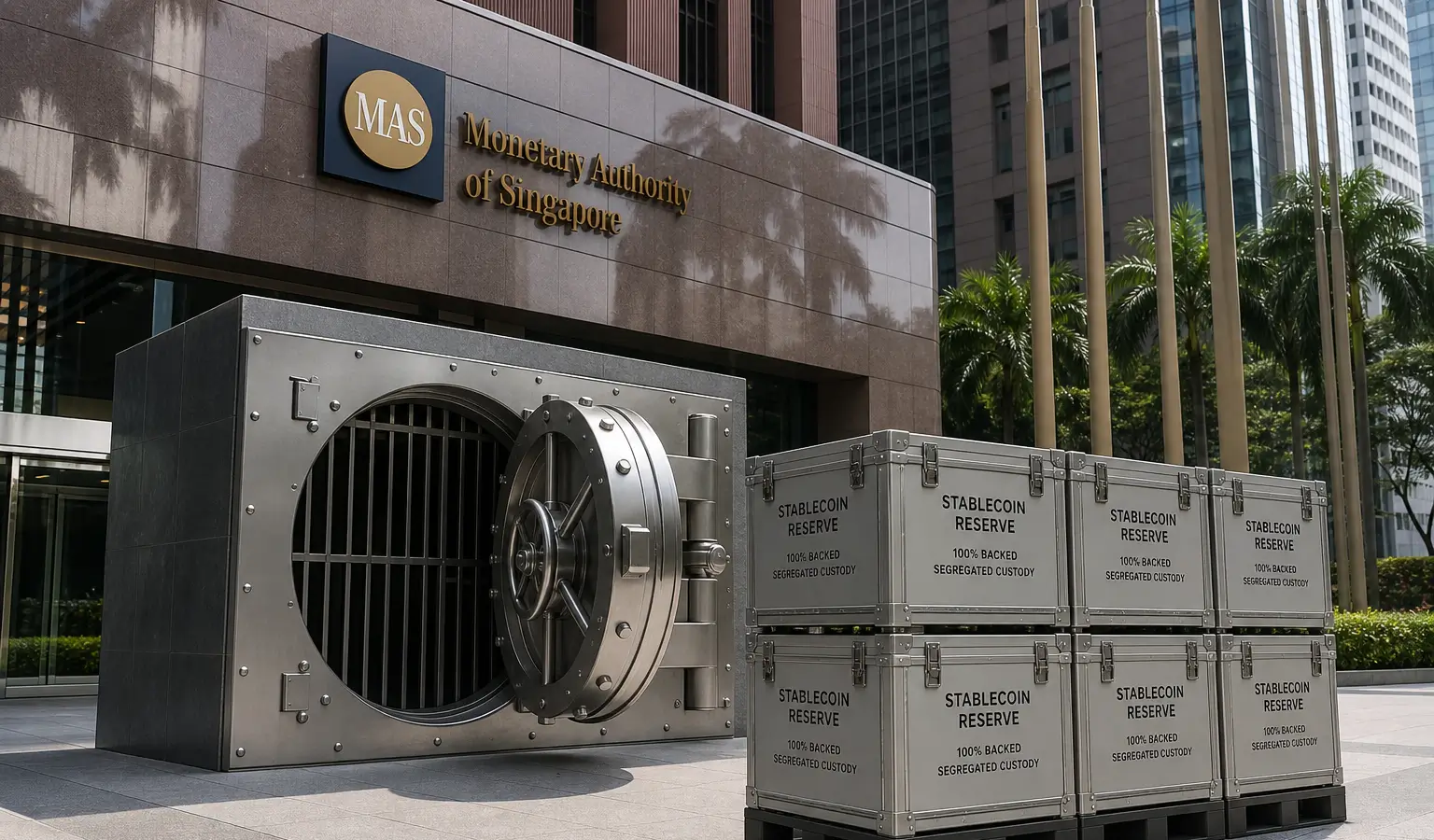
- Singapore wants to require stablecoin issuers to fully back tokens with 100% reserves and keep those reserves separate at licensed institutions.
- The Monetary Authority of Singapore also wants to ban issuers from paying interest or other yield on stablecoins.
- The proposal is still in consultation until October 16; meanwhile, Ripple is testing RLUSD in Singapore’s central bank sandbox.
Singapore wants to tighten the rules for stablecoins with a proposal that would require issuers to fully back tokens with reserves and stop paying yield. The Monetary Authority of Singapore, or MAS, wants to make the status of a regulated stablecoin more formal while also increasing protection for holders.
Stricter Reserve Requirements
Under the proposal, issuers would have to always hold assets equal to at least 100% of all outstanding tokens. Those reserves must be kept separate from the issuer’s own capital and stored only with licensed financial institutions. MAS also wants the funds to remain safe while a customer redeems their stablecoin.
The regulator says stablecoins are meant for payments, not as an investment product or a way to generate returns. Because of that, issuers would also no longer be allowed to pay interest or other benefits directly tied to holding stablecoins.
Alignment With International Rules
That approach lines up with broader rules already in place elsewhere. In the European Union, MiCA already forbids stablecoin issuers from paying interest or yield, and in the United States, the GENIUS Act includes a similar restriction for payment stablecoins. For European crypto followers, that matters because this proposal shows Singapore is clearly moving closer to how major markets now want to define stablecoins.
MAS stresses that well-regulated stablecoins can serve as a credible settlement asset in tokenized financial markets. At the same time, the proposal is still in consultation, which runs until October 16. There is still no launch date, and details such as joint issuance and transition rules still need to be worked out later.
Ripple Tests RLUSD in Singapore
The timing stands out because regulated stablecoins are already being tested in practice in Singapore. Ripple is exploring in Singapore’s central bank sandbox whether RLUSD can replace manual payment processes that have slowed cross-border trade for years. That test is part of BLOOM, a MAS initiative focused on settlement for tokenized bank liabilities and regulated stablecoins.