Solana Executive Lily Liu Outlines a Token Supercycle
Liu sees tokenization as a structural shift, with stablecoins, onchain stocks, and AI as the driving forces. Companies like NYSE, DTCC, and LSE are also exploring that infrastructure.
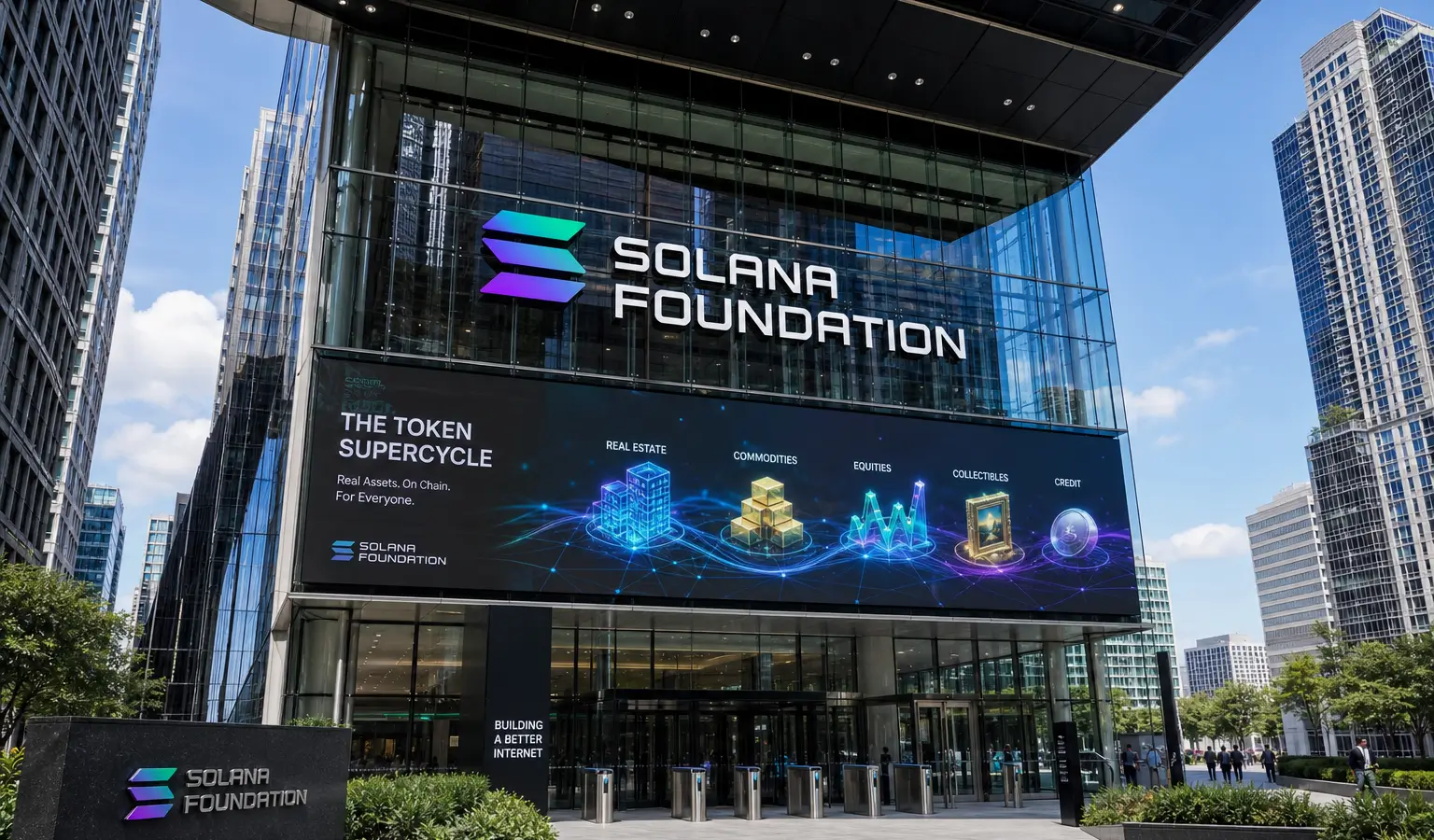
Key Takeaways
- Lily Liu calls tokenization a long-term shift that moves money, assets, and ownership onto always-on internet infrastructure.
- According to Liu, the Token Supercycle will come through stablecoins, institutional onchain assets, fast infrastructure, and programmable money for AI.
- The market for tokenized real-world assets grew to about $2.3 trillion in June 2026, while major financial firms are exploring onchain markets.
Lily Liu, president of the Solana Foundation, says tokenization goes far beyond a new crypto hype cycle. In her view, money, assets, and ownership are moving onto always-on internet infrastructure, changing not just distribution but also the way value is issued, managed, financed, and traded.
What the Supercycle Means
Liu describes the so-called Token Supercycle as a long shift in the crypto market and beyond. She compares it to earlier supercycles in commodities and reconstruction, but says tokenization is coming from three directions at once this time: through stablecoins, through financial institutions bringing assets onchain, and through infrastructure that is fast and cheap enough for real economic activity.
According to her, there is also a fourth factor: AI. Software that can act as an economic actor needs programmable money so it can pay, receive, and send funds on its own. The core of her argument is that this is no longer just about access to tokens, but about a different base layer for ownership and capital.
More Assets on the Blockchain
A big part of her argument comes down to distribution. In the old system, many assets stay locked in separate markets because of rules, minimum ticket sizes, or geographic boundaries. According to Liu, tokenization can break that open because an asset issued somewhere can, in principle, be distributed and traded everywhere.
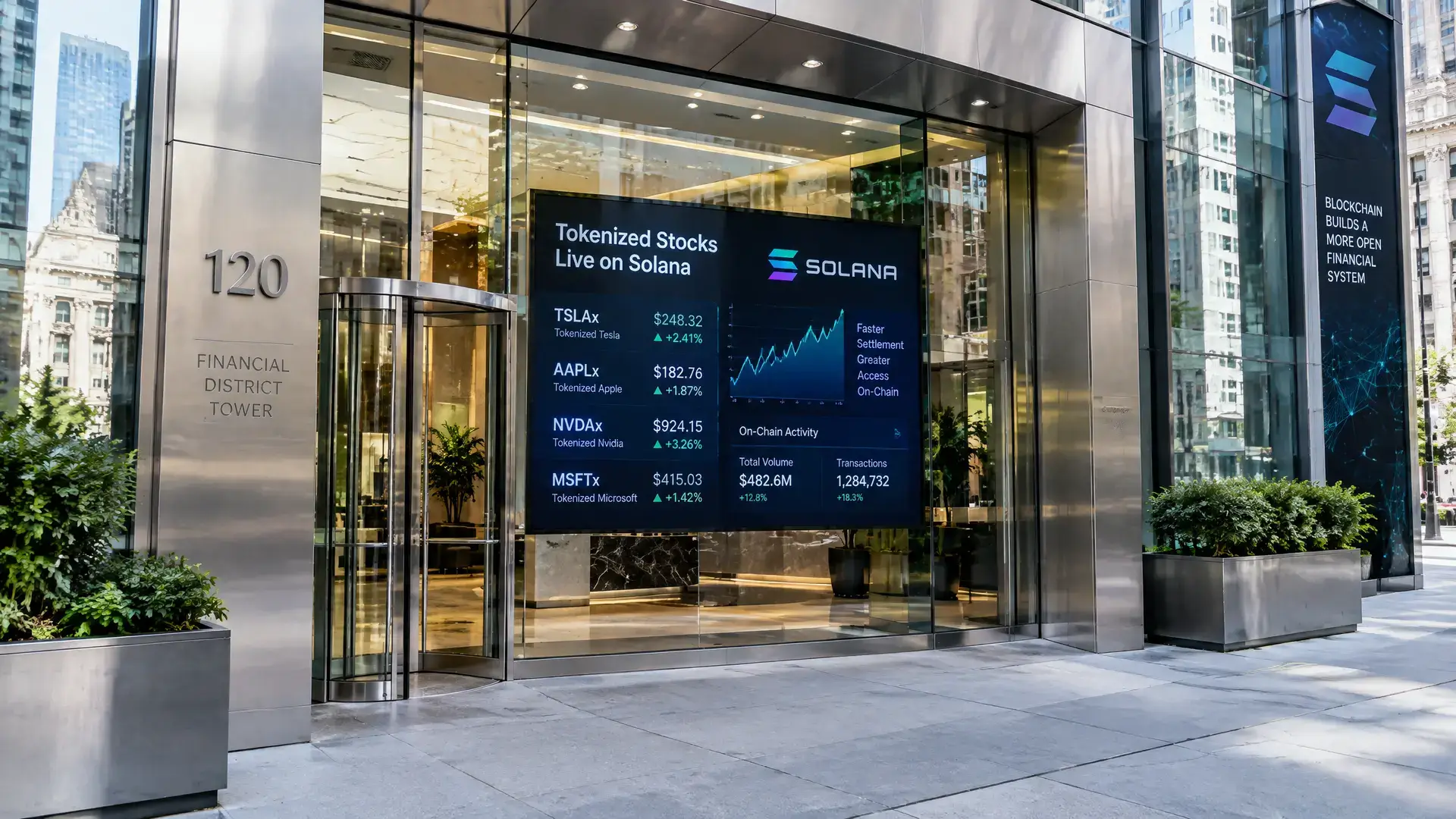
She points out that tokenized Treasuries, stocks, private credit, and other assets are already being traded on Solana. She also notes that major players like the New York Stock Exchange, DTCC, and the London Stock Exchange are exploring what onchain stock markets could look like. That fits into a broader trend: according to the IMF, tokenization is not a simple technical upgrade, but a shift that could bring settlement, custody, and asset management closer together.
Meanwhile, the global market for tokenized real-world assets has grown to about $2.3 trillion (€2 trillion) in June 2026, showing how quickly this market is developing. For European crypto readers, that matters because it shows tokenization is no longer just a niche inside crypto, but is increasingly touching the infrastructure of traditional capital markets.
For that development, the question of how fast the network itself can settle is also relevant. Solana is preparing Alpenglow, for example, an upgrade that is supposed to cut finality to about 150 milliseconds.
Why This Matters Now
Liu also lays out how payments, settlement, asset issuance, and markets can increasingly run on the same programmable rails. She points to examples like Visa, PayPal, MoneyGram, and Western Union, which are already working with Solana around payments and stablecoin flows. In her view, that shows the line between crypto infrastructure and traditional financial services is fading further.
For readers in Europe, the combination of stablecoins, institutional adoption, and market infrastructure is especially relevant. The question is no longer just which token goes up, but how the tradability, ownership, and financing of assets are being technically rebuilt.