Solana and Tron Lead Crypto Drop After Iran Attack
Solana and Tron took the hardest hits, while bitcoin held around $77,500. The risk-off move followed the U.S. strikes on Iran and rising oil prices and rate worries.
Key Takeaways
- Solana and Tron each fell more than 3% over 24 hours after the U.S. strikes on Iran.
- Bitcoin lost about 1% and traded around $77,500, while BNB was the best-performing major coin with a drop of less than 1%.
- Oil, higher rates, and risk-off worries weighed on crypto, with key macro data coming later this month.
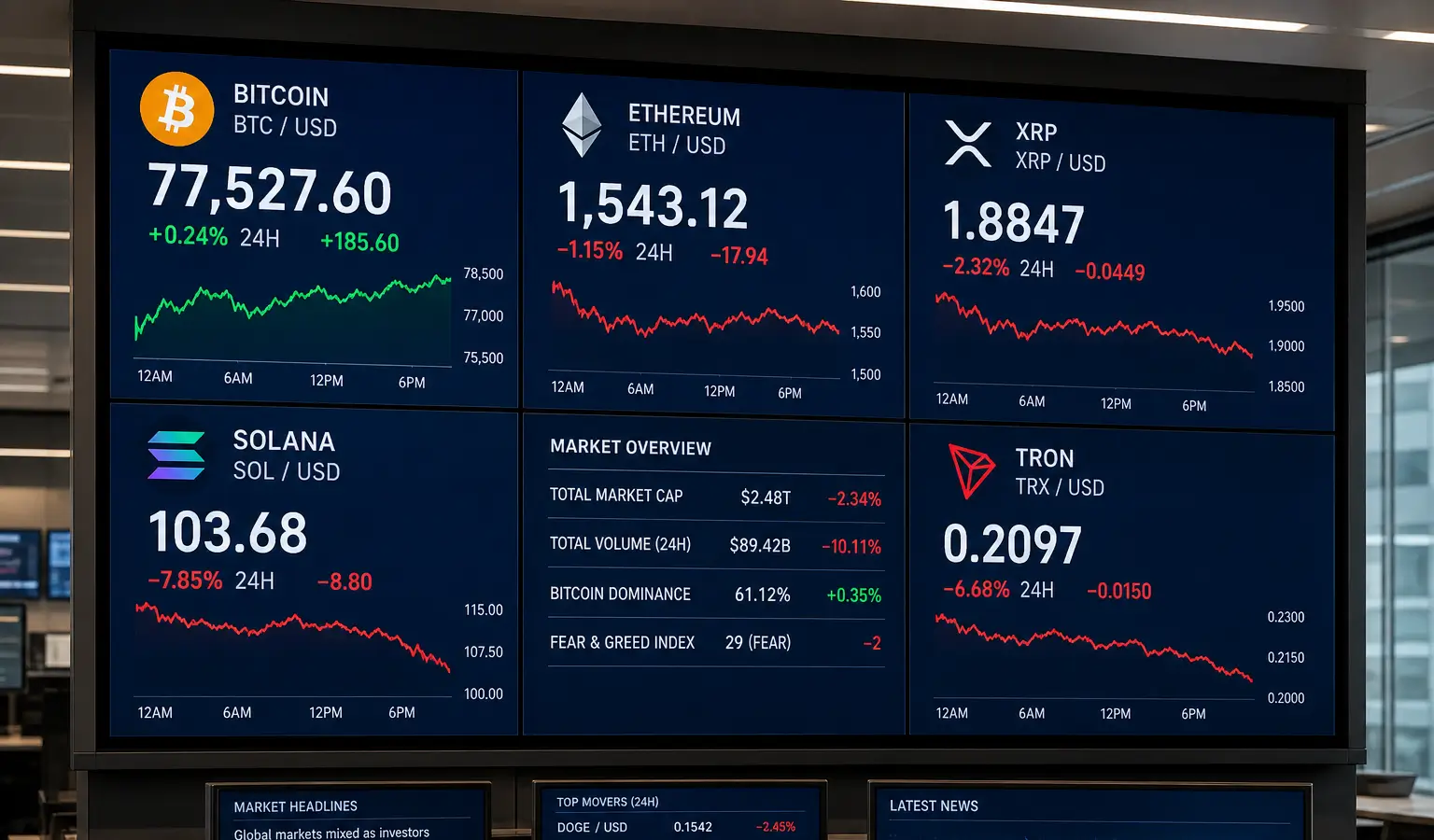
The sell-off in the crypto market after the U.S. strikes on Iran did not hit every coin equally hard. Solana and Tron each fell more than 3% over 24 hours, while bitcoin lost about 1% and traded around $77,500 (€66,900) during Asian hours on Wednesday. That shows traders first cut the fastest and riskiest positions, while the market’s base layer held up relatively better.
Major Coins Under Pressure
Solana slipped back to around $100 (€86) and Tron to around 32 cents, making those two the weakest major coins of the session. Ether fell 2% to just above $2,414 (€2,080) and XRP lost almost 2% to around $1.35 (€1.16). Dogecoin dropped nearly 2% to just above 8 cents and HYPE gave up more than 1% to around $83 (€72). BNB held up best with a drop of less than 1% to $687 (€593).
Notably, all of these coins recovered a bit later in the day, while Asian stock markets posted their steepest losses. That fits a broad risk-off move, where investors first exit volatile positions and only then look at possible repositioning.
Oil and Rates Set the Tone
The immediate trigger was mostly outside crypto. Brent crude climbed above $95 (€82) after the attacks fueled worries about shipping through the Strait of Hormuz. At the same time, the yield on the U.S. 10-year Treasury touched 4.81% overnight, the highest level in about three years. Japanese government bonds also moved sharply: the five-year yield hit a record and the 10-year yield reached 3% for the first time in three decades.
That move spilled over into stocks and the crypto market. Japanese stocks fell more than 2% and South Korea’s Kospi lost more than 3%. For crypto, the key point is that higher rates and rising expectations for a rate hike make the room for risky assets smaller. Traders on CME FedWatch now price the chance of a rate hike in September at 66%, up from about 40% a week earlier.
What This Means for Crypto
For European crypto investors, this is mainly a reminder that major geopolitical shocks can quickly hit liquidity and sentiment. When oil, bond yields, and stocks all move at once, major tokens like Solana, Ether, and XRP are often the first to face extra selling pressure. That makes days like this relevant for the broader crypto market, even if the cause comes from outside the sector.
Solana had already been under pressure in recent weeks because of concerns about network stability, after the network nearly froze due to a routing error, according to reports. Technical risks like that can add even more selling pressure on weak market days.
Bitfinex analysts had already said ahead of time that bitcoin would likely need to consolidate or grind higher slowly unless a broader pullback in risky assets dragged BTC lower too. LMAX Group market strategist Joel Kruger pointed to $80,000 (€69,000) as an important upside zone, with the May peak around $82,820 (€71,500) above that. Friday’s U.S. jobs report and the inflation data on September 11 could decide whether those levels stay out of reach for now.