Solana Tests Alpenglow on Second Testnet
The upgrade is meant to bring Solana’s finality back to around 150 milliseconds, which is especially relevant for exchanges and payment apps. No launch date has been set yet.
Key Takeaways
- Solana has rolled out the Alpenglow upgrade on the public developer network and the second testnet.
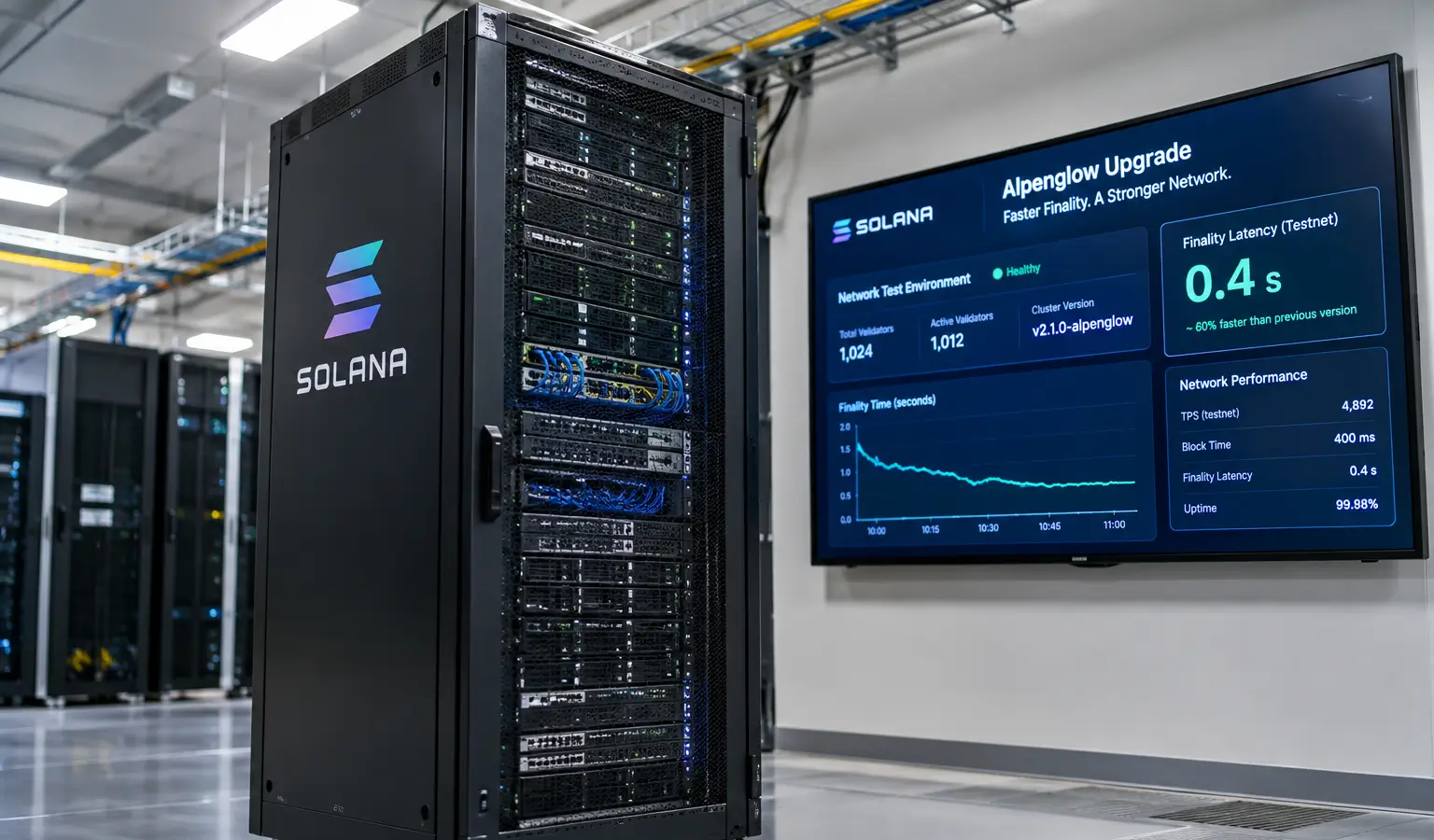
- Alpenglow is meant to bring finality back to about 150 milliseconds, compared with around 12.8 seconds now.
- There is still no launch date for the live network; a later phase, Rotor, also has no activation date yet.
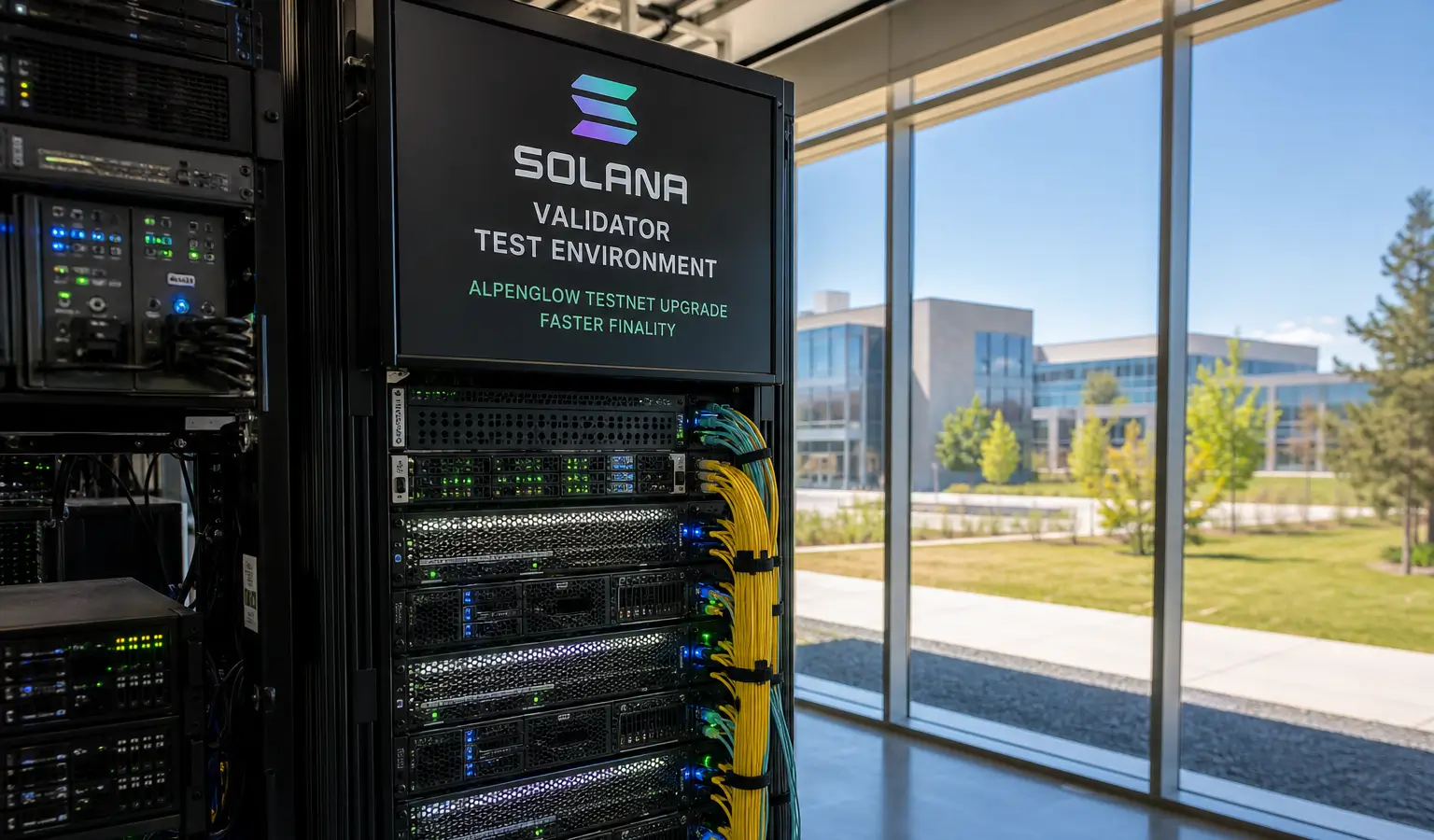
Solana has now also rolled out its planned Alpenglow upgrade on the public developer network, after the separate testnet was already switched over a day earlier. That lets developers test their apps before the blockchain with real money gets the new way of settling transactions.
Alpenglow is meant to bring finality back to about 150 milliseconds. Under the current setup, it still takes around 12.8 seconds before a transaction can no longer be reversed. That difference matters for uses like crypto exchanges and payment apps, where it needs to become clear faster that a deposit or payment is really complete. Earlier, Solana already took a first step with the test phase of Alpenglow on testnet, which first put the upgrade through its paces in a controlled environment.
What Alpenglow Changes
Anza, the company working on Solana’s core software, announced the switch on September 25. The Solana Foundation shows on its upgrade page that Alpenglow is now active on both public test networks.
The upgrade changes how validators, the computers that verify transactions, reach agreement with each other. Instead of storing their votes as transactions in blocks, they exchange those votes directly. According to the plan, network coordination can then be finished in one or two voting rounds.
The Foundation also says that applications that only send transactions and read account balances do not need to migrate. Services that build transaction histories do need to adjust their systems, though, because validator votes will no longer count in the data in the same way.
Why This Matters for Users
For European crypto users, the main point is that faster processing can mean less waiting for deposits, withdrawals, and in-app payments. At the same time, this is still a test phase: the 150 millisecond figure is based on simulations and has not yet been proven under live market conditions. Wallet processing and exchange checks can also still take extra time.
No Launch Date Yet
There is still no fixed date for the live network. Anza’s software schedule does leave room to activate features again starting September 28, but it does not name that date as the launch moment for Alpenglow.
A later phase, Rotor, is meant to replace the current way blocks are spread with a single relay layer. No activation date has been set for that yet.