South Korea Puts Crypto Treasury Companies Under Pressure With KOSDAQ Rules
Stricter KOSDAQ thresholds are increasing delisting risk for publicly traded Bitcoin treasury companies, even as the FSC has loosened rules on corporate crypto investing.
Key Takeaways
- South Korea is tightening KOSDAQ listing rules on July 1, with higher market cap requirements and a faster path to delisting for companies that fall short.
- Crypto treasury companies, including DATs with Bitcoin on their balance sheets, will face closer scrutiny even after the country eased corporate crypto investing earlier this year.
- Bitplanet is a clear example: the company holds 300 BTC, plans to build that to 10,000 BTC, and is also looking for revenue beyond its balance sheet strategy.
South Korea is set to make life harder for crypto treasury companies when its stock market rules tighten again on July 1. For some listed firms, that could mean a fresh and immediate delisting risk. Companies that have stacked Bitcoin on their balance sheets and benefited from paper gains over the past few months are now being pushed into a tougher KOSDAQ environment.
New Thresholds on KOSDAQ
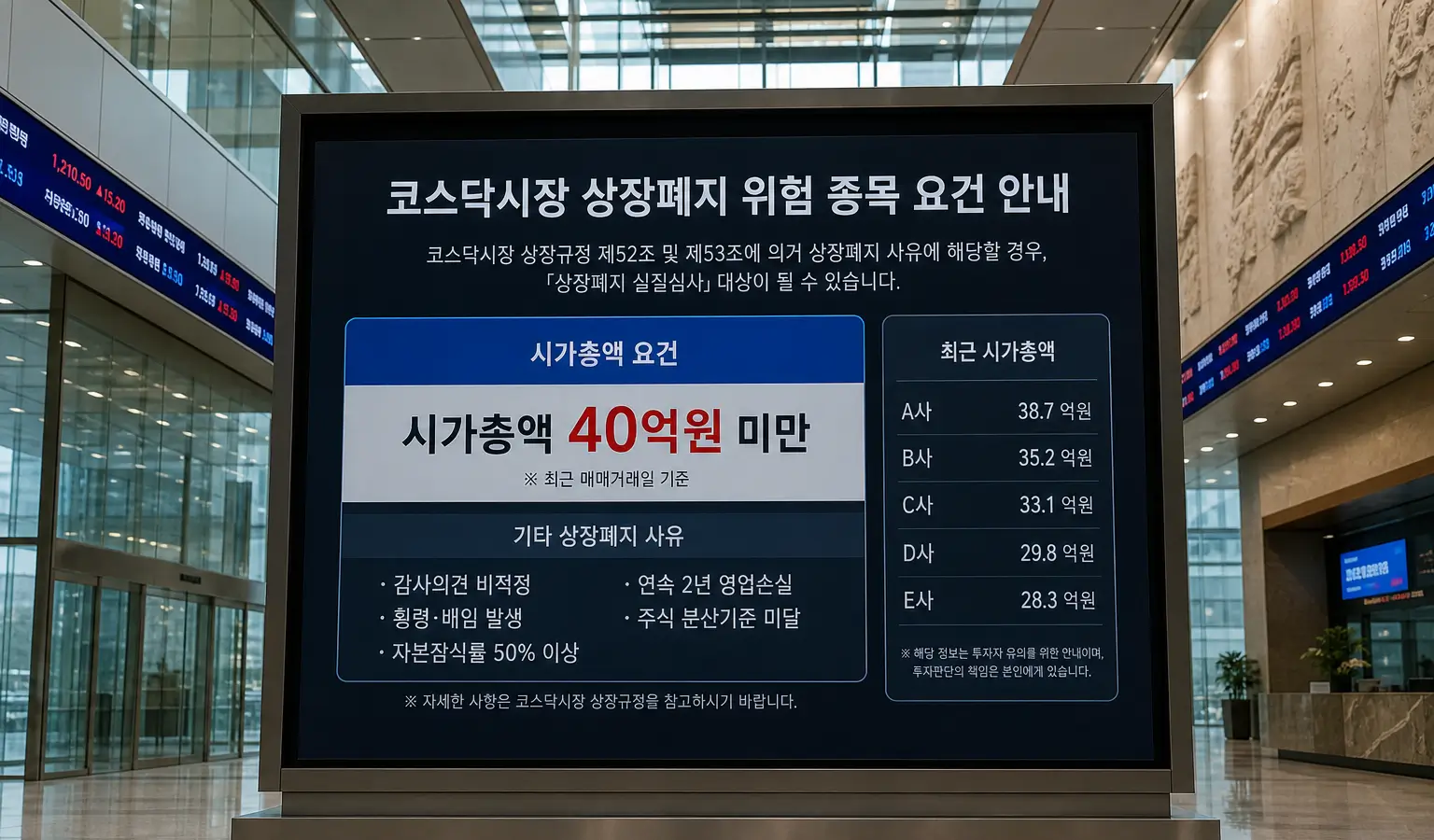
At the center of the change is a straightforward rule update: the minimum market cap for KOSDAQ companies will increase to 200 billion won at the end of 2026, or about $145 million (€127 million). Then, starting in January 2027, the bar rises again to 300 billion won, or roughly $217 million (€190 million). Any company that remains under the required level for 30 consecutive trading days will be classified as a managed stock and could be automatically delisted within 90 days if it does not recover within 45 straight days.
That timing is especially important for so-called DATs, or Digital Asset Treasuries. These are listed companies that treat crypto as a core balance sheet asset, a model first made popular in the U.S. by Strategy and later copied in Japan by Metaplanet. In South Korea, that approach now faces a stricter review, even though the Financial Services Commission earlier this year ended its nine-year ban on corporate crypto investing and allowed companies and professional investors to allocate up to 5% of their equity to digital assets each year.
Bitplanet as a Clear Example
Bitplanet shows how quickly these rules can start to bite. The company was created in July 2025 after the KOSDAQ-listed SGA was acquired by a consortium led by Asia Strategy and Sora Ventures. Bitplanet currently holds 300 BTC and has said it wants to expand that position to 10,000 BTC over time.
Its strategy is closely tied to overseas examples. CEO Lee Seong-hoon has previously cited Strategy and Metaplanet as the model, casting Bitplanet as one of South Korea’s first listed companies built around a treasury-first crypto strategy. Even so, the company is also trying to build income outside of its balance sheet bet, including an MOU with Nasdaq-listed Antalpha for Bitcoin mining equipment worth about 15 billion won, or $10.8 million (€9.5 million), in Oman and Paraguay.
Why This Matters Beyond Korea
For European crypto readers, the bigger takeaway is how quickly South Korea is becoming more open and more restrictive at the same time. The FSC wants to bring in more capital by easing corporate crypto investing, but the KOSDAQ changes make one thing clear: being listed and holding crypto on the balance sheet are not automatically compatible. The new rules also block companies from sidestepping delisting through capital reductions or stock splits, which shifts the emphasis toward formal compliance rather than just market value.
That means the outlook for DAT companies will depend less on Bitcoin’s price alone and more on whether they can keep meeting exchange requirements. In a country that still has one of the world’s largest retail crypto markets, that combination of access and oversight could become a useful benchmark for other regions as well.