S&P Global Gives Crypto Lending Vaults a Risk Score
S&P’s new VRA is meant to make the risks of DeFi loans and vaults easier to understand, while the SEC and other regulators take a closer look at this market.
Key Takeaways
- S&P Global Ratings is launching a new Vault Risk Assessment for crypto lending vaults with about $10 billion in assets under management.
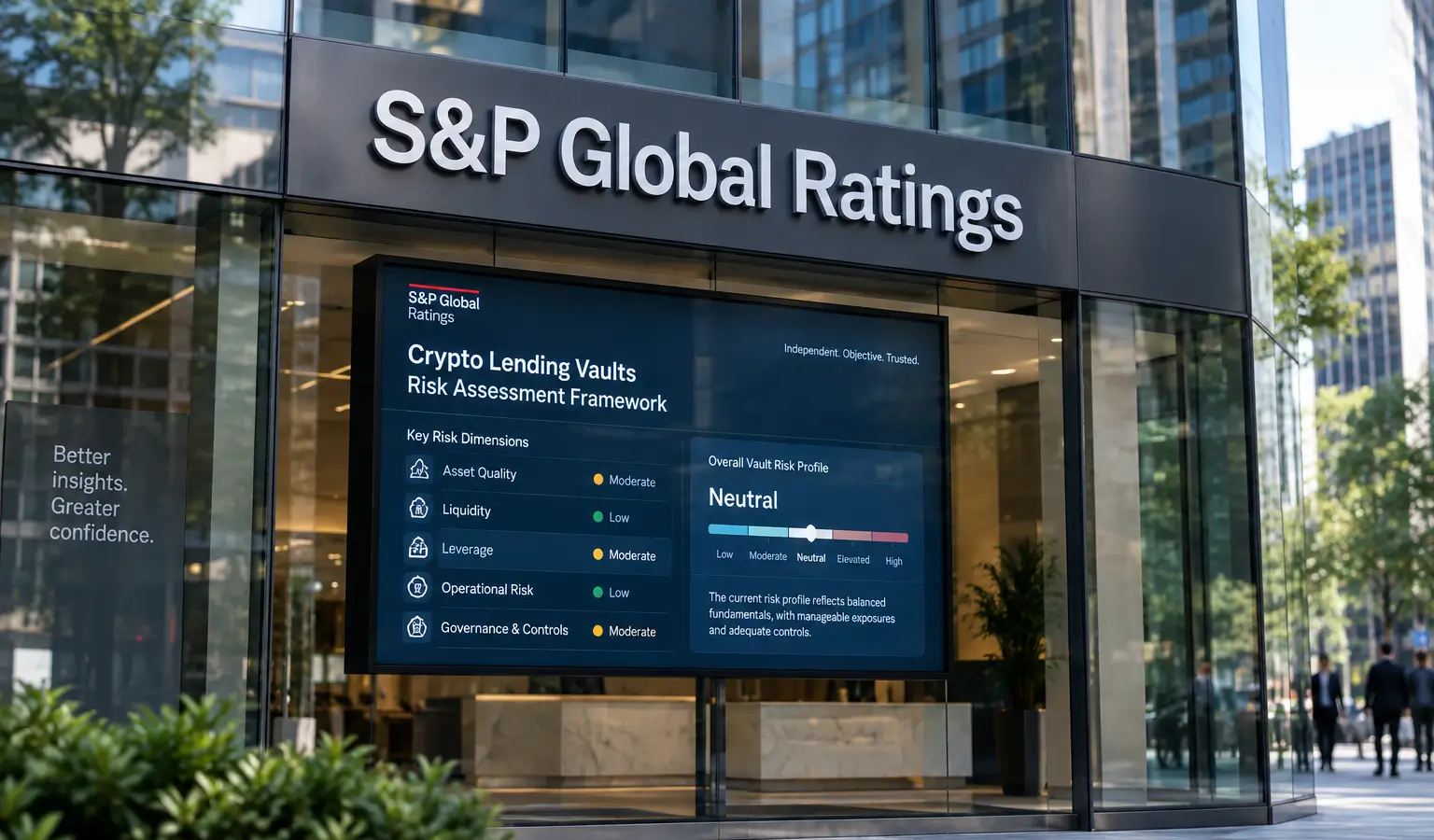
- The assessment looks at six risk factors, including loans, liquidity, curator, blockchain, protocol, and security and governance.
- The scores are not credit ratings, but are meant to show how vulnerable a vault is to market moves or manager mistakes.
S&P Global Ratings has launched a new risk framework for crypto lending vaults, a market that now manages about $10 billion (€8.9 billion). The credit rater stresses that the new scores are not credit ratings, but a separate way to gauge risk.
Crypto lending vaults basically work like a blockchain-based fund that takes deposits and lends them out to borrowers. According to S&P, assets have grown more than sixfold in two years, while the level of disclosure still varies widely from vault to vault.
Six Risk Factors
The new Vault Risk Assessment, or VRA for short, looks at six parts: the quality of the loans in the portfolio, liquidity gaps, the curator, the blockchain, the protocol, and the security and governance of the vault. S&P says each assessment gives a forward-looking view of the chance that investors will take losses.
One notable point is that the framework is not meant to judge a vault’s yield. The scores are mainly supposed to show how vulnerable a setup is if the market moves fast or if the manager makes the wrong calls.
Bridge Between TradFi and DeFi
The move fits into a broader push by S&P into digital assets. In September, the company said it wanted to acquire audit firm OpenZeppelin and took a stake in data provider Kaiko. Earlier, S&P also gave the first credit rating to Sky Protocol, the former MakerDAO, and rated a structured financing deal backed by Bitcoin.
For European crypto followers, this matters because traditional players are increasingly looking for their own language to measure DeFi risk. The VRA uses a suffix with a v, like AAA(v), where that label stands for the lowest risk within this system.
More Attention From Regulators
The timing lines up with more attention from regulators on crypto vaults and lending protocols. In July, SEC Commissioner Hester Peirce warned that these kinds of setups may fall under U.S. securities laws. The SEC also recently gave a new official interpretation of how existing rules should be applied to crypto assets and how its powers compare with those of the Commodity Futures Trading Commission.
That mix of tougher scrutiny and standardized risk assessment could make crypto lending vaults more appealing to banks and funds that require outside checks. At the same time, the big question remains whether curators will end up competing more on SEC warnings about DeFi vaults than on the highest advertised return.