Sparkasse Opens Crypto Trading for Customers in Germany
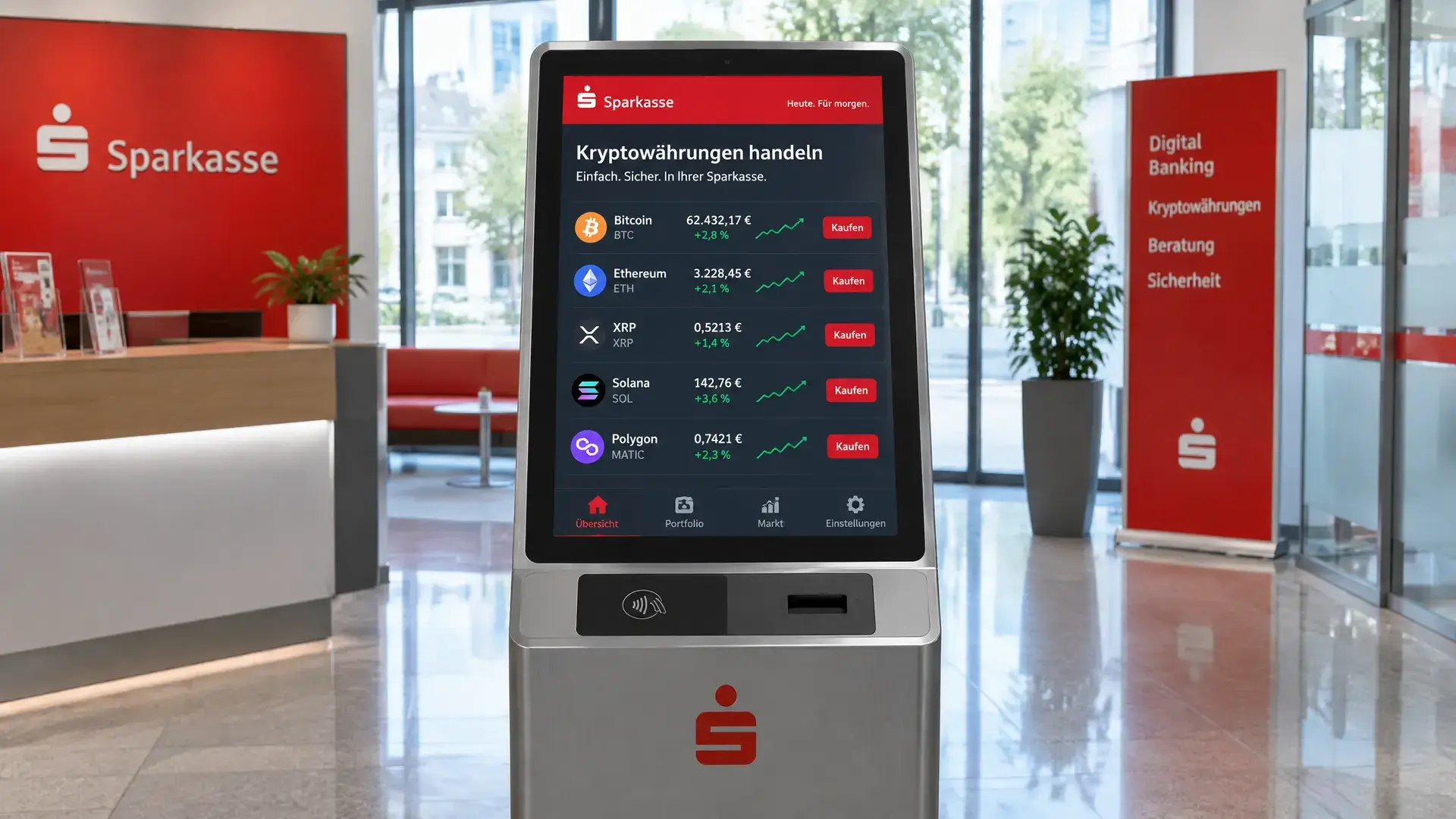
Through DekaBank, customers can trade Bitcoin, Ethereum, XRP, Solana, and Polygon in the banking app. The rollout falls under Germany’s MiCA oversight by BaFin, without deposit protection.
Key Takeaways
- Sparkasse is offering German customers crypto trading through its banking app, with DekaBank handling the trading and custody.
- Customers can buy and sell Bitcoin, Ethereum, XRP, Solana, and Polygon without leaving the banking environment.
- The coins are not covered by the deposit guarantee scheme, and crypto remains sensitive to sharp price swings and availability risks.
The German Sparkasse group is opening crypto trading for customers in its banking app. Through DekaBank, users will soon be able to buy and sell Bitcoin, Ethereum, XRP, Solana, and Polygon without leaving their familiar banking environment. That brings crypto closer to everyday banking, but the risks stay the same: the coins are not covered by the statutory deposit guarantee scheme.
How the Service Works
DekaBank handles the trading and stores the crypto centrally for customers. That means the bank manages the private keys and the assets are not kept in the customer’s own crypto wallet. The service is meant for self-directed investors; no advice is given in the app.
For each transaction, DekaBank gives a binding price that is only valid for a short time. Trading is not tied to fixed exchange hours, although maintenance windows and market disruptions can temporarily limit access. Customers can therefore buy and sell the five coins mentioned above whenever the system is available.
Why This Stands Out
More than 230 Sparkasse banks have shown interest, according to the group, while five are now taking part. That keeps the rollout limited for now, but still visible within one of Germany’s largest banking networks. For German users, that matters because the country remains an important crypto market according to Chainalysis, and access now runs through a familiar banking environment.
Risks Remain Clear
The move also fits into a tighter regulated German market. Since December 2024, BaFin has been working with a MiCA framework for crypto services, which means providers need permission to operate legally. For customers, that does not change the basic risk: crypto can swing sharply in value and, in the worst case, lose all its value. DekaBank also warns that transactions may be executed later or may be temporarily unavailable at the desired price.
Other major banks are also making moves in crypto custody. Deutsche Bank is expanding its custody service, showing that traditional financial institutions are continuing to build out their role in the crypto market.