Stablecoin Card Spending Tops $1 Billion
More than 70% of transactions were paid with dollar-backed stablecoins, mainly USDC and USDT. Meanwhile, Visa is continuing to expand the infrastructure for stablecoin cards.
Key Takeaways
- Crypto card spending reached $1.04 billion in July, more than three times higher than a year earlier.
- More than 70% of the more than 10 million transactions were funded with dollar-backed stablecoins, mainly USDC and USDT.
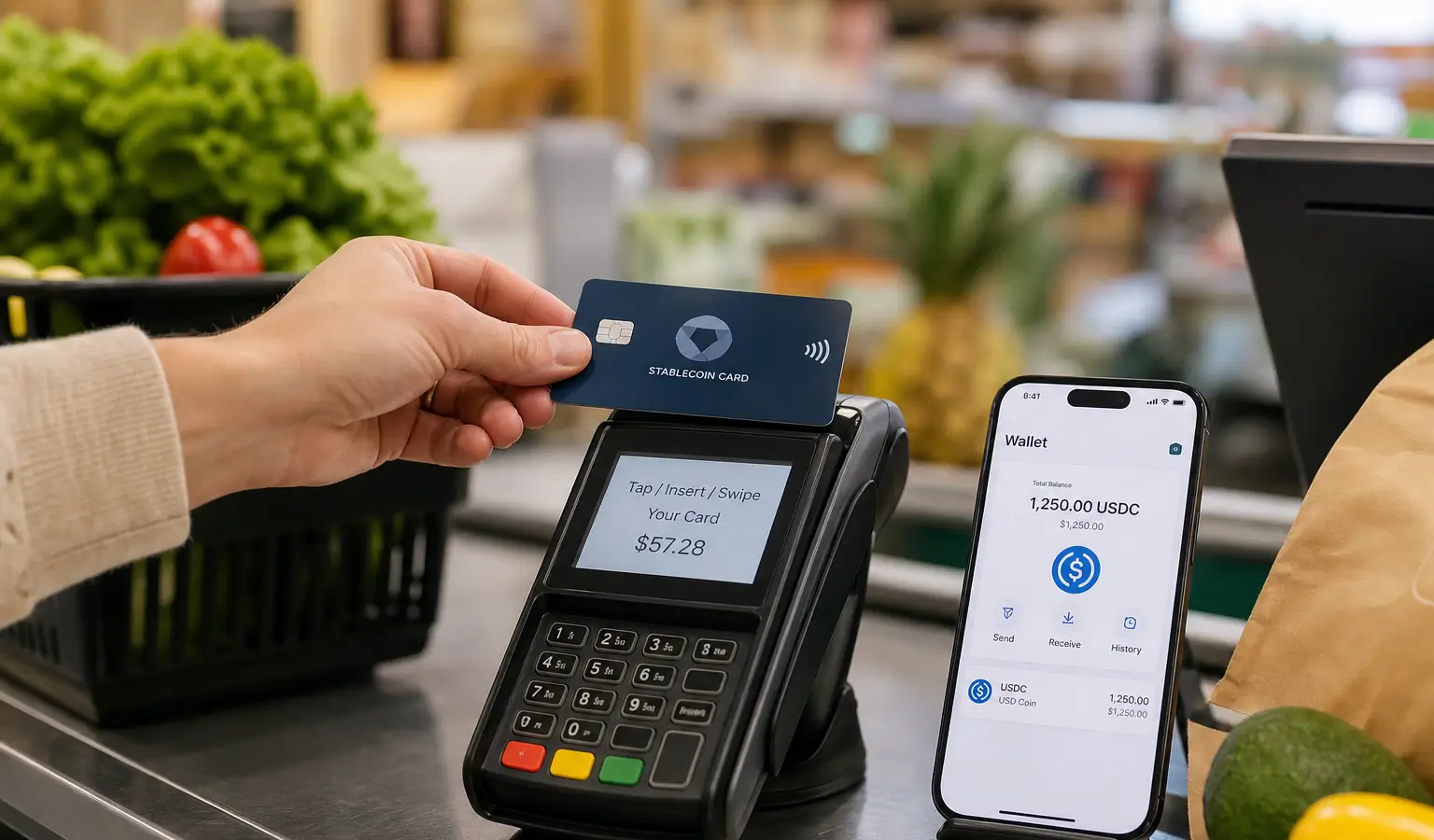
- Stablecoins are increasingly being used for everyday payments like groceries, rides, and food delivery.
Crypto card spending came in at $1.04 billion (€0.9 billion) in July, more than three times as much as a year earlier. The growth was driven mainly by dollar-backed stablecoins and by purchases that sound increasingly ordinary, like groceries, rides, and food delivery.
Stablecoins Dominate Payments
According to Paymentscan, as cited by venture capital firm a16z, more than 70% of the more than 10 million tracked transactions were funded with dollar-backed stablecoins. USDC accounted for 50.8% of July volume and USDT for another 20.3%. A year earlier, those shares were about 48% and 7%, according to the same data.
The average payment rose to about $86 (€74) per transaction, compared with $59 (€50) a year earlier. The monthly volume figures had already shown growth before that: in July 2025, volume stood at $306 million (€262 million). The data for August is not complete yet.
The numbers show that for many users, stablecoins are not just a way to hold digital dollars, but also a way to move and spend money. That fits a broader trend in which stablecoins are increasingly used for everyday payments instead of just trading on the crypto market.
From Balance to Checkout
Crypto cards work through existing payment networks, without a store needing to accept crypto itself. Depending on the product, users deposit money with the issuer or keep it in a crypto wallet, after which the balance is converted into local currency for the merchant when the payment is made.
Visa said in June that it had more than 160 stablecoin-linked card programs live or in development worldwide. In July 2026, the company also launched the Visa Stablecoin Platform, which lets financial institutions and fintechs mint, hold, move, and redeem stablecoins within a Visa environment. That shows the infrastructure around stablecoin payments is still expanding.
This also matters in countries with high inflation. In markets like Argentina and Nigeria, stablecoins give users a way to store value when local currencies quickly lose purchasing power. That partly explains why card use in Latin America is rising sharply, according to several providers, with groceries, restaurants, and delivery services as standard categories.
Why This Matters
For European crypto readers, this matters because stablecoins seem less and less like just a trading tool and more and more like a payment method. That could be important for companies working on cards, wallets, and payment infrastructure, especially now that major players like Visa and crypto exchanges are continuing to build out the market. The growth also suggests that stablecoin use is no longer just about saving or moving money, but also about everyday spending.