Standard Chartered Secures MiCA License After ESMA Register Update
ESMA added 37 new providers to the register, while Standard Chartered can now roll out its custody services under the EU framework through Luxembourg.
Key Takeaways
- Standard Chartered received a MiCA authorization and an Electronic Money Institution license through Standard Chartered Luxembourg S.A.
- ESMA added 37 more crypto firms to the register, bringing the total in the EU to 280 authorized providers.
- After the MiCA transition period ended on July 1, firms without authorization can no longer serve EU customers under old national regimes.
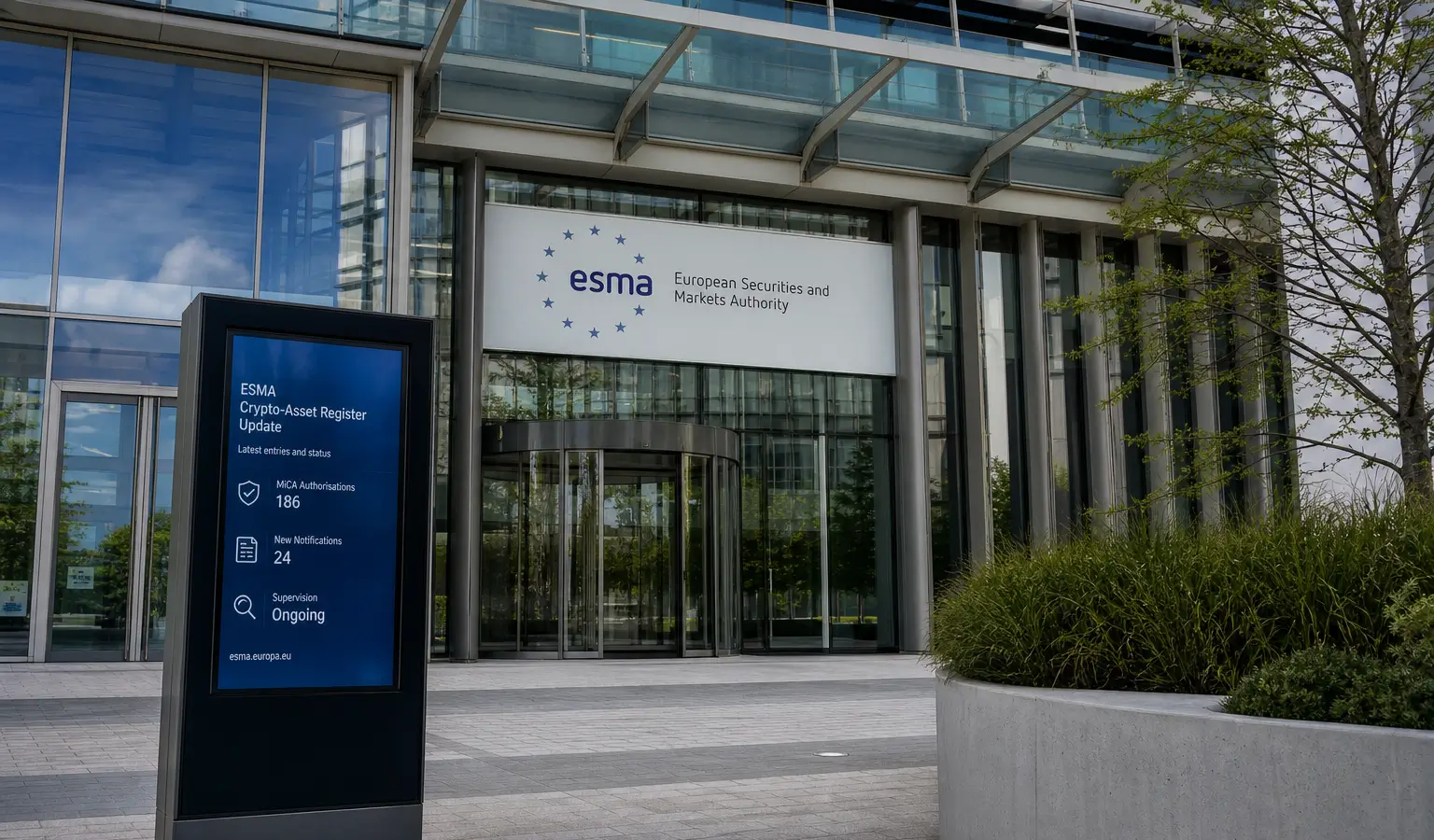
Standard Chartered has now secured its MiCA license, while the European regulator ESMA added 37 more crypto firms in its latest register update. The new entries bring the total number of authorized crypto-asset service providers in the EU to 280, marking the first major licensing wave since MiCA's transition period ended on July 1.
First Wave After the Deadline
The timing of the update is important. Until July 1, some firms were still allowed to operate under national rules thanks to MiCA's grandfathering provision, but that grace period has now expired. Companies that did not get authorization in time can no longer serve EU customers under those older national regimes.
ESMA refreshes the interim register every week, so the list now offers a live look at how quickly the market is adapting to the new European framework. MiCA is the EU's first broad crypto-asset law, designed to bring transparency, disclosure, and operational standards into line across the bloc.
The latest additions also show how broad this licensing round is. Alongside crypto-native firms such as prime broker FalconX and Sygnum Europe, the register now includes CACEIS, a Crédit Agricole subsidiary, for e-money token issuers. In other words, this is not just reshaping the familiar crypto sector, but also pulling in traditional financial groups that want a bigger role in digital assets.
Standard Chartered Chooses Luxembourg
Standard Chartered received both a MiCA authorization and an Electronic Money Institution license through Standard Chartered Luxembourg S.A. The bank launched that entity in 2025 to bring its digital asset custody business into the EU. Before this, it was still operating under Luxembourg's national regime for virtual asset service providers, but MiCA status now gives it a path to expand through passporting, pending any additional approvals.
According to Laurent Marochini, CEO of Standard Chartered Luxembourg, the license will allow the bank to phase in services for European customers over time. He said the move builds on the firm's existing custody operations in Asia and the Middle East.
What This Means for Europe
For European crypto readers, the main point is that MiCA is starting to move from regulation on paper to the actual market structure. A central register combined with passporting could make it easier for regulated firms to enter the market, while companies without full authorization may be forced out more quickly. That could speed up consolidation and make Luxembourg stand out again as a gateway for international players.
The update also reflects a wider shift as banks and traditional financial institutions bring their crypto services under European oversight. Even so, one open question is how strict individual firms will be with their own risk policies, especially when it comes to customers active in crypto or Web3.