Strong U.S. Jobs Data Pushes Bitcoin Below $80,000
The jobs report lowers the odds of a quick Fed easing move; the 10-year yield moved higher and stock futures were lower, while new CPI data is due next week.
Key Takeaways
- Strong U.S. jobs data showed 162,000 new jobs in August, far above the expected 56,000.
- Bitcoin fell about 2% and dropped below $80,000 after the jobs report.
- Higher rate expectations and persistent inflation make next week’s U.S. CPI data especially important for crypto.
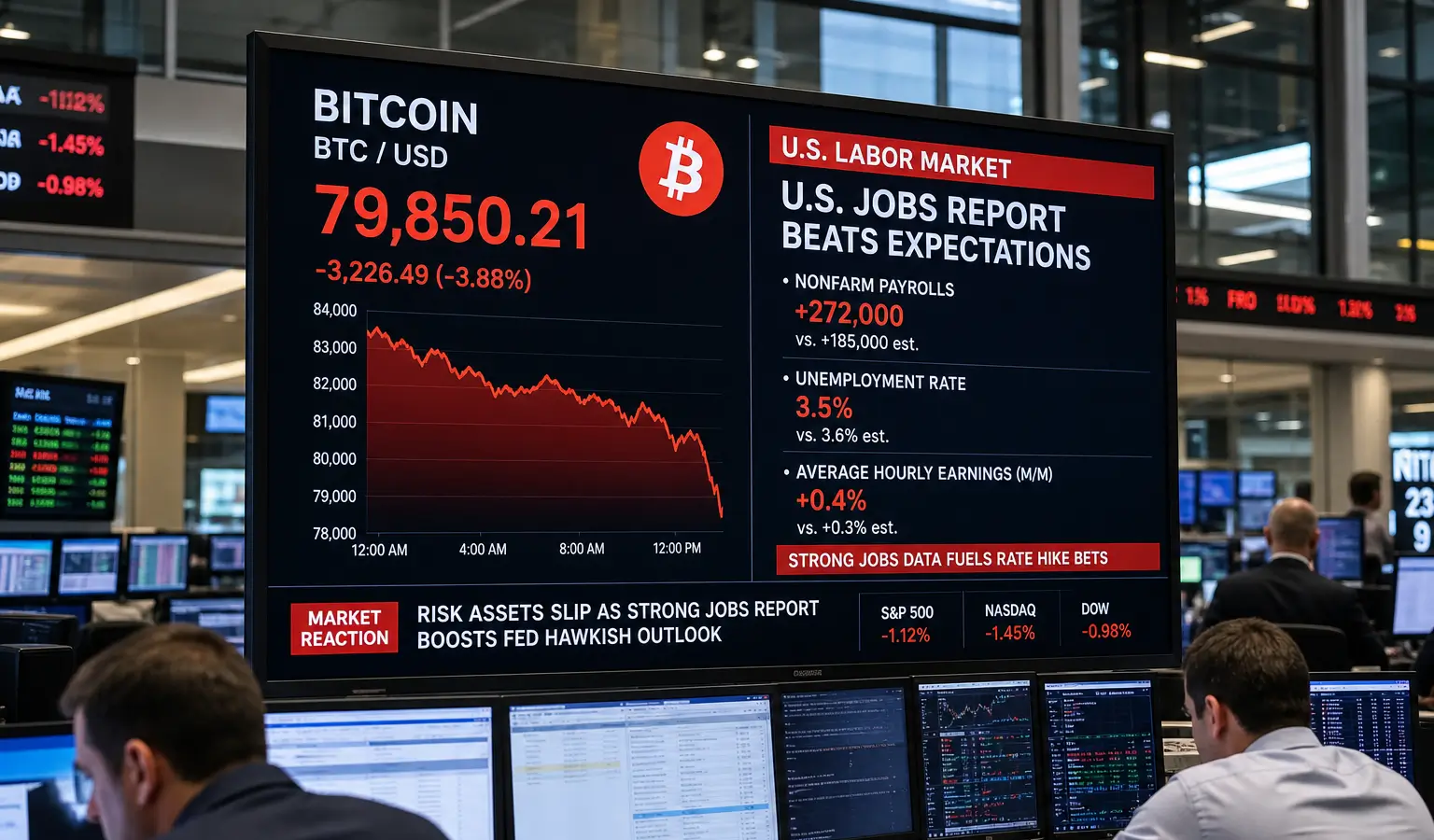
The U.S. labor market recovered more strongly than expected in August, and that immediately put pressure on Bitcoin. The crypto asset fell about 2% and slipped below $80,000 (€68,900) after the jobs report showed the economy added 162,000 jobs, far more than the expected 56,000.
Jobs Report Surprises the Market
Data from the U.S. Department of Labor showed that the labor market clearly picked up in August. Unemployment also held steady at 4.1%, matching expectations and July, but the strong job growth mainly signaled that the Federal Reserve has less room to ease quickly.
That fits into a broader debate inside the Fed. Chair Kevin Warsh already put a September rate hike firmly on the table last week with a tougher tone in Jackson Hole. At the same time, comments from Governor Chris Waller and FRBNY President John Williams earlier this week added more doubt among investors about how locked in a rate hike really is.
Rate Expectations Rise
The reaction in the bond market was immediate. The U.S. 10-year yield rose 3.3 basis points to 4.80%, while the 2-year yield moved up seven basis points to 4.40%. U.S. stock futures were also slightly lower.
For crypto, the combination of strong economic data and sticky inflation is especially relevant. U.S. CPI for July came in at 3.4% year over year, still well above the Fed’s 2% target. That makes the upcoming inflation data especially important, because August CPI is due next Friday.
Why This Matters for Crypto
For European crypto watchers, this matters mainly because Bitcoin often reacts quickly to changes in U.S. rate expectations. Higher rates make risky assets less attractive and can change the tone in the crypto market in a short time. The upcoming inflation data could therefore once again become an important gauge for sentiment around Bitcoin and other major tokens. In earlier periods when rate expectations rose, Bitcoin also came under pressure, such as during the recent pressure from oil, the dollar, and higher rates.