

Tether Freezes USDT Fast, But Getting It Back Often Takes Years
BitOK says frozen USDT on Ethereum and Tron often stays locked up for years, despite Tether’s quick action. The issue also touches on recovery costs and legal claims around stablecoins.
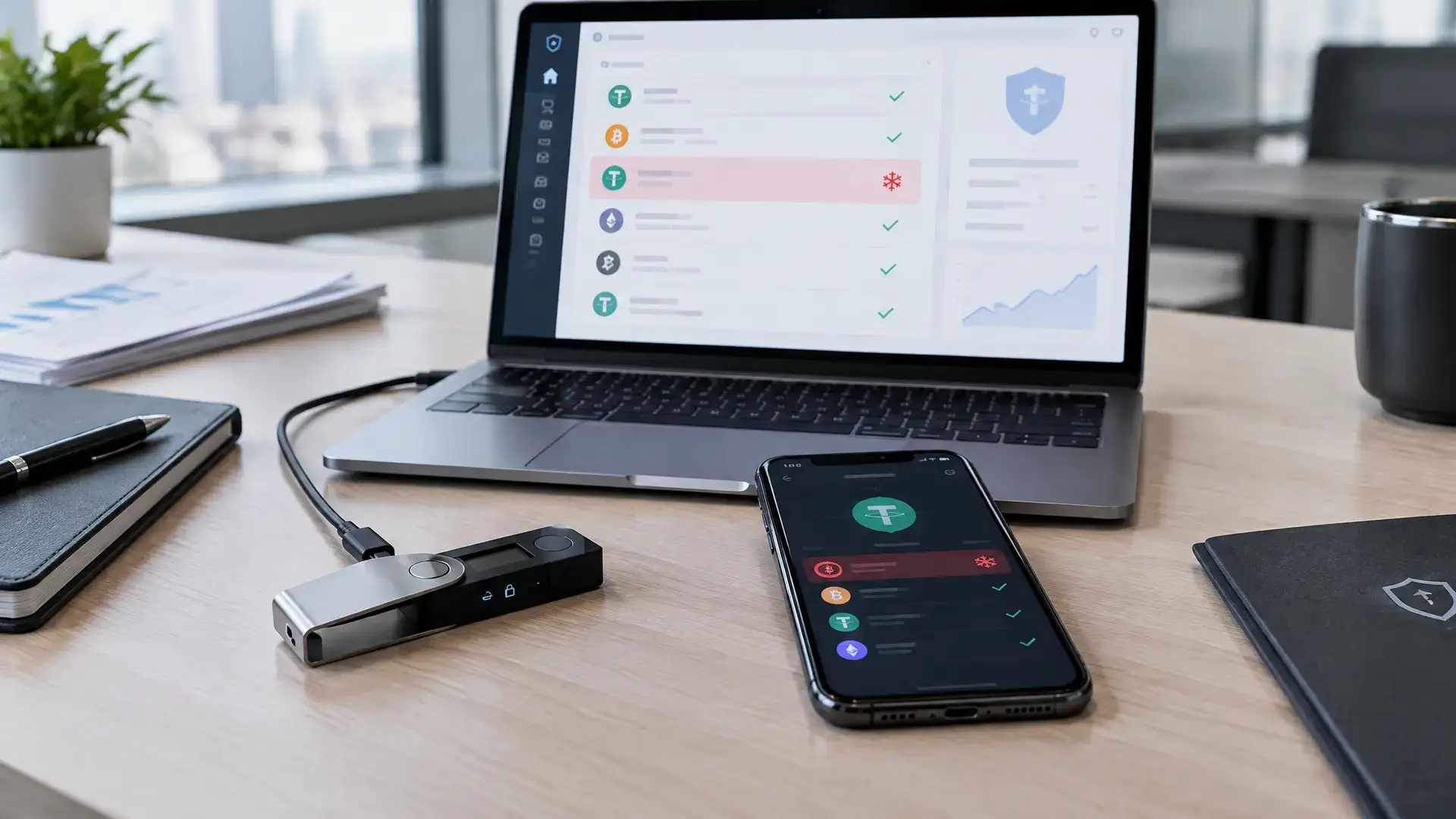
Key Takeaways
- Tether can freeze stolen USDT within minutes, but getting those funds back often takes much longer.
- BitOK found nearly $1.89 billion in frozen USDT on Ethereum and Tron between May 2024 and May 2026, and much of it is still locked up.
- According to BitOK, freezes can take months or years, especially when ownership and legal claims have to be proven first.
Tether can freeze stolen USDT within minutes, but for victims it often takes much longer before they see their money again. Research from blockchain analytics firm BitOK shows that frozen tokens on Ethereum and Tron usually are not released quickly, and that a large share stays locked up for years.
Freezes Stay in Place for a Long Time
BitOK looked at USDT freezes on Ethereum and Tron between May 2024 and May 2026. On Ethereum, $481.6 million (€439 million) was frozen in the first year, and 19% of that was later released. In the second year, the total was $403.2 million (€367 million), but only 1.2% of that was later unfrozen. On Tron, 94% of the USDT that had been frozen before May 2024 was still locked up in May 2026.
The study also shows these are big numbers. BitOK found about $1.89 billion (€1.7 billion) in frozen USDT during the research period. Another $65.7 million (€59.9 million) was sent to 463 wallets that were already on a blacklist; those tokens were later destroyed.
Victims Often Wait Longer
The timing of the research stands out because it follows the major hack at Binance in October, where hackers reportedly stole $6.3 billion (€5.7 billion). Tether then froze more than $1.56 billion (€1.4 billion) in USDT within half an hour. Circle Internet blocked more than $800 million (€729 million) in USDC during the same period. It is still not known when those funds will be returned.
According to BitOK CEO Dmitry Machikhin, a USDT freeze should not be seen as a short-term inconvenience. It can turn into a long financial and legal problem, especially for companies and individuals who first have to prove the tokens really belong to them. In complex cases involving multiple countries, that can take months or years.
Debate Over Recovery Fees
The issue also touches on the fees Tether charges for recovery. Under its Token Recovery Policy, mistaken transfers are subject to a fee of up to 10% or $1,000 (€911), whichever is higher. Based on the available information, Tether has so far reissued about $1.2 billion (€1.1 billion) in USDT and says those fees help pay for recovery and legal action.
For European crypto followers, this matters because stablecoins are often presented as fast and flexible payment tools, but freezes show that issuers still hold a lot of power over the tokens. That can matter for users who keep USDT on exchanges or in wallets, especially if a transaction is later disputed or if funds are tied to an investigation.
The aftermath of the Binance hack also shows how complicated things can get once frozen stablecoins become part of a criminal investigation. In that case, U.S. authorities are trying to recover more than $1.1 billion (€1 billion) in frozen USDC for victim compensation.