Tether Posts $1.5 Billion Profit, But Its Reserve Buffer Was Cut in Half
BDO says USDT remains backed, but a smaller surplus reserve and less detail on gold and Treasuries make the latest report harder to compare.
Key Takeaways
- Tether earned about $1.5 billion in the second quarter, while the reserve buffer for USDT fell to $4.11 billion.
- Excess reserves dropped from $8.23 billion in Q1 to $4.11 billion at the end of June, according to BDO's attestation.
- The new report gives less detail on reserves, making the drop in surplus reserves harder to compare.
Tether said it made about $1.5 billion (€1.3 billion) in the second quarter, even as the cushion behind USDT shrank sharply over the same period. Excess reserves ended June at $4.11 billion (€3.6 billion), down from a record $8.23 billion (€7.2 billion) in the first quarter. The Q2 2026 attestation, prepared by BDO, says USDT is still overcollateralized, but it does not explain where more than $5 billion (€4.4 billion) in surplus reserves went.
What the Numbers Show
The report says Tether held $187.75 billion (€163 billion) in assets on June 30, against $183.64 billion (€160 billion) in liabilities. At the end of the previous quarter, assets stood at $191.77 billion (€167 billion), while token liabilities were almost unchanged. In other words, Tether’s asset base fell by roughly $4 billion (€3.5 billion) during the quarter, even though the company reported a profit.
There is also a shift in how Tether is framing the results. In Q1, the company referred to net profit, but the latest statement uses the term net operating profit. That change removes mark-to-market swings from the headline figure, especially for assets such as gold and Bitcoin, both of which moved sharply during the quarter.
Less Detail on Reserves
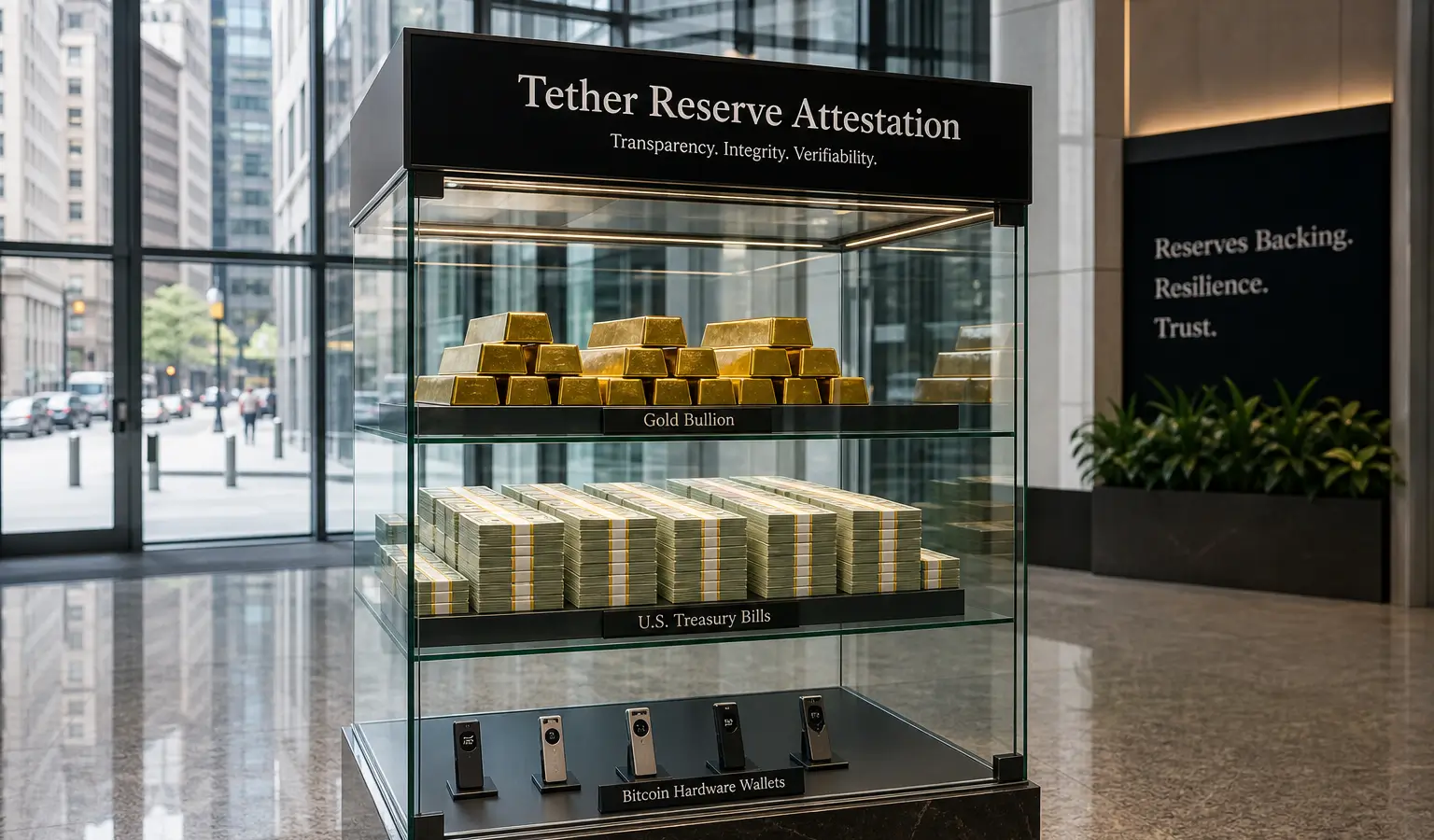
Tether’s first-quarter report still broke out the dollar value of its main reserve assets, but that level of detail is mostly gone in the new filing. At the time, the company said it held $141 billion (€123 billion) in Treasury bills, around $20 billion (€17.4 billion) in gold, and roughly $7 billion (€6.1 billion) in Bitcoin. This time, gold is only described as more than 146 tons, while U.S. government bonds are said to make up most of the reserves without a specific dollar amount.
That makes it tougher to line up this quarter’s reserve buffer with earlier reports. Tether says its reserve position is still strong enough to keep USDT fully backed. Even so, the gap between the profit figure and the smaller surplus reserve still leaves open questions about how the underlying assets moved during the quarter.
Why This Matters for Europe
For European crypto users, the report matters because Tether remains one of the largest stablecoins in circulation and is heavily used outside the U.S. Europe is also facing tighter rules around stablecoins and disclosure, so any change in USDT’s reserve cushion carries extra weight. Tether’s separate push into a U.S.-regulated stablecoin project also shows the company is increasingly splitting its business between the global market and a more regulated U.S. setup.
The attestation also lands as Tether puts more emphasis on outside scrutiny. The company has hired a Big Four accounting firm for its first full independent annual audit, which it says is meant to improve transparency. For investors and market participants, the main question is how quickly that added oversight will translate into clearer information about the reserves backing USDT.