Trump Claims 59% Support as Oil Rises After Iran Strikes
Brent climbed after new U.S. strikes on Iran, with the Strait of Hormuz and gasoline prices back in focus. The unrest could also spill over into crypto risk sentiment.
Key Takeaways
- Trump claimed a 59% approval rating, but independent sites put his support lower and his disapproval higher.
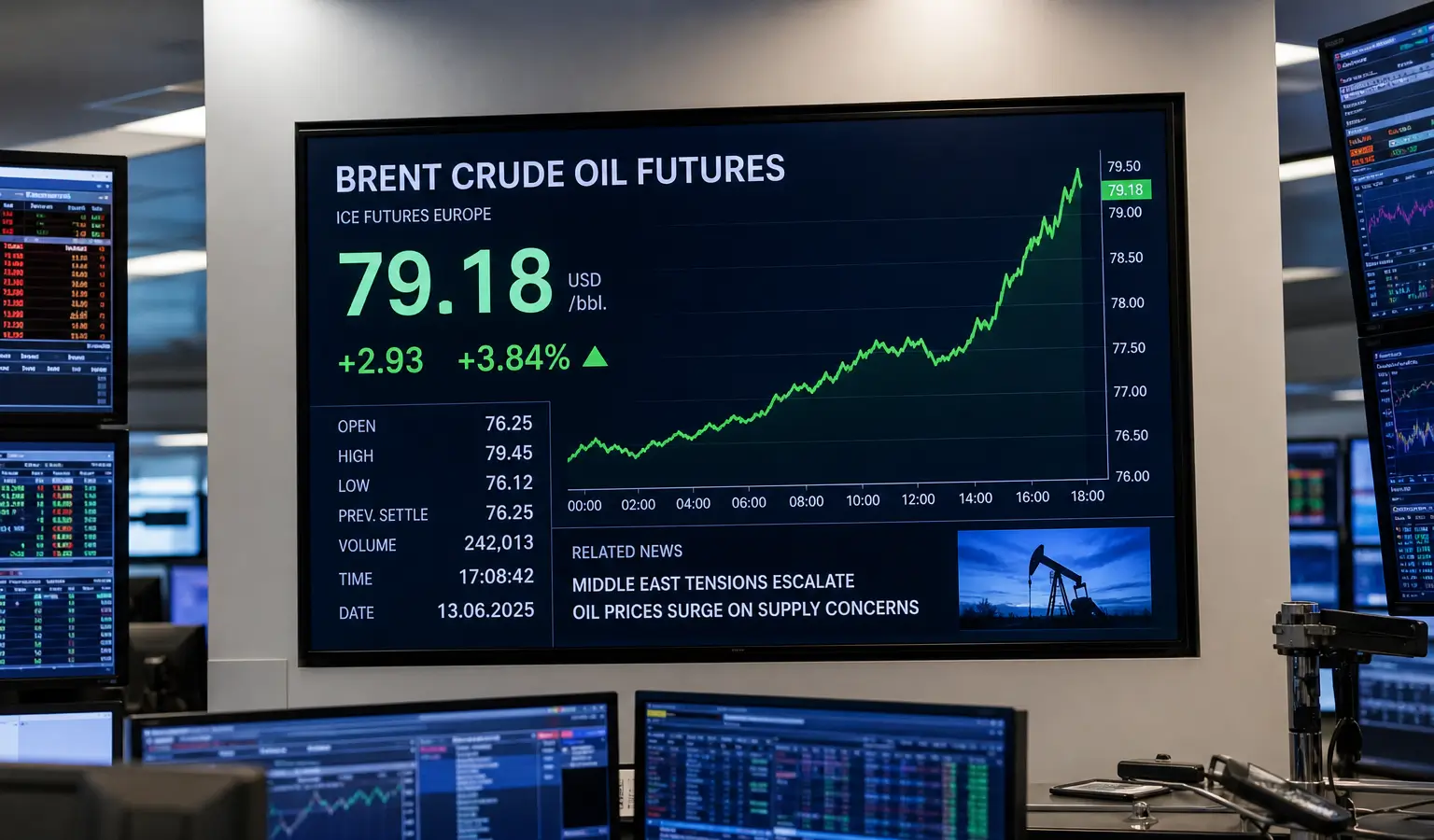
- Brent oil rose nearly 4% after the U.S. carried out more strikes on Iran and tensions around the Strait of Hormuz escalated.
- Higher oil prices and geopolitical unrest could also affect risk sentiment in the crypto market.
President Donald Trump said in a Truth Social post that he had a 59% approval rating, then immediately added that gas and oil prices would move lower. At the same time, oil was already climbing after fresh U.S. strikes on Iran added more pressure to the market.
Oil Reacts to New Strikes
Brent crude rose nearly 4% Sunday night to $78.67 (€69) per barrel and later pushed above $79 (€69). The U.S. launched strikes on Iran for the fourth time in a week, while Tehran responded with attacks on U.S. military sites in Jordan, Kuwait, Bahrain, and Oman.
Iran also said the Strait of Hormuz had been closed, but U.S. Central Command pushed back and said ships could still move through it freely. The waterway is one of the most important routes in global oil trade and carries about 20% of the world’s supply. The latest unrest reflects a broader turn in the oil market, where fears of supply disruptions are now outweighing earlier expectations of an oversupplied market.
Trump's Numbers Don't Add Up
The 59% Trump referred to appears, based on several independent trackers, to line up more closely with his disapproval rating. Those sites put his approval at roughly 37% to 40%. His claim that gas prices are falling also does not match the data: AAA says the national average is about $3.87 (€3.39) per gallon.
That is below the Memorial Day high of $4.56 (€3.99), but it is still about 30% higher than it was at the start of the war in February. Analysts largely attribute that earlier decline to signs of easing tensions, not to a durable trend. With fighting around Hormuz and new strikes on Iran, oil prices remain a direct gauge of geopolitical stress.
Why This Also Matters for Crypto
For crypto readers, the link is simple: oil shocks and geopolitical risk often hit broader market sentiment at the same time. If tensions around Iran and the Strait of Hormuz keep building, that could also weigh on the crypto market mood, even if prices have not reacted clearly yet. In a week when investors are already watching volatility across other assets, an energy-driven shock like this can quickly become part of the conversation.