Uniswap Launches Permissioned Pools for Tokenized Assets
Uniswap Labs is linking AMM liquidity with access controls for regulated funds and securities. Securitize, Superstate, and Dowgo are testing the model for tokenized assets in DeFi.
Key Takeaways
- Uniswap is rolling out Permissioned Pools for tokenized real-world assets, including funds, stocks, and other securities.
- Access is limited to approved wallets, while Uniswap’s automated market maker remains the core trading engine.
- The launch is being tested with Securitize, Superstate, and Dowgo, and it builds on Uniswap v4.
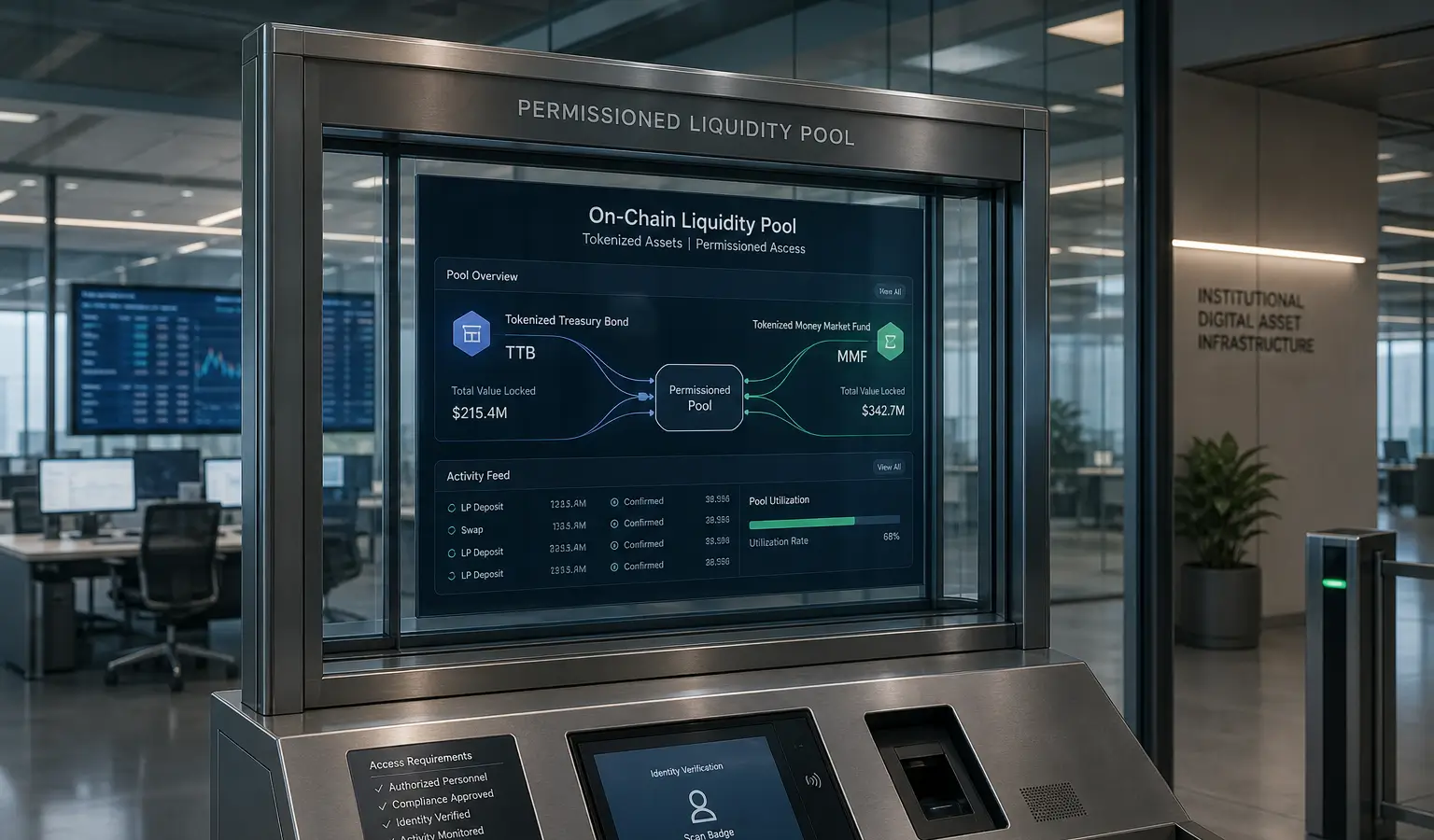
Uniswap is moving deeper into tokenized real-world assets. The decentralized exchange built by Uniswap Labs is launching Permissioned Pools, a new feature designed to let regulated funds, stocks, and other securities trade on the protocol while still meeting compliance requirements.
Compliance in the Pool
With the new setup, issuers of tokenized assets can control who is allowed to trade. Only approved wallets can interact with the pool, but Uniswap still relies on the automated market maker that defines the protocol. Uniswap Labs says this gives issuers a more flexible way to apply their own rules without needing to create a separate trading system.
The rollout is being developed alongside tokenization firms Securitize and Superstate, as well as the European platform Dowgo. The goal is to use the framework for regulated onchain assets. In practice, that moves Uniswap a bit further away from a fully open DeFi model and closer to one that can also support institutional-grade investment products.
Uniswap v4 as the Base
Permissioned Pools are built on Uniswap v4, the latest version that gives developers more room to shape how a pool works. That design makes it possible to customize behavior at the pool level without changing the protocol’s core trading logic. For institutions, the key point is that compliance can now be enforced directly inside the pool instead of only through the app layer.
Superstate CEO Robert Leshner said the rules now sit inside the pool itself, allowing a regulated asset to tap real AMM liquidity without the issuer giving up the controls required under securities law. That marks a notable shift from earlier approaches, where access was often restricted outside the protocol.
Why This Matters for Europe
For European crypto readers, the main takeaway is Dowgo’s involvement. It suggests tokenized securities are not just a U.S. development, but are also getting closer to established market infrastructure in Europe. Combined with the broader DeFi trend, that could shape how regulated assets are traded onchain going forward.
It also fits into a wider trend, where other players are also making tokenized stocks usable inside DeFi, showing that onchain markets are increasingly being adapted to traditional securities rather than the other way around.