U.S. Moves $297 Million in Seized Crypto to Coinbase
Arkham tracked two transfers of seized BTC and ETH to Coinbase Prime, but officials have not confirmed a sale. The move is tied to cases involving BTC-e, FTX, and the U.S. Strategic Bitcoin Reserve.
Key Takeaways
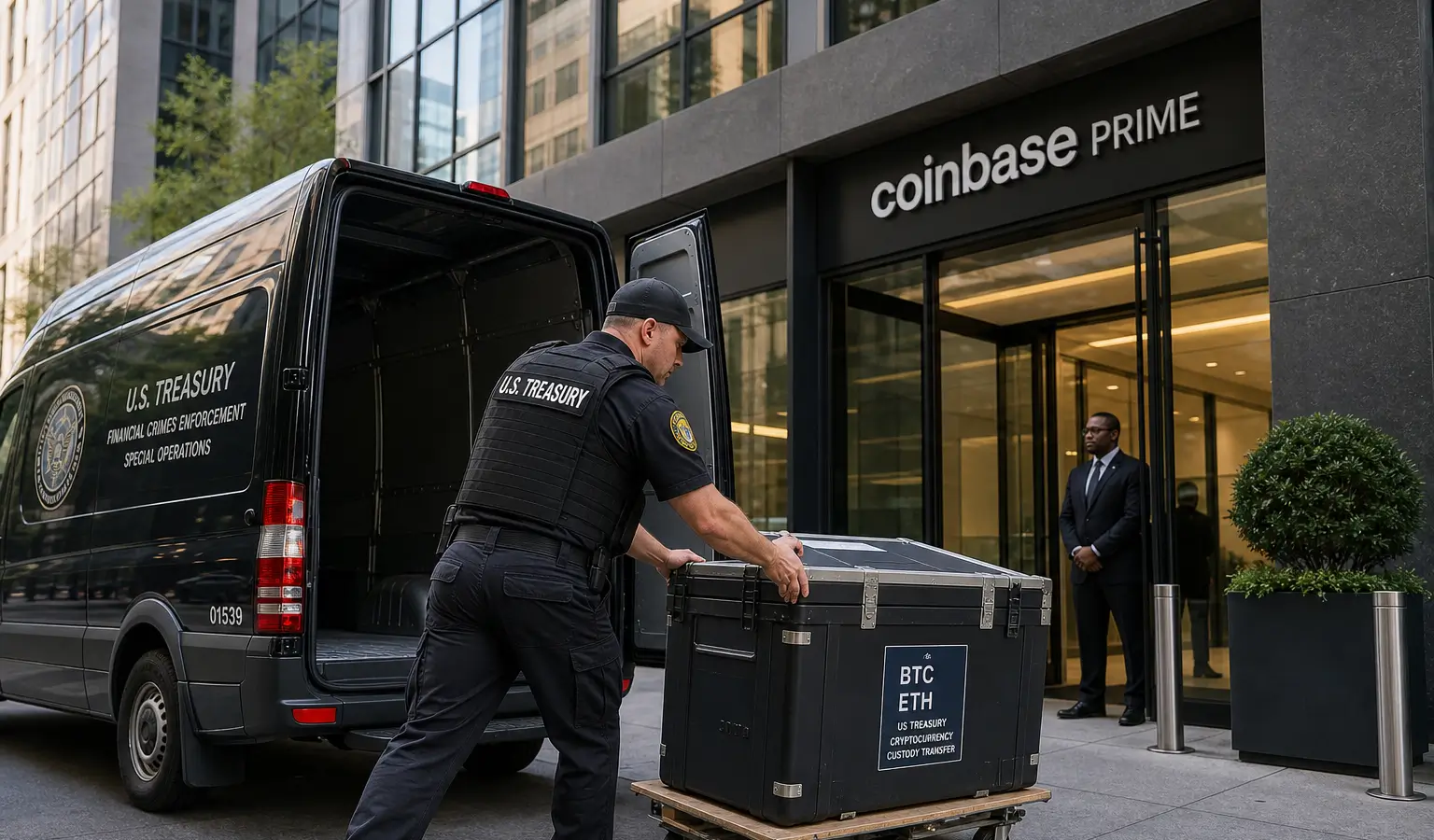
- The U.S. government sent $297 million (€260 million) in seized Bitcoin and Ether to Coinbase Prime in two transactions on Monday.
- Arkham first saw $8.8 million (€7.7 million) moved, then $288.33 million (€252 million) about three hours later, with no confirmation of a sale from Treasury or the Marshals Service.
- The transfer combines forfeitures from three criminal cases and fits a pattern of earlier transfers to Coinbase Prime.
The U.S. government moved $297 million (€260 million) worth of Bitcoin and Ether to Coinbase Prime on Monday in two separate transactions. The transfer is fueling fresh speculation about a possible sale, but Treasury and the Marshals Service have not confirmed that yet.
Two Transfers Within Hours
Blockchain intelligence firm Arkham first flagged an $8.8 million (€7.7 million) deposit, then tracked a second transfer of $288.33 million (€252 million) roughly three hours later. Based on the tracking data, the crypto was seized and sent to Coinbase Prime, rather than sold in a publicly announced liquidation.
The larger transfer pulls together forfeited assets from three different criminal cases. Those include funds linked to Brian Krewson, the now-defunct BTC-e exchange, and dark web drug dealer Ryan Farace.
A Familiar Pattern Around Coinbase Prime
For crypto observers, the move fits a pattern that has already played out before. In January, a similar transfer of forfeited assets also triggered rumors of a sale of Samourai Bitcoin, but no confirmed sale followed. Since then, the government has repeatedly routed seized assets through Coinbase Prime, including Chainlink tokens from the FTX case in June and altcoins from the Alameda cases in May. That sits within the broader fallout from the FTX scandal, where the treatment of seized crypto is still unfolding.
For now, Monday's transfers mainly show that the government is continuing to centralize how it handles forfeited crypto assets. Whether any of it was actually sold remains unknown unless the agencies involved provide more detail.
Why This Matters
The timing matters because the U.S. has been operating a Strategic Bitcoin Reserve since 2025, created by executive order to hold seized Bitcoin for longer. At the same time, the government has also shown it is willing to sell assets, including the 9,861.17 BTC it liquidated in March 2023 from the Silk Road case. For European readers, the main point is that government custody now plays a major role in the crypto market, especially for BTC and ETH.
There is also a legal backdrop. In 2026, the CFTC and the SEC issued a final rule spelling out how federal securities laws apply to certain crypto assets and transactions. That could shape how seized crypto is handled in the U.S., although the rule does not address this transfer specifically.