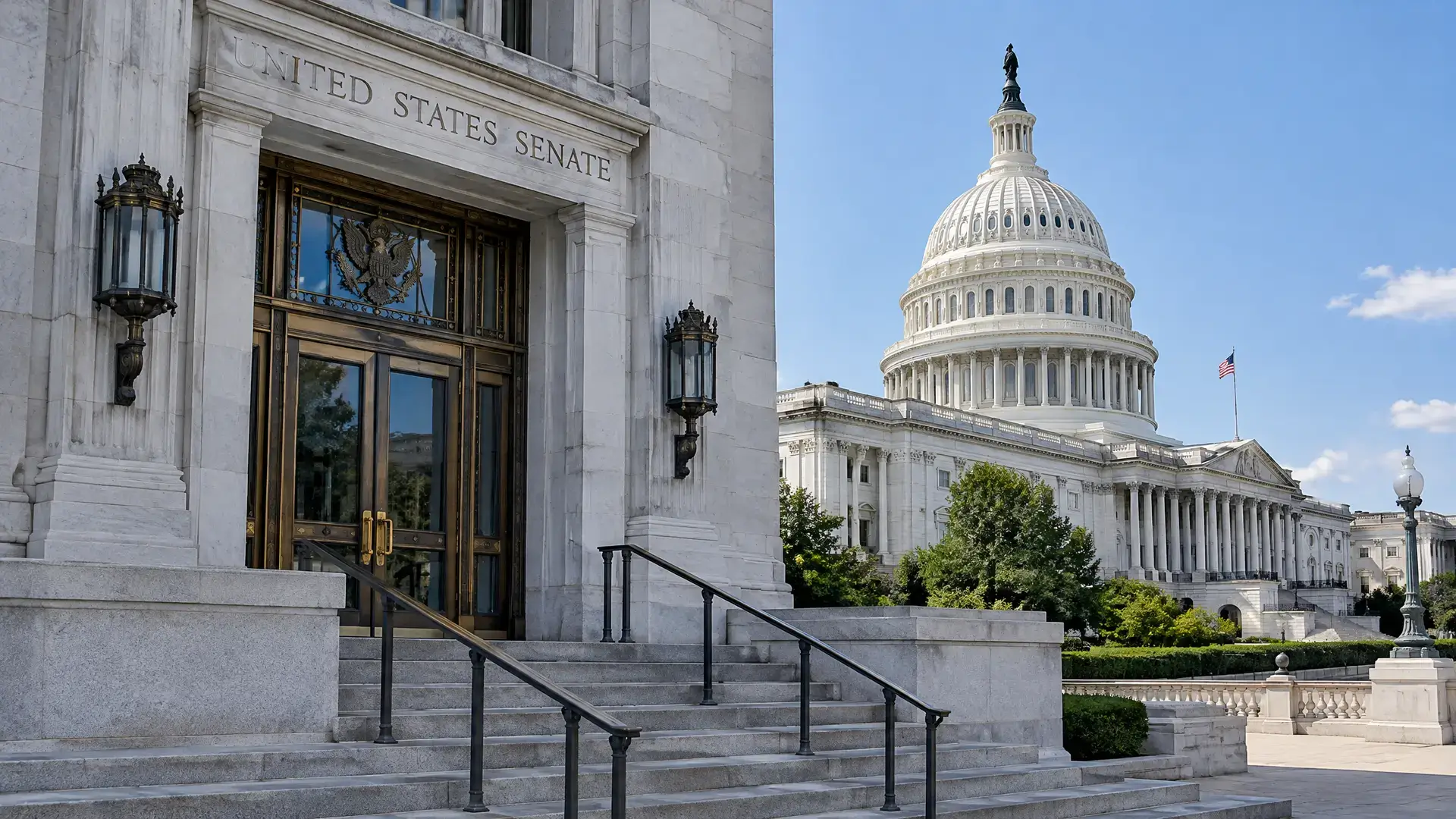
U.S. Senate Approves Four-Year Ban on a Digital Dollar
The Senate is blocking a digital dollar until 2030, despite broader debates over CBDCs. Read on for the political backdrop and possible fallout.

Key Takeaways
- The U.S. Senate passed a bill by an 85 to 5 vote that bars the Federal Reserve from issuing a digital dollar for four years.
- The ban is included in the 21st Century ROAD to Housing Act, a law meant to improve housing affordability.
- The ban runs through the end of 2030 and reflects the U.S. government's cautious stance toward central bank digital currencies.
The U.S. Senate has passed a bill that bars the Federal Reserve from issuing a central bank digital currency (CBDC) for the next four years. The ban is part of the 21st Century ROAD to Housing Act, a bill aimed at improving housing affordability, which passed by a wide margin of 85 to 5.
Digital Dollar Ban Folded Into Broader Legislation
Even though the Federal Reserve itself was not actively working on a digital dollar, the Senate decided to formally block the idea. Republican lawmakers strongly pushed back against a possible CBDC rollout, seeing it as a dangerous expansion of government control and surveillance. That means the ban is now tied to broader housing legislation, which raises the odds that it will also pass the House of Representatives and be signed by President Donald Trump.
Temporary Measure With a Political Backdrop
The ban runs through the end of 2030 and temporarily limits the Federal Reserve's ability to develop or issue a digital dollar. This comes even though the Federal Reserve had already confirmed in March 2026 that it had stopped work on a CBDC because it lacked legal authority without explicit approval from Congress. The Senate's decision reflects the political hesitation in the United States around central bank digital currencies, in contrast to developments in Europe and China.
Why This Matters for European and Dutch Crypto Fans
For European and Dutch crypto followers, this development highlights the very different political attitudes toward CBDCs around the world. While some regions are actively experimenting with central bank digital currencies, U.S. politics is taking a wait-and-see, restrictive approach for now. That could affect international cooperation and the adoption of digital currencies on a global scale.