x402 Lacks Chargebacks as AI Agents Pay
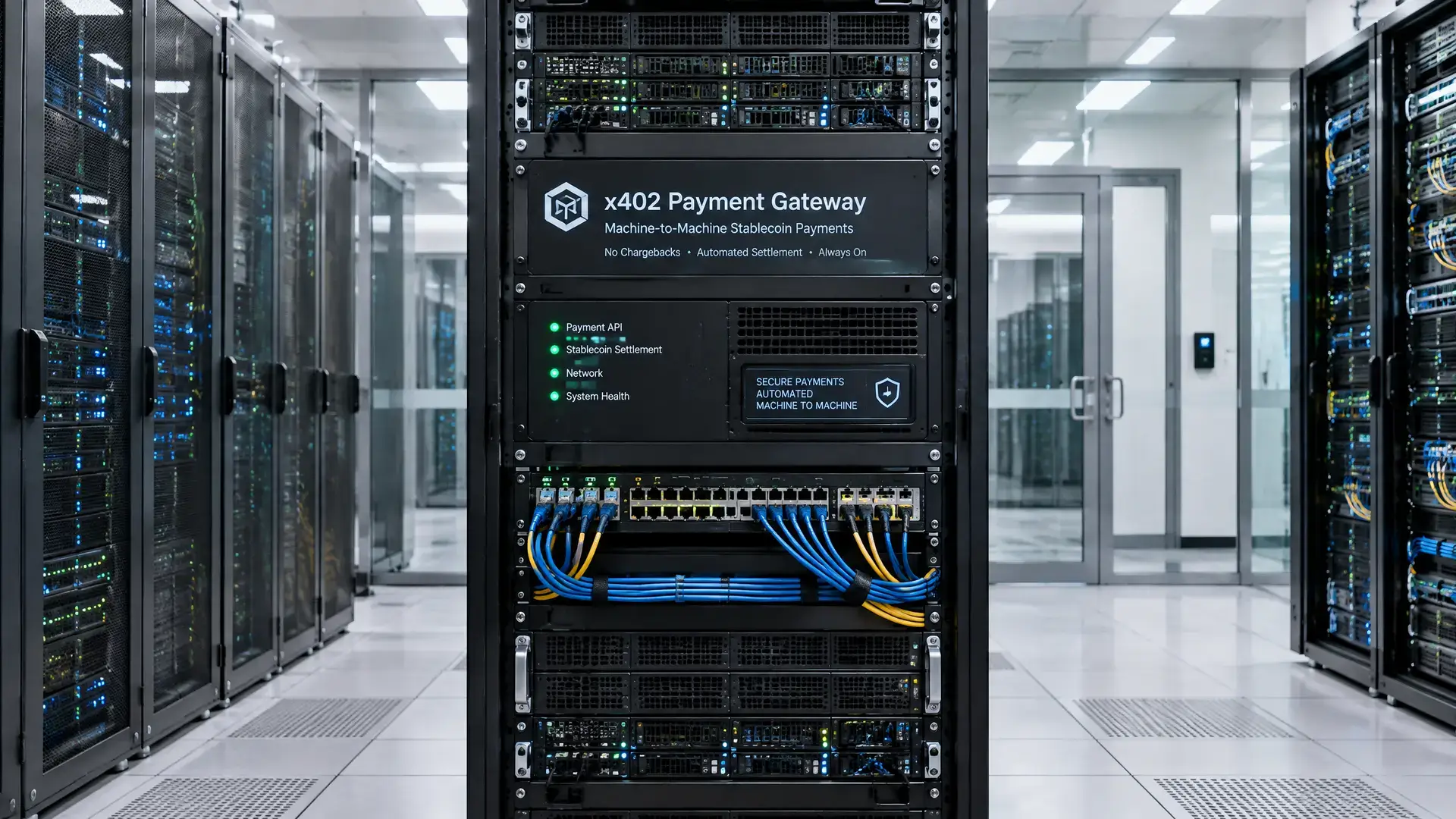
Visa, Mastercard, and American Express are at the table, but x402 still lacks a standard for disputes. That becomes even more of a problem with stablecoin payments made by AI agents.
Key Takeaways
- AI agents can pay with x402, but the protocol has no standard mechanism for chargebacks or disputed payments.
- Major card networks like Visa, Mastercard, and American Express sit in the top governance tier, while settlement often happens onchain in stablecoins.
- Parties are working on dispute resolution for AI payments, because blockchain can prove money moved but not the delivery or quality of the service.
AI agents can pay online through x402, but the protocol has no standard way to dispute a payment if something goes wrong. That matters now that major card networks like Visa, Mastercard, and American Express help govern the standard in its top governance tier, while payments are often settled in stablecoins onchain.
No Standard for Reversals
Albert Castellana of GenLayer Labs points out that x402 was built for fast machine-to-machine payments. A transaction can settle in hundreds of milliseconds and cost just a fraction of a cent, making microtransactions possible at scale. But once a stablecoin payment is confirmed, there is no issuer to call and no chargeback to file.
That difference matters because the classic card model relies on a human noticing that something is wrong and then complaining. With AI agents, the buyer is often software, and software does not read statements. Coinbase introduced the protocol in 2025, and in July the Linux Foundation brought in the x402 Foundation to manage the standard.
Why This Matters for Users
According to Castellana, payment on the blockchain is not the same as commercial finality. The chain can prove that money moved, but not whether the data was correct, the service was delivered, or both sides held up their end of the deal. That makes reversals and proof especially tricky for payments made by software.
That concern is part of the broader trend around AI and crypto. Researchers from EPFL and Zhejiang University looked at 15 facilitators in July that verify payments and put them onchain, and found at least one violation of their safety rules in each of them. On Base, nearly 2% of settlement attempts were also reversed at the end of 2025, equal to about 1.9 million payments.
A New Layer for Disputes
The pressure to build a machine-native solution is growing as a result. Some parties are already working on systems for disputes around AI payments, such as Recourse, which aims to provide a framework for situations where an agent receives something wrong, incomplete, or useless. That shows the market needs not just a payment standard, but also a way to handle losses and responsibility.
For European crypto readers, this is especially relevant because x402 shows how stablecoins and AI are increasingly intersecting in real payment flows. If these systems get used more widely, the need for clear rules around security, proof, and disputes could become more important outside the U.S. too. The debate is then not just about speed, but also about who carries the risk when a payment is technically correct but still goes wrong in practice.